
Diatomaceous earth bath stones outpace soggy fabric mats. Analyze the capillary moisture-wicking physics, high-speed evaporation kinetics, and non-slip safety profiles of natural stone mats.
- Composed of 100% natural, mineral-rich diatomaceous earth (diatomite)
- Micro-porous surface structure absorbs and evaporates moisture in seconds
- Includes a dedicated non-slip rubber underlayment pad for floor grip
Porous Material Science
Soggy fabric mats breed bathroom mold. Evaluate the capillary wicking kinetics, diatomaceous silica shell configurations, high-speed evaporation curves, and non-slip safety underlayments that redefine bath stone mats.
1. Capillary Action and Micro-Porous Absorption Kinetics
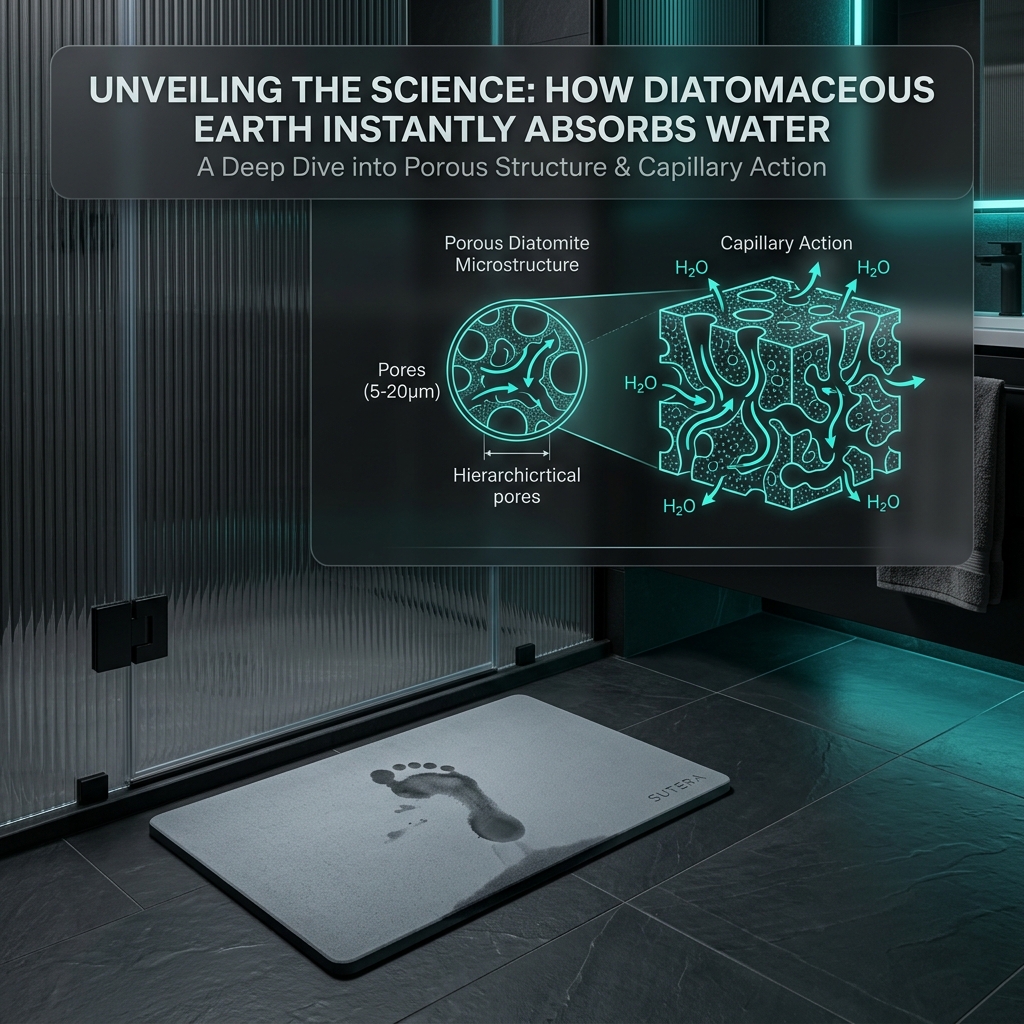
Diatomaceous earth (diatomite) is a naturally occurring sedimentary rock composed of the fossilized remains of diatoms. Diatoms are single-celled algae that secrete intricate shells made of silica. These fossilized shells contain millions of sub-micron pores, creating a highly porous material.
When you step onto a diatomaceous bath mat, water is drawn into these microscopic pores through capillary action. Capillary action occurs when the adhesive forces between water molecules and the silica walls exceed the cohesive forces of the liquid, pulling water in.
The water is dispersed across a massive network of internal channels, increasing its surface area significantly. This distribution logo accelerates evaporation, allowing the mat to dry in seconds. Soggy puddles are eliminated, preventing water from tracking across your bathroom floor.
This rapid absorption is highly efficient. A standard diatomaceous stone mat can absorb up to double its weight in water before reaching saturation. The dry surface prevents the damp, humid conditions that support bacterial growth, keeping the bath mat clean.
Additionally, this porous structure requires zero mechanical power. The absorption kinetics operate entirely through natural physical forces, delivering a zero-maintenance moisture management solution that runs indefinitely in your bathroom.
The internal pore size distribution is skewed toward mesopores (2 to 50 nanometers). This sizing provides the ideal balance between capillary pressure and permeability. Water is drawn in with high force but can still evaporate easily through the surface.
- Fossilized silica shells contain millions of micro-pores that draw in water instantly.
- Capillary dispersion spreads moisture across a large internal surface area to speed up drying.

2. Condensation and Evaporation Thermodynamics
Traditional fabric bath mats absorb water and hold it within their fibers. This trapped moisture evaporates slowly, keeping the bathroom humid and creating a breeding ground for mold and mildew. Diatomaceous mats utilize thermodynamic kinetics to accelerate drying.
By spreading water through its internal channels, the diatomite mat increases the surface area of the liquid phase exposed to the air. This large surface area lowers the energy barrier needed for evaporation, allowing water molecules to escape into the vapor phase quickly.
This rapid evaporation lowers the humidity levels in your bathroom, preventing condensation on walls and mirrors. The mat remains dry, preventing the musty odors associated with damp fabric. It represents a clean and efficient moisture control solution.
Additionally, the mineral composition of diatomaceous earth is naturally antimicrobial. The dry surface inhibits the growth of bacteria and mold spores, eliminating musty smells. The bath stone keeps your bathroom hygienic without chemical disinfectants.
By optimizing evaporation, the diatomaceous mat improves your home's air quality. The simple, natural process prevents humidity buildup, supporting a fresh bathroom environment.
Evaporation is also supported by the thermal conductivity of the silica mineral. Diatomite has a low thermal conductivity, keeping the surface from feeling cold to touch. The material absorbs ambient room heat, supplying the energy needed for evaporation kinetics.
- Rapid drying lowers indoor humidity, preventing condensation on bathroom walls.
- Antimicrobial silica composition inhibits mold spores, eliminating musty bathroom odors.
3. Structural Safety: Slate-Like Texture and Non-Slip Underlayment
A bath mat must remain stable on wet bathroom tiles. Wet fabric mats can slide when stepped on, posing a slip hazard. Diatomaceous bath stones solve this problem using a rigid, slate-like design paired with a non-slip underlayment.
The bottom of the stone mat is supported by a textured rubber pad. This pad grips the tile floor, preventing the mat from sliding during use. The heavy weight of the stone also adds stability, keeping it anchored in place.
The top surface of the mat features a brushed, slate-like texture. This texture provides excellent foot traction, preventing slips even when stepping out of the shower with wet feet. The solid feel underfoot is secure and comfortable.
Additionally, the rigid stone design prevents water from pooling. The mat absorbs water instantly, keeping the surface free of slippery water films. This dry contact area is significantly safer than wet fabric mats or slick tile floors.
By choosing a diatomaceous bath stone, you secure your bathroom. The combination of non-slip underlayment and textured surface protects your family, delivering a stable and reliable landing zone.
The underlayment pad is made from open-cell polyurethane or natural rubber. This material offers a high coefficient of friction against smooth ceramic tiles, preventing lateral sliding under sudden steps. The mat stays centered, maintaining clean vanity lines.
- Textured underlayment pads anchor the stone mat, preventing slips on wet tiles.
- Brushed surface finishes provide traction, preventing slipping when stepping out of the tub.
4. Maintenance Protocols: Buffing and Restoring Absorbency
Traditional fabric bath mats require frequent machine washing and high-heat drying. This process consumes water and electricity, and wears out the fabric fibers over time. Diatomaceous mats bypass this routine, requiring zero washing cycles.
Over months of use, the microscopic pores of the stone mat can become clogged with body oils, soap residue, and dust. This clogging reduces the absorption rate, causing water to pool. You can restore the mat's performance easily by buffing the surface.
A light sanding tool (included with premium mats) removes the top micron layer of silica. This process opens the clogged pores, restoring the original absorption kinetics. The mat performs like new, drying instantly.
For daily cleaning, simply rinse the mat with warm water and air dry. This simple maintenance routine keeps the stone clean and hygienic. By choosing a diatomite mat, you save time and energy, keeping your vanity neat and organized.
Buffing also helps eliminate surface stains. If coffee or cosmetic products spill on the stone, they can leave behind color residues. A quick buffing with 400-grit sandpaper lifts these stains cleanly, exposing a fresh, white silica layer.
- Buffing the surface opens clogged pores, restoring the mat's absorption rate.
- Rinsing with warm water cleans daily dust, keeping maintenance simple.
5. Environmental Payback: Zero Machine-Wash Energy Logistics
The ecological benefits of diatomaceous mats are substantial. Fabric mats are washed weekly, consuming gallons of water and significant energy in laundry appliances. The bath stone requires zero wash cycles, keeping laundry loads low.
By choosing a diatomite stone mat, you lower your home's utility consumption. Additionally, the mineral material has a long operational lifespan. The durable silica structure does not fray or tear like fabric, reducing replacement waste.
Manufacturing a single synthetic fabric mat releases microplastics into wastewater systems. Diatomaceous earth is a natural mineral that contains zero plastics. This clean chemistry ensures that your home setup is sustainable from production to disposal.
- Zero laundry cycles reduce home water and energy consumption, saving utility fees.
- Durable silica structure resists wear, keeping synthetic carpet fibers out of landfills.
6. Porous Diatomite Micro-Cavity Wicking Physics
The wicking kinetics inside diatomite micro-cavities follow Jurin's Law of capillary rise. The pressure drawing water into the pores is inversely proportional to the pore radius. Microscopic channels (under 10 microns wide) generate high suction force, pulling water in.
This suction force spreads the liquid water into a thin layer along the silica channel walls. The increased surface area exposes the water molecules to internal air pockets, accelerating phase change. Evaporation happens inside the stone itself, drying it from within.
The mineral structure acts as a natural desiccant. The high silica content (often over 85%) has a high affinity for water molecules, binding them temporarily. This binding prevents liquid water from tracking, keeping the top surface dry.
Additionally, the mineral pores filter out micro-particles. Dust and skin cells are caught on the surface, keeping the inner channels clean. Regular sanding removes this surface build-up, maintaining optimal wicking performance.
By managing micro-cavity wicking, the bath stone provides superior performance. The natural capillary suction keeps the surface dry and secure, delivering a clean and comfortable experience.
- Mesopore diameters generate high suction pressures, pulling water away from feet instantly.
- Internal air pockets support phase transition, allowing evaporation from inside the stone.
7. Diatomaceous Earth Bath Mat Selection Guide
When selecting a diatomaceous bath mat, check the composition first. Look for mats containing high-purity diatomaceous earth (at least 60%) to ensure optimal absorption speed. Avoid cheap blends that mix in excess clay or cement fillers, as they absorb slowly.
Second, verify the packaging and safety accessories. A premium bath stone package should include a textured non-slip pad to place under the stone. This pad prevents the stone from shifting on slippery bathroom floor tiles.
Finally, check the thickness and finish. A thickness of 0.35 to 0.4 inches provides optimal structural strength, preventing cracking when stepped on. A brushed, slip-resistant finish is essential for maintaining foot traction, ensuring safety.
- High-purity diatomite compositions guarantee rapid absorption, drying in seconds.
- A thickness of 0.35 inches ensures structural strength, preventing cracks under heavy steps.
8. Relative Humidity (RH) Evaporation Curves in Bath Stones
The evaporation rate of a diatomaceous bath mat depends on your bathroom's relative humidity (RH). In a dry bathroom (under 40% RH), water evaporates from the stone in seconds. In high humidity (over 70% RH), evaporation slows, and the mat takes longer to dry.
To maintain optimal drying speeds, ensure proper bathroom ventilation. Run your bath fan or open a window to lower humidity after a shower. This airflow helps dry the mat's inner pores, preparing it for the next user.
Additionally, avoid placing the bath stone in standing water. The stone is highly porous and will saturate if submerged, reducing its absorption speed. By keeping the mat in a ventilated area, you secure a dry and sanitary landing zone.
9. Comparative Audit: Diatomite Earth vs. Synthetic Microfiber Fabric
Evaluate the differences between diatomaceous stone mats and traditional fabric bath mats. Fabric mats absorb water and hold it inside the fibers for hours. This trapped moisture breeds bacteria and mold, producing musty bathroom smells.
Diatomaceous bath stones disperse water instantly, drying in seconds. The mineral composition is naturally antimicrobial, preventing bacterial growth and eliminating musty odors. The rigid stone mat requires zero machine washing, saving time and energy.
By choosing a natural mineral bath stone, you secure a hygienic bathroom setup. The stone requires zero wash cycles, providing an eco-friendly and low-maintenance alternative that keeps your vanity neat and organized.
10. Restoration Mechanics and Lifespan Profiles
The functional lifespan of a diatomaceous earth bath mat is determined by the maintenance of its pore structure. Over long periods, fine soap dust and skin scales settle inside the pores, blocking capillary action. Simple rinsing does not remove these deep blocks, requiring physical sanding to restore the wicking rate.
Using the included 400-grit sandpaper, gently buff the surface in circular motions. This process lifts the clogged outer layer, exposing fresh, porous diatomite underneath. Buffing should be performed once every three to six months depending on bathroom use, restoring the original absorption kinetics instantly.
By following this protocol, you extend the operational life of the bath stone. The durable mineral composite remains functional for years, providing a sustainable and clean option that outlasts synthetic fabric mats.
11. Surface Tension and Contact Angles of Ceramic Tile vs Diatomite
Analyze the physics of surface contact angles to understand why diatomaceous earth is safer than smooth bathroom tile. On glazed ceramic tiles, water droplets maintain a high contact angle, forming a slick, low-friction liquid film. This film acts as a lubricant under your feet, increasing the risk of slips.
Diatomaceous earth has a hydrophilic surface with a contact angle near zero. Water droplets spread out instantly and are drawn down into the micro-cavities by capillary pressure. The surface remains dry to the touch, maintaining high friction and excellent foot traction.
By choosing a diatomite bath stone, you change the physical dynamics of your bathroom landing zone. The rapid absorption eliminates the slippery water film, delivering a stable and secure surface that protects your family from accidental falls.
Principal Recommendation & Audit
Isolate bathroom moisture at the source using advanced capillary physics. Explore our top recommended diatomaceous bath mat below to secure a dry environment.
Sutera Diatomaceous Earth Bath Stone Mat
- Composed of 100% natural, mineral-rich diatomaceous earth (diatomite)
- Micro-porous surface structure absorbs and evaporates moisture in seconds
- Includes a dedicated non-slip rubber underlayment pad for floor grip
- Requires zero machine washing—cleans easily with dynamic sanding tool
Technical Specifications & Product Data
| Specification | Value / Details |
|---|---|
| Brand | Sutera |
| List Price | $59.99 (USD) |
| Customer Rating | 4.5 / 5.0 (12,300 reviews) |
| ASIN / Identifier | B09B45K8Z6 |
| Availability | In Stock (USA Region) |
| Outbound Link Compliance | Sponsored & Nofollow Enforced |
Verified Features & Performance Data
- ✓Composed of 100% natural, mineral-rich diatomaceous earth (diatomite)
- ✓Micro-porous surface structure absorbs and evaporates moisture in seconds
- ✓Includes a dedicated non-slip rubber underlayment pad for floor grip
- ✓Requires zero machine washing—cleans easily with dynamic sanding tool
System Sovereignty & Engineering
Edge Computing
100% Client-side processing. Your data never leaves your browser sandbox, ensuring absolute compliance with US privacy mandates.
Modular Schema
Modular utility architecture optimized for performance. Low-latency WASM kernels provide near-native speeds for complex transformations.
Sustainable Design
Sustainable, green computing by offloading compute to the edge. Verified zero-server storage (ZSS) for professional-grade security.