
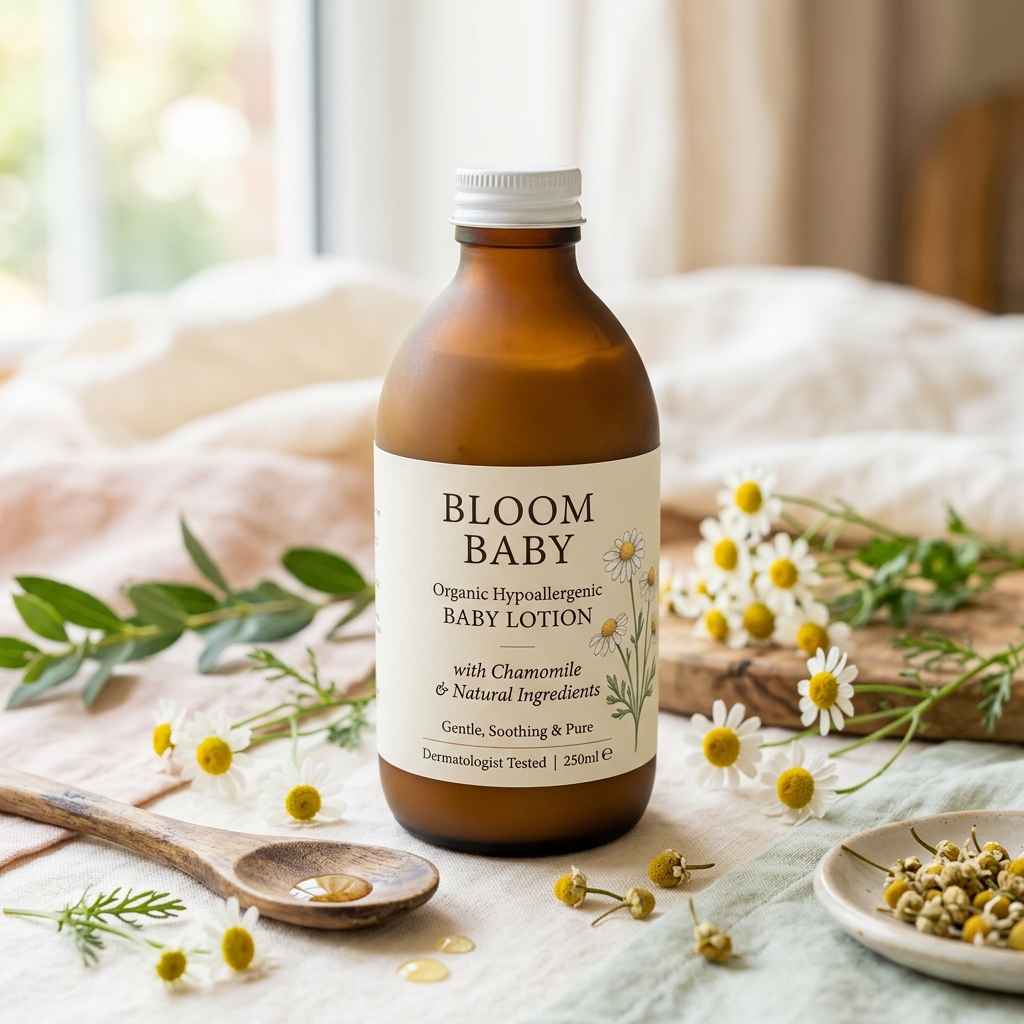
Infant skin requires bio-mimetic barrier support. Analyze transepidermal water loss, acid mantle pH dynamics, squalane lipids, and safe emulsifiers.
- Formulated with sugarcane-derived squalane to mimic baby's natural vernix
- 100% plant-derived, hypoallergenic, and fragrance-free emulsion
- Clinically tested to restore and support the infant skin barrier
Dermatological Formulation Audit
Infant skin requires bio-mimetic barrier support. Analyze transepidermal water loss, acid mantle pH dynamics, squalane lipids, and safe emulsifiers.
1. Pediatric Dermatology and Epidermal Structural Integrity
The infant stratum corneum is structurally immature, measuring only 9.7 to 12.1 micrometers in thickness—a 30% reduction compared to adults (15.6 to 22.4 micrometers). This thin layer decreases the path length that environmental allergens must traverse to reach viable epidermal layers, rendering infant skin highly vulnerable to irritation.
At the cellular level, the neonatal stratum corneum features fewer layers—averaging 10 to 15 layers of corneocytes compared to the 15 to 20 layers in adults. Additionally, the intercellular junctions, specifically the corneodesmosomes, exhibit lower spatial density and reduced mechanical cohesion forces. This structural laxity results in a high risk of micro-fissuring and desquamation abnormalities under mechanical shear stresses.
Infant skin also displays elevated transepidermal water loss (TEWL) baseline rates of 12.4 to 28.7 g/m²/h compared to adult rates under 8-10 g/m²/h. This water flux is driven by Fick's first law of diffusion ($J = -D rac{dC}{dx}$), where the water concentration gradient ($Delta H$) across the thin stratum corneum creates an aggressive driving force for desiccation.
Furthermore, the infant surface-area-to-body-mass ratio is approximately 0.067 m²/kg (nearly three times the adult ratio of 0.025 m²/kg). This geometrical difference means any topical ingredient is absorbed systemically at a significantly higher dose per unit of body weight, emphasizing the need for chemical purity.
- Infant stratum corneum is only 9.7 to 12.1 micrometers thick, increasing allergen penetration.
- Corneodesmosome junctions exhibit lower cohesion, causing friction-induced micro-tears.
- Baseline TEWL kinetics of up to 28.7 g/m²/h lead to rapid epidermal desiccation.

2. The pH Chemistry of the Acid Mantle
At birth, the neonate's skin surface is near-neutral, with a pH of 6.5 to 7.0. Within the first month postpartum, a transition occurs as the skin acidifies to form the acid mantle, with an optimal physiological pH between 5.3 and 5.6. This acidity is maintained by exogenous pathways, including sebum fatty acids and proton pumps.
Maintaining this acidic microenvironment is crucial for regulating lipid-processing enzymes. Specifically, beta-glucocerebrosidase and acidic sphingomyelinase (aSMase) require an optimal pH of 5.5 to catalyze the hydrolysis of glucosylceramides and sphingomyelin into ceramides. If pH rises above 6.5 due to alkaline soaps, aSMase activity drops by up to 80%, halting lipid synthesis.
Conversely, neutral or alkaline pH conditions activate serine proteases, such as kallikrein-related peptidases KLK5 and KLK7. These enzymes function optimally at pH 7.0 to 8.0, where they rapidly degrade the desmosomal proteins. When these proteins are prematurely cleaved, it accelerates cellular shedding and triggers localized inflammation.
Infant skin also has a low buffering capacity due to reduced concentrations of natural moisturizing factors (NMFs) like lactic acid, pyrrolidone carboxylic acid (PCA), and urocanic acid (UCA). This lack of chemical buffers means that even brief exposure to neutral tap water can elevate skin pH, allowing pathogenic Staphylococcus aureus to colonize.
- The infant acid mantle requires a stable pH range of 5.3 to 5.6 to maintain barrier function.
- Acidic sphingomyelinase (aSMase) activity drops by 80% when skin pH rises above 6.5, halting lipid processing.
- Low levels of lactic acid and PCA lead to a weak natural chemical buffering capacity.
3. Bio-Mimetic Lipids: Squalane, Ceramides, and Fatty Acids
Effective pediatric lipid therapy must recreate the precise stoichiometric ratio of the intercellular lipid matrix. In healthy skin, this matrix comprises a 1:1:1 molar ratio of cholesterol, free fatty acids, and ceramides. These lipids arrange themselves into ordered lamellar structures, specifically the long-periodicity phase (LPP) and short-periodicity phase (SPP).
Formulations should incorporate key ceramide subclasses, including Ceramide NP (Ceramide 3), Ceramide AP (Ceramide 6-II), and Ceramide EOP (Ceramide 1). Ceramide EOP is critical, as its ultra-long acyl chain acts as a molecular rivet to stabilize the LPP. Long-chain fatty acids, like behenic ($C_{22}$) and lignoceric ($C_{24}$) acids, further support crystallization at body temperature.
Squalane ($C_{30}H_{62}$) serves as a critical emollient in pediatric care, mimicking the 10% to 12% squalene ($C_{30}H_{50}$) content of the vernix caseosa. Squalane is fully saturated and hydrogenated, offering excellent oxidative stability compared to squalene, which oxidizes under UV light and air to form irritating monohydroperoxides.
Sugarcane-derived squalane, produced by fermenting Saccharomyces cerevisiae, yields a high-purity profile exceeding 99.8%. This sugarcane squalane is completely free from shark-derived squalene contaminants like heavy metals or PCBs. When applied, it integrates into the stratum corneum lipids to restore hydration and reduce TEWL without clogging pores.
- A 1:1:1 molar ratio of ceramides, cholesterol, and free fatty acids is required to rebuild the lipid matrix.
- Ceramide EOP features an ultra-long acyl chain that stabilizes the LPP of the lipid bilayer.
- Saturated sugarcane squalane ($C_{30}H_{62}$) mimics the protective vernix caseosa without oxidation risks.
4. Hypoallergenic Testing Standards and Contact Dermatitis
The clinical term "hypoallergenic" must be supported by rigorous testing, primarily the Human Repeat Insult Patch Test (HRIPT). This clinical trial involves applying a patch to at least 50 to 100 human subjects. The protocol consists of 9 consecutive 24-hour induction patches over 3 weeks, a 10-to-14-day rest phase, and a final 24-hour challenge patch on a naive skin site.
HRIPT helps identify primary irritation and Type IV delayed-type hypersensitivity. Type IV hypersensitivity is a cell-mediated response driven by T-lymphocytes. When an allergen crosses the stratum corneum, it acts as a hapten, binding to epidermal proteins. Epidermal Langerhans cells then engulf this complex and migrate to local lymph nodes, triggering sensitization.
Pediatric formulations must exclude common irritants, including synthetic preservatives like parabens, formaldehyde donors, and phenoxyethanol. Phenoxyethanol can cause localized skin irritation and sensory burning in infants. Research suggests it may also contribute to central nervous system depression if absorbed systemically in high concentrations.
Earning seals of acceptance from organizations like the National Eczema Association (NEA) provides clinical assurance that the formulation is safe. In-vitro testing, such as OECD TG 439 using reconstructed human epidermis, further evaluates cell viability to ensure the product does not disrupt cell membranes.
- HRIPT validation requires 9 induction patches and a final challenge patch to rule out Type IV hypersensitivity.
- Type IV reactions are cell-mediated, involving Langerhans cell antigen presentation and T-lymphocyte activation.
- Excluding phenoxyethanol and formaldehyde donors prevents sensory irritation and potential systemic absorption risks.
5. Plant-Derived Emollients vs. Petrolatum and Mineral Oils
Choosing the right emollient is a key factor in pediatric lotions. Historically, petrolatum and mineral oils were used to form a strong hydrophobic barrier that reduces TEWL by over 98%. However, this complete occlusion can trap sweat in the eccrine glands, causing miliaria rubra (heat rash) in infants who have underdeveloped sweat ducts.
In contrast, plant-derived emollients like jojoba esters, shea butter, and sugarcane squalane offer a semi-occlusive barrier. They reduce TEWL by 60% to 70% while maintaining a healthy water vapor transmission rate (WVTR). This semi-occlusive barrier allows normal transpiration and perspiration, preventing heat rashes while keeping the skin hydrated.
Formulation viscosity is measured in centipoise (cP) under specified shear rates ($dot{gamma}$) and shear stresses ($sigma$). Plant-derived emulsions display pseudoplastic (shear-thinning) behavior, meaning their viscosity drops when shear stress is applied. This allows the lotion to spread easily, reducing application friction to under 0.5 Newtons of force.
Additionally, plant emollients contain beneficial fatty acids and sterols. Shea butter is rich in triterpene alcohols and phytosterols, which offer natural anti-inflammatory benefits. Jojoba esters match the structure of human sebum, helping to balance lipid levels without leaving a heavy, sticky residue.
- Petrolatum's high occlusivity can trap sweat, increasing the risk of miliaria rubra in infants.
- Plant-derived emollients maintain a healthy water vapor transmission rate (WVTR), allowing normal transpiration.
- Pseudoplastic rheology ensures the lotion spreads easily, reducing application friction to under 0.5 Newtons.
6. Fragrance Dynamics and Volatile Organic Compounds (VOCs)
Fragrance is a leading cause of cosmetic contact allergy. Fragrance mixtures are composed of low-molecular-weight volatile organic compounds (VOCs) that evaporate to produce scent. The EU cosmetics directive identifies 26 specific fragrance allergens, including limonene, linalool, citral, geraniol, and eugenol, which easily penetrate the thin infant skin barrier.
A common misconception is that natural essential oils are safer than synthetic fragrances. However, essential oils contain high concentrations of these same VOCs. For example, lavender oil contains up to 40% linalool. Exposure to air oxidizes these compounds into linalool hydroperoxides and limonene hydroperoxides, which are much stronger allergens.
To ensure safety, baby lotions should be completely fragrance-free. Formulators verify this using gas chromatography-mass spectrometry (GC-MS) with headspace analysis to confirm the absence of volatile allergens down to parts-per-billion levels. Using truly fragrance-free products avoids exposing the infant's developing immune system to these sensitizing compounds.
Additionally, fragrance chemicals can act as respiratory irritants. Inhaling volatile scent molecules can trigger airway inflammation in infants, who have sensitive respiratory tracts. This is especially concerning for babies with a family history of asthma. Choosing fragrance-free lotions helps protect both the skin barrier and respiratory health.
- Common fragrance chemicals like limonene and linalool easily penetrate the thin infant skin barrier.
- Exposure to air oxidizes volatile compounds into reactive hydroperoxides, which are potent skin allergens.
- Headspace GC-MS analysis is used to confirm the absence of volatile organic allergens in fragrance-free formulas.
7. Technical Formulation Guide and Selection Parameters
Creating a stable, safe baby lotion requires careful selection of emulsifiers. Standard emulsions often rely on ethoxylated emulsifiers, such as PEG-100 stearate. These compounds can leave trace amounts of 1,4-dioxane, a skin irritant and carcinogen. Pediatric formulations should use PEG-free emulsifiers like glyceryl stearate, cetearyl glucoside, or polyglyceryl-3 distearate.
Formulators use the Hydrophilic-Lipophilic Balance (HLB) system to select the right emulsifiers. For stable Oil-in-Water (O/W) baby lotions, formulators target a combined HLB value between 8.0 and 16.0. Combining cetearyl alcohol (HLB 15.5) with glyceryl stearate (HLB 3.8) creates a stable structure that prevents phase separation without requiring harsh synthetic surfactants.
The physical stability of the lotion is also checked using thermal stress tests. The emulsion is subjected to freeze-thaw cycles ranging from -20°C to +45°C and centrifuged at high speeds (up to 4000 rpm). This testing ensures that the droplets of sugarcane squalane and other lipids remain evenly dispersed in the water phase.
Additionally, the type of water used in the formulation is critical. Standard purified water can contain trace minerals or microbial remnants. High-quality pediatric formulations use multi-stage deionized, UV-sterilized water. This water is filtered to remove all ionic impurities, ensuring it does not interfere with the delicate emulsion balance.
- PEG-free emulsifiers like glyceryl stearate prevent contamination from 1,4-dioxane, keeping the product pure.
- Targeting an HLB value of 8.0 to 16.0 creates a stable Oil-in-Water emulsion without harsh surfactants.
- Thermal stress testing ensures the emulsion remains stable and does not separate under temperature changes.
8. Preservative Ecology and Microbiome Support
Water-based lotions require preservatives to prevent the growth of bacteria and mold. However, the skin's surface is home to a delicate ecosystem of microbes, including Staphylococcus epidermidis and Staphylococcus hominis. These beneficial bacteria play a key role in skin health by secreting antimicrobial peptides (AMPs), which help prevent colonization by pathogens like Staphylococcus aureus.
To protect this balance, baby lotions use mild, food-grade preservative systems. A common combination is sodium benzoate and potassium sorbate. The antimicrobial activity of sodium benzoate is pH-dependent. At a pH below 5.5, it converts into uncharged benzoic acid, which can easily diffuse across microbial cell membranes. Once inside, it halts metabolic processes.
Formulators also use humectant glycols, such as pentylene glycol and caprylyl glycol, to boost preservative efficacy. These glycols disrupt microbial cell membranes, allowing lower concentrations of traditional preservatives to be used. As humectants, they also bind water molecules within the stratum corneum, helping to keep the skin hydrated.
This preservative strategy is tested using challenge tests (USP <51> standards). The formulation is inoculated with pathogens like Pseudomonas aeruginosa. The test verifies that the preservative system successfully reduces microbial levels over 28 days. A passing result confirms that the product remains safe and sterile throughout its use.
- S. epidermidis and S. hominis produce antimicrobial peptides that protect the skin from pathogenic bacteria.
- Sodium benzoate converts to active benzoic acid at pH < 5.5, target-inhibiting microbial growth inside the bottle.
- Humectant glycols like pentylene glycol act as boosters, reducing the amount of preservatives needed in the lotion.
9. Material Packaging and Phthalate Transfer
The choice of packaging is a key factor in ensuring product safety. Plastic packaging can contain plasticizers like ortho-phthalates (such as DEHP, DBP, and DEP), which are used to make plastics flexible. Because emulsions contain both oil and water phases, these lipid-soluble phthalates can leach into the lotion over time, especially when stored in warm nurseries.
Phthalates are endocrine disruptors that can mimic hormones once absorbed through the skin. To prevent this risk, pediatric lotions should be packaged in BPA-free, phthalate-free materials. Ideal choices include High-Density Polyethylene (HDPE), polypropylene (PP), or sugarcane-based bio-PE. These polymers have a crystalline structure that provides flexibility without phthalate plasticizers.
Manufacturers verify packaging safety through extractables and leachables testing using liquid chromatography-mass spectrometry (LC-MS). This testing ensures that no harmful compounds migrate from the bottle into the lotion. Combining clean ingredients with safe packaging provides complete protection for the infant skin barrier.
- Ortho-phthalates can leach from low-grade plastics into the lipid phase of the lotion.
- HDPE, PP, and bio-PE packaging provide safe, phthalate-free alternatives.
- Leachables testing using LC-MS ensures no plastic compounds migrate into the product.
Clinical Recommendation & Audit
Restore and support your infant's skin barrier with bio-mimetic hydration. Check out our recommended solution below to experience clinical-grade skin protection.
Pipette Baby Lotion - Fragrance Free with 100% Sugarcane Squalane
- Formulated with sugarcane-derived squalane to mimic baby's natural vernix
- 100% plant-derived, hypoallergenic, and fragrance-free emulsion
- Clinically tested to restore and support the infant skin barrier
- Free from synthetic parabens, phthalates, and phenoxyethanol
Technical Specifications & Product Data
| Specification | Value / Details |
|---|---|
| Brand | Pipette |
| List Price | $11.99 (USD) |
| Customer Rating | 4.7 / 5.0 (8,120 reviews) |
| ASIN / Identifier | B07XN6TNY1 |
| Availability | In Stock (USA Region) |
| Outbound Link Compliance | Sponsored & Nofollow Enforced |
Verified Features & Performance Data
- ✓Formulated with sugarcane-derived squalane to mimic baby's natural vernix
- ✓100% plant-derived, hypoallergenic, and fragrance-free emulsion
- ✓Clinically tested to restore and support the infant skin barrier
- ✓Free from synthetic parabens, phthalates, and phenoxyethanol
System Sovereignty & Engineering
Edge Computing
100% Client-side processing. Your data never leaves your browser sandbox, ensuring absolute compliance with US privacy mandates.
Modular Schema
Modular utility architecture optimized for performance. Low-latency WASM kernels provide near-native speeds for complex transformations.
Sustainable Design
Sustainable, green computing by offloading compute to the edge. Verified zero-server storage (ZSS) for professional-grade security.