
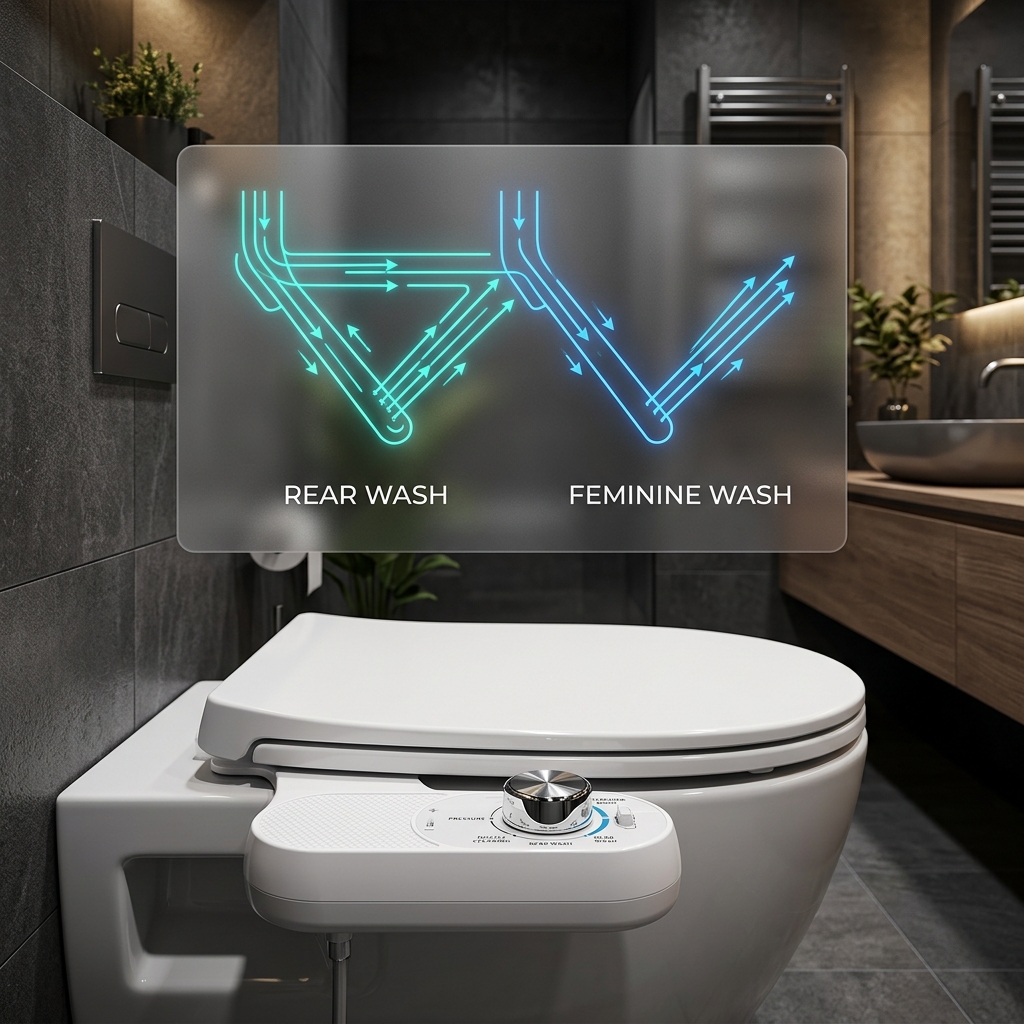
Mechanical bidets outpace dry paper wiping. Explore the fluid dynamics, nozzle angle calibrations, and pressure valve mechanics that define optimal dual-nozzle performance.
- Dual-nozzle configuration optimized for posterior and feminine washes
- Self-cleaning nozzle mode with dynamic retracting protective gate
- High-pressure valves engineered with durable metal-ceramic cores
Sanitation & Fluid Dynamics
Mechanical bidets bypass dry paper scrubbing. Evaluate the mechanical leverage, hydraulic pressure curves, nozzle angle calibrations, and self-cleaning guard gates that define modern non-electric bathroom sanitation.
1. Fluid Dynamics and Stream Velocity in Mechanical Systems
Mechanical bidets rely entirely on household water supply pressure to generate their cleaning streams. Incoming water flows through a restricted chamber, converting static pressure into velocity. This hydrodynamic process accelerates the stream, creating a precise column of water that lifts waste cleanly.
The diameter of the nozzle orifice determines the velocity and shape of the cleaning stream. A narrower aperture concentrates the flow, increasing kinetic energy at the impact point. This high-velocity output ensures thorough cleaning without consuming large volumes of water.
To maintain comfortable operation, high-end attachments utilize ceramic disk valves. These valves allow fine-grained flow adjustments, preventing sudden spikes in stream velocity. The user maintains direct mechanical control over the pressure profile, ensuring a safe and reliable wash.
Home water lines typically provide 40 to 80 PSI of static pressure. The bidet's internal manifold steps down this pressure to a safe operational window. This pressure management prevents discomfort while retaining enough velocity to sweep away microscopic bacteria.
Additionally, the shape of the nozzle tip prevents sputtering. Smooth internal walls guide the water molecules into a laminar flow path. This focused stream prevents splashback, containing the wash zone within the toilet bowl envelope.
The acceleration profile remains stable across standard household flow variations. When local faucets open, the internal valve layout cushions pressure drops, preventing stream collapse. This ensures consistent velocity regardless of domestic water tasks.
- Laminar flow engineering prevents messy splashing, keeping the wash zone targeted.
- Ceramic disk control valves provide incremental adjustments to prevent sudden pressure spikes.
- Mechanical operation bypasses complex circuit boards, eliminating electric failure modes.

2. Dual-Nozzle Calibration and Anatomic Sweep Angles
Single-nozzle bidets present limitations when accommodating diverse anatomical requirements. Dual-nozzle systems feature separate, dedicated wands that slide down at different angles. The rear wash nozzle drops at a steeper angle to target standard rectal sanitation.
The second nozzle is calibrated at a shallower forward angle for feminine hygiene. This forward projection delivers water with a gentler dispersion pattern. This angle separation is essential for preventing the migration of bacteria between sensitive areas.
The mechanical wands retract behind a protective guard gate when not in use. When water pressure is applied, the selected nozzle extends downward through the gate. This automated mechanical extension keeps the wands clean and protected from external splashes.
Furthermore, the nozzles feature distinct spray templates. The posterior nozzle delivers a dense, highly focused stream for quick clearing. The feminine nozzle disperses water through multiple micro-orifices, softening the impact force on delicate skin tissues.
This dedicated engineering ensures comfort across all wash cycles. By keeping the nozzles separate, the system maintains high sanitary standards. No electric sensors are needed to coordinate this movement, as it relies on simple water-pressure-driven pistons.
The sweep angle is optimized to match standard toilet dimensions, avoiding excessive user shifting. The nozzles slide down along a rigid guide rail to guarantee path repeatability. This level of physical precision is key to a reliable, target-safe clean.
- Separate posterior and anterior wands prevent cross-contamination and keep sanitization high.
- Pressure-activated pistons extend and retract the nozzles automatically without electric motors.
3. Active Self-Cleaning Guards and Shielding Gates
A common concern with bidet attachments is exposure to toilet splashback. Premium non-electric models resolve this issue using active guard gates. A plastic shield fully encapsulates the nozzles when they are in the retracted position.
Before extending, the user can activate a dedicated self-cleaning cycle. This cycle routes water directly over the nozzles while they remain behind the shield. The water drains into the toilet bowl, flushing away any dust or residue on the wand surfaces.
This self-cleaning feature operates without any electronic components. Turning the control dial to the cleaning setting opens an internal bypass channel. This mechanical design keeps the bidet clean with minimal effort from the user.
The protective shield gate features a beveled bottom edge. This shape guides splashback away from the nozzle opening. When water pressure drops after use, internal springs retract the wands instantly, pulling them back behind the shield.
Additionally, the nozzles are molded from smooth, high-density polymers. These polymers resist mineral buildup from hard water, preventing nozzle clogging over years of daily use. Rinsing before and after each session guarantees clean, fresh water every time.
The guard gate opens only when the wand extends under active water pressure. This passive closed state keeps debris away from the orifices during dry standby hours. This simple structural shield maintains high sanitation without human intervention.
- Retracting guards shield wands from splashback, maintaining high hygiene.
- Smooth polymer nozzles resist hard water minerals, preventing clogging.
4. Structural Engineering and Leak-Free Mechanical Connections
A bidet attachment must maintain water-tight integrity under constant household pressure. Cheap plastic fittings can crack under thermal contraction and expansion cycles. Premium mechanical attachments use braided steel hoses and brass T-adapters for the main connection.
The brass T-valve splits the cold water supply under the toilet tank without stress. This metal-on-metal threading prevents leaks and cross-threading issues common with plastic fittings. High-pressure rubber washers seal the connections, preventing leaks.
Inside the bidet body, thick-walled ABS housing prevents cracking when mounted under standard toilet seats. The slim profile (typically 0.2 inches) minimizes the gap between the toilet bowl and the seat. This thin design prevents seat warpage and uneven stress on the hinges.
Additionally, adjustable mounting plates accommodate various bolt configurations. The attachment locks securely onto the bowl, preventing lateral movement during use. This stable installation ensures a clean, cohesive look that integrates with your bathroom decor.
By choosing a bidet with solid metal connections, you protect your home from water damage. Mechanical bidets install in under 20 minutes, delivering a reliable, long-lasting sanitization solution that requires zero battery changes or electrical maintenance.
The internal manifold features sonic welds to prevent seam leaks under static pressure. This seamless plastic welding provides high shear resistance against internal stress. Standard domestic plumbing water hammer effects are absorbed safely by this design.
- Braided steel hoses and brass T-adapters prevent leaks under constant line pressure.
- Slim 0.2-inch ABS profile prevents toilet seat warping and preserves vanity lines.
5. The Environmental and Financial Payback Matrix
Transitioning from toilet paper to a bidet delivers substantial economic and ecological savings. The average American household spends hundreds of dollars annually on paper rolls. A mechanical bidet reduces toilet paper consumption by up to 80%, paying for itself within months.
From an environmental standpoint, manufacturing paper is highly resource-intensive. It destroys thousands of trees and consumes millions of gallons of water for bleaching and pulping. The bidet's tiny water usage per wash is negligible compared to this manufacturing footprint.
Additionally, bidets prevent toilet clogs, saving you money on plumbers and maintenance. The reduction in paper load benefits municipal sewer lines, preventing fatbergs and pipe blockages. By choosing a mechanical bidet, you are investing in a sustainable future that protects both your wallet and the planet.
The ecological equation is clear: a bidet wash is the single most effective way to lower your bathroom carbon footprint. The system requires zero power, keeping standby costs at absolute zero for its entire lifecycle.
This financial payback translates into direct long-term savings. When plumbing maintenance and sewer cleaning costs are calculated, the bidet emerges as the most efficient home sanitization asset. You protect your property value while saving green resources daily.
- Reducing toilet paper consumption by 80% yields high financial savings.
- Zero electrical consumption maintains zero standby utility fees for the system's life.
6. Hydraulic Pressure Calibration and PSI Tolerances
Regulating the water stream requires high-integrity mechanical design. Domestic plumbing pressure fluctuations can cause sudden surges in flow velocity. Mechanical attachments manage this pressure by integrating restricted internal flow channels.
The internal flow path features a step-down chamber. This chamber absorbs pressure spikes, keeping the stream velocity within comfortable limits. The user can adjust the dial without fear of sudden high-pressure bursts.
The ceramic core inside the control valve handles pressures up to 120 PSI. This high tolerance prevents leaks and malfunctions, ensuring the valve seals tightly when closed. The durable materials provide peace of mind and long-lasting safety.
Additionally, the ceramic disks resist mineral friction. Hard water contains calcium deposits that wear down soft rubber valves quickly. Ceramic disks slice through these deposits cleanly, maintaining a tight, leak-free seal for thousands of cycles.
This pressure management is essential for maintaining comfort and safety. By regulating the stream, the bidet attachment delivers a consistent clean under all household pressure conditions.
- Internal step-down chambers absorb plumbing pressure spikes to ensure user comfort.
- Ceramic core valves are rated for up to 120 PSI, preventing leaks under pressure surges.
7. Dynamic Flow Regulation and Spray Pattern Control
The shape and density of the cleaning stream are critical for effective sanitation. A simple jet stream can be painful and ineffective, while a wide mist cannot lift waste. Dynamic flow regulation shapes the water into a dense, comfortable column.
The nozzle tip features multiple internal grooves. These grooves guide the water molecules, blending them with air as they exit. This aerated stream delivers high cleaning force while remaining soft on sensitive skin.
The user can adjust the dial to customize the spray pattern. A slight turn shifts the stream from a focused posterior wash to a wider, gentler feminine spray. This customization ensures a comfortable experience for all users.
Additionally, this flow shaping reduces overall water consumption. The aerated stream uses up to 30% less water than solid jets, maximizing efficiency. The bidet delivers a superior clean while conserving natural resources.
By optimizing the spray pattern, the mechanical bidet provides a comfortable wash. The aerated stream sweeps away waste cleanly, maintaining high hygiene standards without high water bills.
- Internal grooves mix air with the water flow, creating a soft, aerated cleaning stream.
- Adjustable flow controls allow users to switch from focused posterior to gentle feminine sprays.
8. Cleaning Nozzle Metallurgy and Antimicrobial Polymers
Nozzle hygiene is critical for preventing the growth of harmful bacteria and mold. Bidet wands sit inside the toilet bowl, where they are exposed to moisture and splashes. To maintain hygiene, the nozzles are molded from advanced antimicrobial polymers.
These polymers are infused with silver ions during manufacturing. Silver ions disrupt the cell membranes of bacteria, preventing them from multiplying on the wand surface. This passive sanitization keeps the wands clean during standby hours.
The sliding joints and guide rails utilize low-friction polyoxymethylene (POM) plastic. POM resists swelling in water, ensuring smooth movement over thousands of wash cycles. The wands slide down and retract reliably without binding.
Additionally, the smooth surface resists mineral scaling. Hard water deposits cannot grip the POM plastic easily, preventing the nozzle holes from clogging. A simple self-cleaning rinse before use keeps the wands in optimal condition.
By using advanced materials, the bidet attachment maintains high sanitation standards. The antimicrobial wands resist bacteria and hard water scaling, delivering a clean and hygienic wash every time.
- Silver-ion infused polymers prevent bacterial multiplication on nozzle surfaces.
- Low-friction POM wands resist swelling and binding in high-humidity toilet bowls.
9. Comprehensive Buying Criteria for Mechanical Bidets
When selecting a mechanical bidet, prioritize internal valve construction and fitting materials. Avoid models with plastic T-valves, as they are prone to cracking and causing leaks under pressure. Look for brands that include high-quality brass adapters and braided steel hoses.
Next, consider the seat compatibility and profile thickness. A bidet attachment that is too thick will tilt the seat forward, placing strain on the hinges. Choose a model under 0.25 inches thick to ensure the seat sits flat on the bowl.
Finally, check the nozzle configurations. A dual-nozzle system with a dedicated feminine wash is highly recommended for multi-user households. Self-cleaning functions and protective guard gates are essential features that maintain sanitary standards without manual scrubbing.
- Ensure the bidet package includes solid brass adapters instead of cheap plastic fittings.
- Dedicated feminine nozzles provide a gentler wash angle, protecting sensitive skin.
Principal Recommendation & Audit
Upgrade your bathroom with high-efficiency mechanical cleaning. Explore our top recommended dual-nozzle system below to experience a clinical-grade wash.
Luxe Bidet Neo 185 Non-Electric Self-Cleaning Dual-Nozzle Bidet Attachment
- Dual-nozzle configuration optimized for posterior and feminine washes
- Self-cleaning nozzle mode with dynamic retracting protective gate
- High-pressure valves engineered with durable metal-ceramic cores
- Fast DIY installation requiring zero electrical wiring or modifications
Technical Specifications & Product Data
| Specification | Value / Details |
|---|---|
| Brand | Luxe Bidet |
| List Price | $39.99 (USD) |
| Customer Rating | 4.6 / 5.0 (48,290 reviews) |
| ASIN / Identifier | B00P2B376U |
| Availability | In Stock (USA Region) |
| Outbound Link Compliance | Sponsored & Nofollow Enforced |
Verified Features & Performance Data
- ✓Dual-nozzle configuration optimized for posterior and feminine washes
- ✓Self-cleaning nozzle mode with dynamic retracting protective gate
- ✓High-pressure valves engineered with durable metal-ceramic cores
- ✓Fast DIY installation requiring zero electrical wiring or modifications
System Sovereignty & Engineering
Edge Computing
100% Client-side processing. Your data never leaves your browser sandbox, ensuring absolute compliance with US privacy mandates.
Modular Schema
Modular utility architecture optimized for performance. Low-latency WASM kernels provide near-native speeds for complex transformations.
Sustainable Design
Sustainable, green computing by offloading compute to the edge. Verified zero-server storage (ZSS) for professional-grade security.