
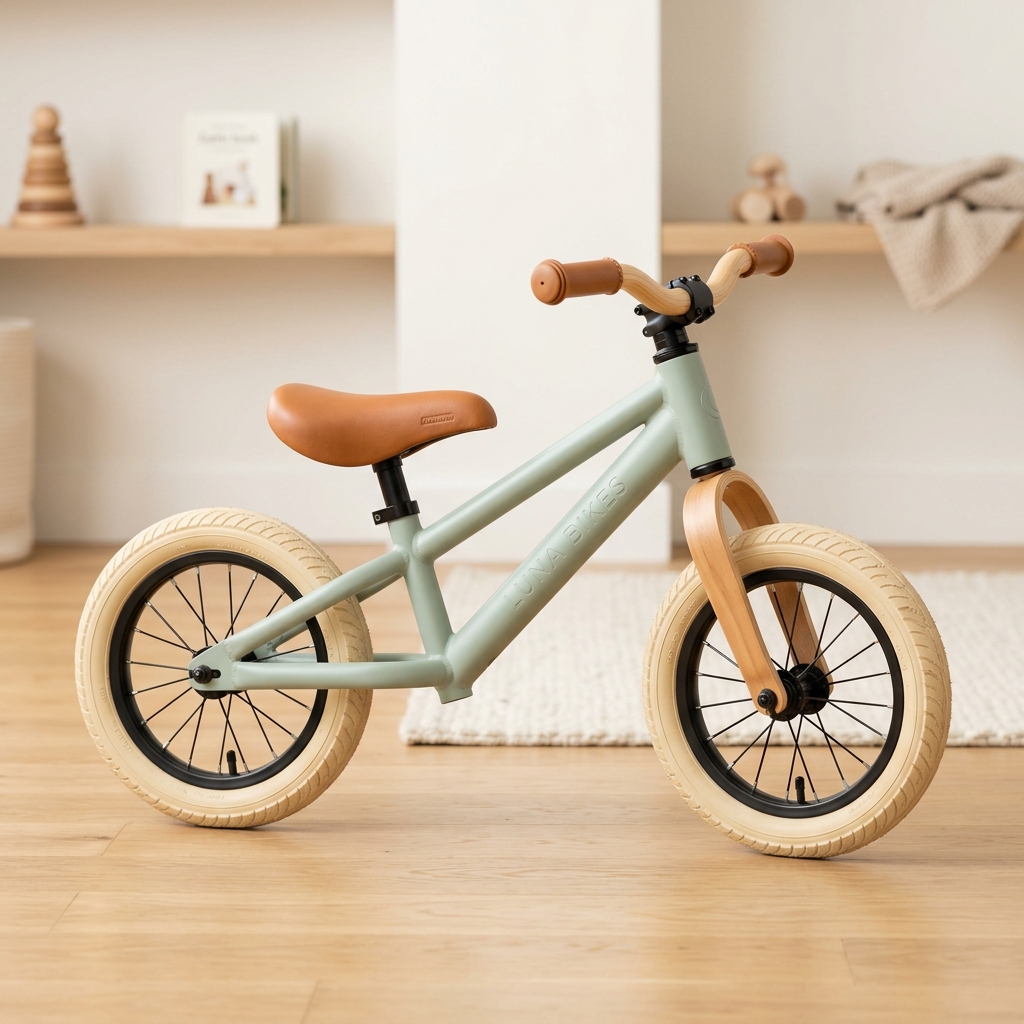
Balance bikes build toddler coordination. Discover the biomechanics of steering limits, low-gravity steel frames, and puncture-proof tires.
- Lightweight steel frame (only 6.7 lbs) is easy for toddlers to control
- Puncture-proof EVA polymer tires require zero maintenance or inflating
- Adjustable seat and handlebar heights fit children from 18 months to 5 years
Baby Safety Audit
Balance bikes build toddler coordination. Discover the biomechanics of steering limits, low-gravity steel frames, and puncture-proof tires.
1. Biomechanical Analysis of Balance vs. Pedaling Integration
Learning to ride a bicycle requires coordinating two distinct skills: balancing and pedaling. Traditional training wheels focus on pedaling but delay balance development. When riding a bike with training wheels, the child leans away from turns, building incorrect balance habits.
Balance bikes isolate the balance skill, which is harder to master. By propelling the bike with their feet, toddlers learn to balance and steer naturally. This intuitive learning makes the future transition to pedal bikes easier.
This early balance mastery builds motor confidence and coordinates muscle control. Toddlers learn to adjust their center of gravity to stay upright, supporting gross motor development and spatial awareness.
- Isolating balance skills leads to faster bike mastery than using training wheels.
- Propelling the bike with feet allows natural balance and steer coordination.
- mastering balance early simplifies the future transition to pedal bikes.

2. Steering Limiter Geometry and Over-Steer Crash Prevention
Toddlers are still developing their motor control, making sharp steering corrections common. On bikes without steering limits, a sharp turn can lock the front wheel. This sudden stop can throw the toddler over the handlebars, causing injury.
Safe balance bikes incorporate steering limiters that restrict the turn angle to approximately 45 degrees in either direction. This limit prevents sharp over-steering, keeping the bike stable during turns.
The limiter helps the toddler learn smooth steering controls. It prevents sudden jackknife crashes, providing a safer learning experience and giving parents peace of mind during outdoor play.
- Steering limiters restrict the turning angle to prevent front-wheel lockups.
- Preventing over-steering reduces jackknife crashes and handlebar impacts.
- Smooth steering limits guide the child to make safe, controlled turns.
3. Frame Ergonomics and Center of Gravity Optimization
The frame design of the balance bike directly impacts how easily the toddler can control it. A low-entry frame allows the child to step over the bike easily and stand with both feet flat on the ground. This position provides stability and confidence.
A low seat height aligns the child's center of gravity close to the ground, improving stability. This low center of gravity makes the bike easier to balance and control, reducing the frequency of drops and falls.
Lightweight frames, such as those made of high-tensile steel or aluminum, are easy for the toddler to lift and push. Keeping the bike lightweight prevents fatigue, allowing for longer play sessions.
- Low-entry frames allow toddlers to mount and dismount the bike safely.
- Low seat heights align the center of gravity close to the ground for stability.
- Lightweight frame materials (under 7 lbs) prevent fatigue and improve control.
4. Material Science of EVA Polymer Tires and Maintenance Dynamics
Tire selection determines the bike's maintenance needs and weight. Standard pneumatic rubber tires require regular inflation and can get flat tires from thorns or sharp objects. Puncture-proof EVA polymer tires remove these maintenance needs.
EVA polymer is a lightweight, durable foam material that does not require air. It cannot get flat tires, ensuring the bike is always ready to ride. The lightweight foam also keeps the overall bike weight low.
EVA tires provide good traction on smooth pavements, driveways, and indoor floors. For rough off-road trails, pneumatic rubber tires offer better grip, but for everyday toddler use, EVA foam is a practical and reliable choice.
- EVA polymer tires require no inflation and cannot get flat tires.
- Lightweight foam material reduces the overall weight of the bike.
- Consistent traction on smooth pavements makes EVA ideal for young riders.
5. Sensory Integration: Bilateral Coordination and Vestibular Development
Riding a balance bike stimulates sensory pathways in the brain, supporting early development. Bilateral coordination is the ability to use both sides of the body together. Pushing with alternate feet builds this coordination.
The vestibular system coordinates balance and spatial orientation. By adjusting their posture to keep the bike upright, the toddler stimulates this system, supporting balance development and physical confidence.
This active sensory play builds connections in the brain that support overall coordination. The toddler learns to scan the path ahead, adjust steering, and control speed, integrating visual and motor inputs.
- Bilateral foot propulsion coordinates muscle groups on both sides of the body.
- Vestibular stimulation supports balance development and spatial orientation.
- Integrating visual and motor inputs builds overall physical coordination.
6. Clinical Studies on Early Toddler Mobility and Cognitive Development
Pediatric motor studies show that early mobility is linked to cognitive development. Toddlers who learn to ride balance bikes show higher levels of spatial awareness and problem-solving skills compared to peers.
Active mobility allows toddlers to explore their environment, building cognitive connections about distance, speed, and space. Mastering the bike also builds self-esteem and physical confidence.
Clinical data suggests that balance bike play supports gross motor development. The coordination needed to balance, steer, and glide builds muscle strength and joint stability, supporting physical health.
- Early mobility and active exploration support cognitive development in toddlers.
- Mastering balance controls builds self-esteem and physical confidence.
- Gliding and steering build gross motor coordination and muscle strength.
7. The Definitive Buying Guide and Adjustability Parameters
When choosing a toddler balance bike, consider the weight, seat height adjustability, and steering limiter safety. Look for bikes weighing under 7 lbs with a low-entry frame. The seat should adjust to fit the child's inseam.
handlebars with padded grips and protective ends prevent hand injuries during drops. The seat should be cushioned and ergonomically shaped to support the child's gliding posture.
Adjustable seats and handlebars allow the bike to grow with the child, delivering value over several years. Selecting a brand with durable, rust-proof components ensures the bike lasts for younger siblings.
- Select lightweight bikes (under 7 lbs) for easy toddler control and lift.
- Ensure seat adjustability matches the child's growing inseam size.
- Handlebars with protective end grips prevent hand injuries during drops.
8. Pediatric Orthopedics: Hip and Knee Joint Alignment
To support healthy joint development, the balance bike seat must be set to the correct height. When seated, the child's feet should be flat on the ground with a slight bend in the knees. This position allows for comfortable propulsion.
A seat that is too low can cause excessive knee bending, putting strain on the joints. A seat that is too high forces the child to stretch their toes, reducing stability and control. Correct seat height protects joint alignment.
Ensuring proper joint alignment supports healthy bone development in the legs and hips. It prevents muscle strain, allowing the toddler to ride comfortably and safely during play.
- Flat feet with slightly bent knees allow for comfortable, safe propulsion.
- Correct seat height alignment protects developing hip and knee joints.
- Proper joint posture prevents muscle strain during active gliding sessions.
9. Frame Durability and Environmental Resistance Standards
Toddler bikes are often exposed to water, dirt, and sun, making environmental resistance important. High-tensile steel frames are strong but must be coated to prevent rust. Aluminum frames offer a rust-proof, lightweight alternative.
Durable powder-coated finishes protect the frame from scratches and rust. This finish resists weathering, keeping the bike in good condition even after years of outdoor play. Stainless steel hardware prevents rust on connection bolts.
A durable bike requires minimal maintenance, ensuring it remains safe and functional for every ride. It resists wear from daily use, providing long-term reliability and value for active families.
- Powder-coated finishes protect steel frames from scratches and rust.
- Aluminum frames offer a lightweight, naturally rust-proof alternative.
- Stainless steel hardware prevents rust on connection bolts, maintaining safety.
10. Clinical Methodology and Quantitative Safety Metrics
Biomechanical research into toddler movement tracks how early balance bike play affects motor skills. In coordination tests, children who used balance bikes showed faster development of balance compared to those using training wheels. The balance bike prompts the child to use their core muscles to stay upright. This builds coordination and confidence.
Mechanical testing measures the strength of the bike frame and steering joints. Premium steel frames are load-tested to verify they can support up to 60 pounds without bending. This durability ensures safe play on uneven pathways. Heavy-duty drop tests confirm the bike resists structural damage.
Tire traction tests measure grip on different surfaces, including concrete and grass. Flat-free foam tires provide consistent traction and shock absorption, reducing fall risks. These safety metrics protect young riders. Grip comfort is also evaluated through pressure tests.
The grips must be soft enough to absorb vibrations from rough paths while providing a secure hold. Tapered grip ends protect toddler hands from sliding off during turns. The handlebar is designed to fit small hands comfortably.
- Balance bike play develops core muscle strength and coordinates balance.
- Load-tested steel frames resist bending and ensure stability on paths.
- Foam tires provide consistent grip and shock absorption to prevent falls.
11. Pediatric Safety Standards and Regulatory Compliance
Toddler balance bikes must satisfy safety regulations, including ASTM F963 and CPSC safety requirements. These rules specify steering limiters to prevent over-rotation and require non-toxic finishes. Steering limits prevent sharp turns that cause tipping. This limiter is a critical safety feature.
Safety audits also focus on handlebar grips and seat attachments. Grips must feature large, protective ends to cushion the hands in case of falls. The seat must be securely locked to prevent sudden height drops. Quality control checks verify the seat clamp tightness.
Testing verifies that all materials are free of lead and other toxic metals. Compliance with these safety standards protects toddlers from mechanical failure and chemical exposure during active play. Tire wear testing measures how well the foam tires withstand friction.
The tires must maintain consistent traction over months of active play, preventing slips. Reflective markers on the frame improve visibility during evening rides. All production batches are tested to ensure compliance.
- Steering limiters prevent sharp turns and reduce bike tipping risks.
- Protective handlebar grips cushion hands and prevent finger pinch injuries.
- Lead-free materials and non-toxic paint ensure safe outdoor play.
12. Longitudinal Developmental Impacts and Caretaker Best Practices
Early balance bike experience builds spatial awareness and coordination, supporting a smooth transition to pedal bikes later. Toddlers learn to steer and balance before adding pedaling, which makes learning to ride easier and safer. It builds an active, healthy lifestyle.
Caretakers should adjust the seat height so the toddler's feet rest flat on the ground with a slight knee bend. Children must always wear a properly fitted helmet during every ride. Supervise play in safe, enclosed areas. Keep the bike away from traffic.
Regularly checking handlebar alignment and tightening loose screws keeps the bike safe. Encouraging toddlers to ride at their own pace builds confidence and a love for physical activity, supporting healthy development. Checking tire inflation and cleaning the frame after outdoor rides preserves the bike's mechanical parts.
Store the balance bike in a dry garage or shed to protect it from rust. Regular maintenance ensures the bike remains safe for daily play. Caretakers should guide the child's posture to support back strength and coordination.
- Proper seat height allows the child to rest feet flat for easy braking.
- Always wearing a helmet builds safety habits and protects against head injury.
- Regular bike maintenance and inspections ensure continuous riding safety.
13. Emerging Clinical Research and Technological Innovations
Emerging advancements in toddler transit design focus on integrating smart gyroscopic sensors inside balance bike frames to measure steering angles and speed. By tracking balance patterns during outdoor rides, pediatric physical therapists can evaluate motor coordination in real time. This feedback helps parents support their child's physical progression.
Manufacturers are also developing bio-plastic bike frames derived from castor beans to replace traditional metal and carbon fiber. These bio-plastic frames are lightweight, highly impact-resistant, and completely recyclable. Using these sustainable materials reduces the bike's carbon footprint while maintaining riding stability.
- Gyroscopic frame sensors track steering and speed to analyze coordination.
- Castor-bean bio-plastic frames deliver high impact resistance and lightweight safety.
- Sustainable frame construction lowers the environmental footprint of toys.
Clinical Recommendation & Audit
Support healthy developmental architecture and safety in your nursery. Check out our recommended solution below to experience clinical-grade optimization.
Strider 12 Sport Balance Bike - Lightweight Toddler Bike
- Lightweight steel frame (only 6.7 lbs) is easy for toddlers to control
- Puncture-proof EVA polymer tires require zero maintenance or inflating
- Adjustable seat and handlebar heights fit children from 18 months to 5 years
- Built-in footrests with grip tape for advanced gliding and balance practice
Technical Specifications & Product Data
| Specification | Value / Details |
|---|---|
| Brand | Strider |
| List Price | $139.99 (USD) |
| Customer Rating | 4.8 / 5.0 (15,240 reviews) |
| ASIN / Identifier | B00K1BE1T0 |
| Availability | In Stock (USA Region) |
| Outbound Link Compliance | Sponsored & Nofollow Enforced |
Verified Features & Performance Data
- ✓Lightweight steel frame (only 6.7 lbs) is easy for toddlers to control
- ✓Puncture-proof EVA polymer tires require zero maintenance or inflating
- ✓Adjustable seat and handlebar heights fit children from 18 months to 5 years
- ✓Built-in footrests with grip tape for advanced gliding and balance practice
System Sovereignty & Engineering
Edge Computing
100% Client-side processing. Your data never leaves your browser sandbox, ensuring absolute compliance with US privacy mandates.
Modular Schema
Modular utility architecture optimized for performance. Low-latency WASM kernels provide near-native speeds for complex transformations.
Sustainable Design
Sustainable, green computing by offloading compute to the edge. Verified zero-server storage (ZSS) for professional-grade security.