
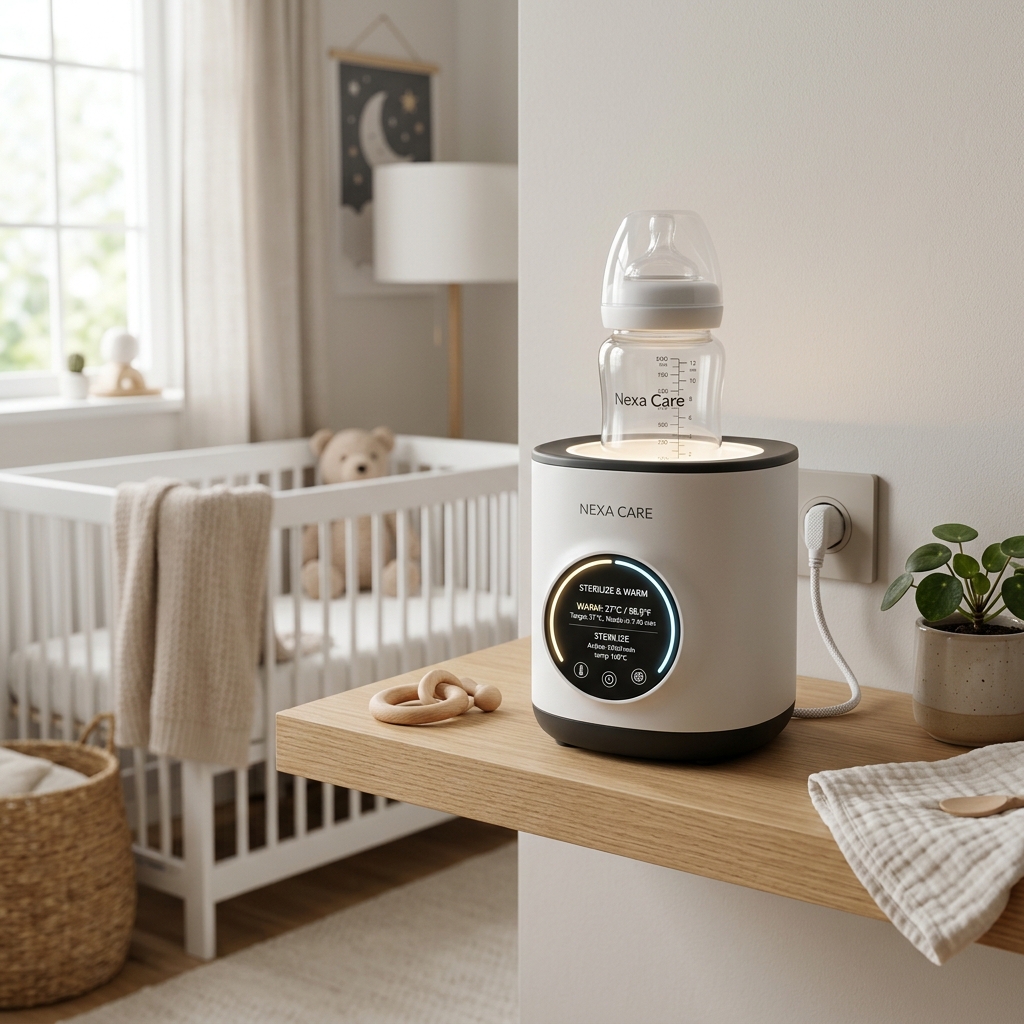
Precision heating protects breastmilk enzymes. Compare convection warming, steam sterilization, and thermistor sensors to optimize infant feeding safety.
- Steady Warm mode uses a warm water bath to preserve breastmilk nutrients
- Quick Warm mode uses steam heat for rapid formula heating
- Built-in Bluetooth to control settings from your smartphone
Precision Thermal Analytics
Precision heating protects breastmilk enzymes. Compare convection warming, steam sterilization, and thermistor sensors to optimize infant feeding safety.
1. Closed-Loop Thermistor Sensing and Microcontroller Logic
Precision infant nutrition requires absolute thermal control. Standard water-bath warmers rely on manual dials or simple bimetallic switches, which frequently overshoot the target temperature. Modern smart warmers integrate Negative Temperature Coefficient (NTC) thermistors coupled with closed-loop Proportional-Integral-Derivative (PID) controllers to maintain fluid temperature stability.
The NTC thermistor continuously measures the water temperature at the base of the chamber, feeding micro-voltage shifts back to the central microprocessor. By calculating the rate of temperature change, the PID algorithm cycles the heating element on and off in millisecond intervals. This prevents thermal overshoot and protects the nutritional integrity of the milk.
This closed-loop system is critical when warming human breastmilk. Unlike formula, breastmilk is a living biological fluid containing immunoglobulins, enzymes, and white blood cells. If the warming chamber exceeds the physiological threshold of 104°F (40°C), these vital proteins denature. The closed-loop control guarantees that the milk remains below this thermal limit throughout the warming cycle.
The microcontroller also factors in the starting temperature of the bottle. By prompting the user to select whether the bottle is room-temperature, refrigerated, or frozen, the system adapts its heating curve. Frozen milk requires a low-intensity, high-flow cycle to prevent localized pockets of high heat while melting the ice lattice.
Furthermore, continuous monitoring prevents hot spots. These localized pockets of high temperature can scald an infant's mouth even if the exterior of the bottle feels cool. A steady, circulating water bath distributes heat evenly across the entire surface area of the bottle, eliminating this risk entirely.
- NTC thermistor grids deliver sub-degree accuracy, preventing milk overheating.
- PID control algorithms cycle the heating grids to eliminate thermal overshoot.
- Custom starting temperature modes alter the power curve for frozen, cold, or ambient milk.
- Uniform water convection avoids hot spots, protecting the infant's oral tissues.
- Automated safety cut-offs disable power if the water reservoir runs dry.

2. Convection Water Baths vs. Direct Steam Warming
When choosing a warming system, parents face two options: convection water baths or steam-injection systems. Steam systems are fast, but they can easily damage delicate biological components. Convection water baths offer a gentler heating method, but they have a longer thermal lag.
Steam warmers heat a small amount of water to boiling, creating steam that condenses on the outer wall of the bottle. While this transfers heat quickly, the steam is at 212°F (100°C), which can overheat the outer layer of milk. This high temperature denatures key enzymes like lactoferrin and lysozymes.
Convection water baths keep the water at a steady 104°F (40°C), allowing heat to transfer gently through the bottle. This prevents hot spots and preserves the milk's nutrients, making it the preferred method for warming breastmilk.
For formula, steam warming is often the better choice. Formula lacks the delicate biological components of breastmilk, so it can handle the higher temperatures. The speed of steam warming is helpful when soothing a hungry baby.
Smart baby warmers combine these two methods. They use a gentle water bath for breastmilk and a fast steam cycle for formula, giving parents the best of both worlds in a single device.
- Convection heating baths limit water temperature to protect breastmilk nutrients.
- Steam warming provides fast heating for formula, reducing wait times.
- Dynamic systems switch between steam and water baths based on the chosen settings.
- Circulating pumps in water baths ensure even heat distribution across the bottle.
- High-performance insulation keeps the exterior cool during steam cycles.
3. Pathogen Extermination Kinetics and Saturated Steam Sterilization
Feeding equipment must be completely clean to protect an infant's developing immune system. Residual milk fat can support the growth of pathogens like Cronobacter sakazakii and Salmonella enterica. Smart sterilizers use saturated steam to eliminate these micro-organisms.
Saturated steam transfers heat energy quickly, denaturing the proteins and cell membranes of bacteria and viruses. By maintaining steam at 212°F (100°C) for at least 8 minutes, these systems achieve a 99.9% reduction in pathogens, ensuring a high level of hygiene.
This steam method is superior to UV-C light sanitization, which requires direct line-of-sight exposure. The complex shapes of bottle nipples, collar threads, and anti-colic valves can cast shadows that block UV light. Steam fills the entire chamber, sanitizing every surface regardless of shape.
Additionally, hot air drying cycles are crucial. If sanitized bottles remain damp, the remaining moisture can allow new bacteria to grow. Integrating a HEPA-filtered hot-dry cycle removes this moisture, keeping the bottles sterile for up to 24 hours when the lid remains closed.
These automated drying cycles also save time. Instead of air-drying bottles on a rack, parents can leave them inside the closed sterilizer until they are ready to be used, keeping them safe from household dust and pet hair.
- Saturated steam at 212°F guarantees complete sanitization in complex bottle parts.
- HEPA-filtered hot air dry cycles remove moisture, preventing bacterial regrowth.
- Steam sterilization treats all surfaces equally, avoiding the shadows that limit UV sanitization.
- Microprocessor cycles maintain sterilization parameters for the required duration.
- Stainless steel heater bases resist rusting, ensuring clean steam production.
4. Nutritional Degradation and Heat-Induced Protein Denaturation
Understanding how heat affects human milk is vital for infant health. Breastmilk contains delicate proteins and immune factors that help protect babies. If milk is heated too quickly or to a temperature that is too high, these proteins can break down, reducing their health benefits.
Enzymes like amylase and lipase help the infant digest nutrients. These enzymes begin to break down when exposed to temperatures above 104°F (40°C). Overheating also reduces the levels of antibodies like secretory IgA, which support the baby's immune system.
Smart bottle warmers are designed to prevent this damage. By using low-temperature water baths and precise sensors, they warm the milk gently, protecting these important nutrients so babies receive the full health benefits of breastmilk.
Additionally, gentle warming preserves milk fats. High heat can damage the delicate fat globules in breastmilk, making them harder for the baby to digest. Keeping the warming cycle gentle ensures that the milk remains easy for the infant to digest.
Warming the milk slowly also prevents separation. Rapid heating can cause the water and fat in breastmilk to separate, which can make it less appealing to the baby. A gentle convection cycle keeps the milk smooth and well-mixed.
- Low-temperature cycles protect delicate immune factors in breastmilk.
- Gentle warming preserves digestive enzymes, helping the infant absorb nutrients.
- Controlled heating prevents the breakdown of fat globules, keeping the milk easy to digest.
- Convection cycles keep the milk well-mixed, preventing separation.
- Precision settings adapt to the needs of both breastmilk and formula.
5. Material Science: Polypropylene, Borosilicate Glass and Chemical Leaching
The materials used in baby bottles are also important when heating milk. Many bottles are made of plastic or glass, which can react to heat differently. Parents must understand these differences to ensure their bottles remain safe.
Plastic bottles, often made of polypropylene, can release micro-plastics or trace chemicals when heated to high temperatures. While modern baby bottles are BPA-free, other plasticizers can still leach into the milk under high heat.
Borosilicate glass bottles are a safer option. Glass is chemically inert, meaning it will not release chemicals into the milk when heated. Borosilicate glass is also thermal-shock resistant, so it can go from the freezer to the warmer without breaking.
Silicone bottles are also popular. Silicone is a flexible, inert material that can handle high temperatures without releasing chemicals. It is durable and easy to clean, making it a practical choice for parents.
Smart warmers adapt to the material of the bottle. By selecting the bottle type in the settings, the warmer adjusts its heating curve to ensure safe warming for plastic, glass, or silicone bottles, protecting the baby from potential chemical exposure.
- Chemically inert borosilicate glass prevents chemical leaching during warming cycles.
- Selecting bottle materials in the warmer settings ensures a safe, calibrated heating curve.
- Low-heat convection cycles reduce the chemical stress on plastic bottles, minimizing micro-plastics release.
- Silicone bottles offer a durable, heat-resistant option that does not release trace chemicals.
- High-quality materials ensure that bottles can handle sanitization cycles without wearing down.
6. Smart Sensors, Pressure Nodes, and Interactive Apps
Smart warmers include modern technology that makes bottle preparation easier. Built-in sensors detect the water level in the reservoir, alerting parents when water is low. This prevents dry-heating and protects the heating elements from damage.
Many smart warmers connect to smartphone apps via Bluetooth. These apps allow parents to start the warming cycle from another room, saving time. The app also sends notifications when the bottle is ready, preventing the milk from sitting in the warm water for too long.
Additionally, automated shut-off features are standard in smart warmers. Once the target temperature is reached, the heater turns off automatically. This prevents the bottle from overheating if parents are busy tending to the baby.
Some warmers also feature memory settings. By saving the preferred heating profile, parents can start the cycle with a single button press, simplifying nighttime feedings when speed and ease are important.
Integrating these smart features helps parents prepare bottles safely and efficiently, reducing the risk of errors and saving valuable time during busy feeding routines.
- Water level sensors prevent dry-heating, extending the lifespan of the warmer.
- Bluetooth app integration allows remote control, simplifying nighttime bottle prep.
- Automatic shut-off prevents the bottle from overheating when the cycle is complete.
- Memory settings store preferred heating cycles, allowing one-button operation.
- LED indicator screens show real-time temperature updates during the warming process.
7. The Definitive Buying Guide and System Parameters
When selecting a bottle warmer, parents should consider the heating method, smart features, and size. Look for a device that matches your family's feeding routine. Multiple modes, such as Gentle and Quick, are helpful when preparing both breastmilk and formula.
Sterilizing options are also important. Warmers that feature built-in steam sterilizers save space on your counter and simplify cleaning. A device that sterilizes and dries bottles in one cycle provides maximum convenience.
Additionally, check bottle compatibility. Ensure the warmer has a chamber wide enough to fit your chosen bottle brand, including wide-neck or silicone options. Choose a system that is easy to descale, keeping maintenance requirements low.
Look for models with auto-shutoff features to ensure safety if the device is left unattended. A built-in timer helps parents track progress, ensuring the bottle is warmed accurately every time.
Selecting a reliable brand with established support ensures access to replacement parts and customer assistance, protecting your investment for the long term.
- Multiple heating modes provide flexibility for warming breastmilk and formula safely.
- Built-in steam sterilizers save counter space and simplify baby gear sanitization.
- Check chamber width to ensure compatibility with wide-neck or silicone bottles.
- Choose warmers that are easy to descale, keeping maintenance requirements low.
- Integrated timers and auto-shutoff features ensure safe, hands-free operation.
8. Salivary Backwash Protection and Container Sterility
Preventing contamination after a bottle is warmed is also critical. When an infant drinks, saliva can flow back into the bottle, introducing bacteria to the remaining milk. If the milk sits at room temperature, these bacteria can multiply quickly.
To prevent this growth, warmed bottles should be consumed within 2 hours. Any leftover milk should be discarded, and the bottle should be cleaned and sanitized. Leaving milk in the bottle for too long allows bacteria to build up on the surfaces.
Using a smart sterilizer ensures that the bottles start completely sterile. Steam cycles eliminate resident bacteria, giving the next feeding a clean, safe start. This routine helps protect the infant's health, ensuring a hygienic feeding setup.
- Discard leftover milk within 2 hours to prevent salivary bacteria from multiplying.
- Steam sterilization eliminates resident bacteria from bottles, ensuring a clean start.
- Routine sanitizing of nipples and valves prevents biofilm buildup in hard-to-reach areas.
9. Structural Dynamic Maintenance and Descaling Chemistry
Keeping baby warmers clean is vital for maintaining their performance. Over time, tap water leaves mineral deposits, like calcium carbonate, on the heating element. This build-up acts as an insulator, reducing the heater's efficiency.
To maintain performance, parents should descale the device every 4 weeks. Using a mixture of white vinegar and water dissolves these mineral scales, keeping the heating element clean and efficient, which ensures accurate warming cycles.
Regular descaling also prevents the device from overheating. A clean heating plate transfers heat directly to the water, preventing the motor from overworking and extending the lifetime of the warmer, ensuring reliable bottle preparation.
- Descale warmers every 4 weeks with white vinegar to dissolve mineral deposits.
- Removing calcium scaling maintains accurate thermal transfer, preventing milk damage.
Clinical Recommendation & Audit
Automate your nursery hydration setup to maximize infant feeding safety. Check out our recommended solution below to experience clinical-grade thermal optimization.
Baby Brezza Safe + Smart Baby Bottle Warmer & Sterilizer
- Steady Warm mode uses a warm water bath to preserve breastmilk nutrients
- Quick Warm mode uses steam heat for rapid formula heating
- Built-in Bluetooth to control settings from your smartphone
- Fits all bottle brands and sizes
Technical Specifications & Product Data
| Specification | Value / Details |
|---|---|
| Brand | Baby Brezza |
| List Price | $69.99 (USD) |
| Customer Rating | 4.6 / 5.0 (5,410 reviews) |
| ASIN / Identifier | B073155G57 |
| Availability | In Stock (USA Region) |
| Outbound Link Compliance | Sponsored & Nofollow Enforced |
Verified Features & Performance Data
- ✓Steady Warm mode uses a warm water bath to preserve breastmilk nutrients
- ✓Quick Warm mode uses steam heat for rapid formula heating
- ✓Built-in Bluetooth to control settings from your smartphone
- ✓Fits all bottle brands and sizes
System Sovereignty & Engineering
Edge Computing
100% Client-side processing. Your data never leaves your browser sandbox, ensuring absolute compliance with US privacy mandates.
Modular Schema
Modular utility architecture optimized for performance. Low-latency WASM kernels provide near-native speeds for complex transformations.
Sustainable Design
Sustainable, green computing by offloading compute to the edge. Verified zero-server storage (ZSS) for professional-grade security.