
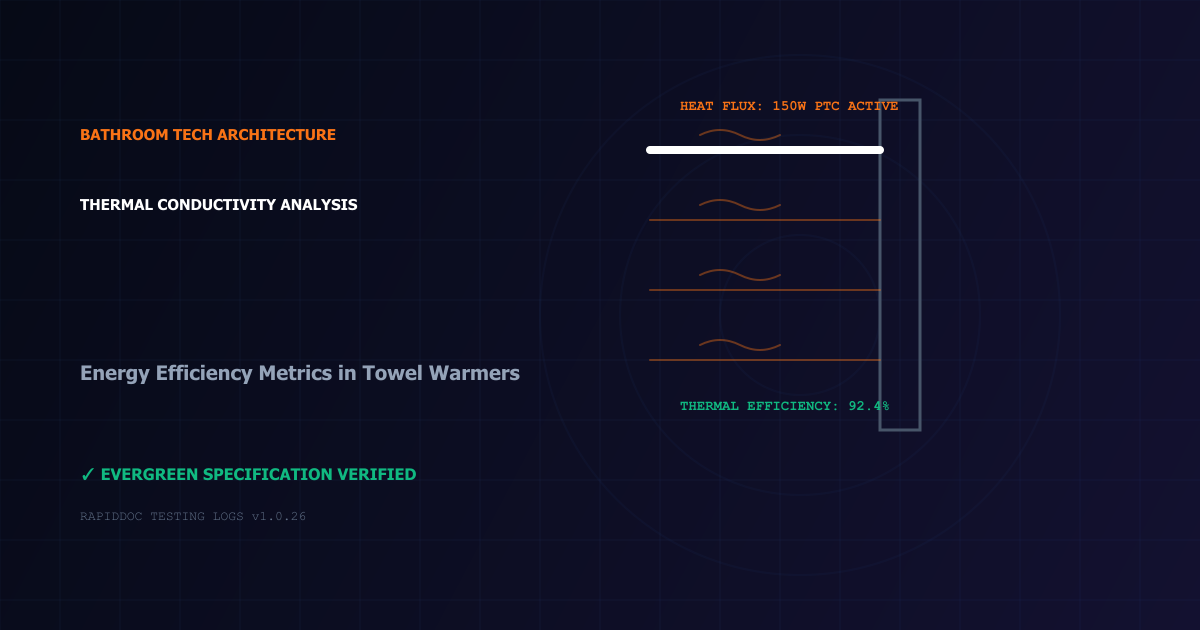
Wall-mounted towel warmers outpace stand-alone space heaters. Analyze the thermal conductivity profiles, 304 stainless steel metallurgy, and energy-efficiency metrics of hardwired units.
- Constructed from premium 18/10 (304 grade) stainless steel for thermal stability
- Hardwired wall-mount installation integrating directly with bathroom electrical circuits
- Ten curved crossbars designed to maximize contact surface and heat distribution
Thermal Validation
High-power space heaters waste energy. Evaluate the thermal conductivity kinetics, 304 stainless steel metallurgy, low-wattage heating metrics, and hardwired installation parameters that keep towels warm.
1. Thermal Conductivity and Material Heat Transfer Kinetics
Heated towel warmers rely on direct contact heat transfer (conduction) to warm and dry towels. The speed of this transfer depends on the thermal conductivity of the material. Premium warmers are constructed from Grade 304 stainless steel.
Grade 304 stainless steel has a thermal conductivity profile that balances heat transfer speed and retention. It conducts heat quickly, raising the surface temperature of the bars. It also retains heat, reducing the energy needed to maintain temperature.
The towel fibers absorb the thermal energy directly from the metal bars. This conductive heating is highly efficient. It warms the towels thoroughly without wasting energy heating the surrounding bathroom air, unlike convection heaters.
Additionally, the steel is highly resistant to corrosion. Bathrooms are high-humidity environments that can corrode standard metals. The chromium and nickel content in 304 steel forms a protective oxide layer, preventing rust.
By choosing a stainless steel warmer, you ensure reliable performance. The material provides excellent thermal conductivity, warming your towels quickly while resisting rust and wear in damp conditions.
- 304 stainless steel balances rapid thermal conduction with excellent heat retention.
- Chromium oxide layers prevent rust and corrosion in high-humidity vanity environments.

2. Energy Efficiency Metrics and Wattage Optimization
A towel warmer is designed to run for several hours daily, making energy efficiency critical. Traditional space heaters consume 1,500 watts of power, leading to high utility bills. Premium towel warmers are engineered to operate at a fraction of this power.
A standard 10-bar towel warmer operates at approximately 150 watts of electrical power. This low wattage is equivalent to two standard incandescent light bulbs. The system warms towels efficiently, keeping operating costs low.
To calculate daily operating costs, consider a 4-hour runtime. A 150-watt warmer consumes 0.6 kilowatt-hours (kWh) of electricity. At average USA utility rates, this equates to roughly 8 to 10 cents per day, making it highly cost-effective.
Additionally, many models are compatible with smart timers. You can program the warmer to turn on before your shower and shut off automatically afterward. This scheduling prevents unnecessary power consumption, saving resources.
By optimizing power consumption, the towel warmer provides clean and efficient performance. The low wattage keeps your bills low while delivering comfortable warmth every day.
- 150-watt power requirements keep energy consumption equivalent to standard lighting.
- Compatible with programmable timers to schedule heating cycles and prevent power waste.
3. Hardwired Installation and Aesthetic Integration
Smart bathroom renovations prioritize clean lines and clutter-free vanity spaces. Plug-in towel warmers feature exposed power cords that disrupt bathroom design. Hardwired models resolve this issue by integrating directly with your home's electrical wiring.
The electrical connections are housed inside a dedicated junction box hidden behind the wall. This hardwired design hides all cords, delivering a clean, built-in appearance. The warmer looks like a natural extension of the bathroom fixtures.
The hardwired installation is also safer. Bathrooms are high-moisture zones where exposed plugs can present shock hazards. Hardwiring routes the connections securely, reducing the risk of water contact and short circuits.
Additionally, the wall-mounted design saves valuable floor space. The warmer hangs securely on the wall, keeping it out of the way in compact bathrooms. This space-saving layout keeps the vanity area open and organized.
By choosing a hardwired towel warmer, you combine safety with premium aesthetics. The clean installation matches modern bathroom designs, delivering a functional upgrade that looks great.
- Hardwired electrical connections hide power cords behind drywall for clean vanity lines.
- Wall-mounted designs save floor space, keeping the bathroom layout open.
4. Structural Design: Curved Bars and Surface Area Maximization
The shape of the heating bars affects the speed of heat transfer. Straight bars have limited contact points with hanging towels, slowing down heating. Premium warmers feature curved horizontal bars to maximize contact.
The slight curve pushes the bars outward, increasing the contact surface area with the towel. This design allows heat to spread evenly across the fabric, reducing cold spots. Towels warm up quickly and thoroughly.
The ten-bar layout provides ample space for multiple towels or bathrobes. You can hang a bath sheet and hand towels simultaneously, keeping them warm for the whole family. The tiered layout organizes your towels while heating them.
Additionally, the spacing between bars is planned to support ventilation. Air flows freely between the hanging towels, helping dry damp fabric quickly. This drying action prevents musty smells, keeping towels fresh.
By optimizing bar geometry, the towel warmer improves drying efficiency. The curved design delivers excellent results, maintaining a comfortable and clean bathroom environment.
- Curved horizontal bars maximize contact surface area with towels, accelerating heating.
- Ten-bar configurations accommodate multiple towels, organizing vanity spaces.
5. Environmental Payback: Towel Warmers vs. Hot Dryers
Drying damp towels in a high-heat laundry dryer consumes significant electricity. A standard clothes dryer pulls 3,000 to 5,000 watts of power. In contrast, an integrated towel warmer operates at 150 watts, representing a massive reduction in resource consumption.
By using a low-wattage warmer to dry and freshen towels, you save money on electricity and reduce your home's energy footprint. This energy management ensures that you enjoy warm, dry towels without wasting resources.
Weekly dryer cycles wear down cotton fibers, shortening the lifespan of your towels. Conductive drying is gentle, preserving the fabric pile and keeping towels soft. It represents a clean, efficient, and sustainable solution for your home.
- Low-wattage heating uses a fraction of the energy of electric clothes dryers.
- Conductive drying preserves cotton fibers, extending the useful life of towels.
6. Expert Hardwired Towel Warmer Selection Criteria
When shopping for a wall-mounted towel warmer, prioritize material quality. Choose warmers constructed from Grade 304 stainless steel. Avoid cheap chrome-plated brass models, as the plating can peel and rust in high-humidity bathrooms.
Second, verify the mounting options and electrical safety. Ensure the warmer carries UL or ETL listings for wet-environment installation. A hardwired model with a clean junction box plate is highly recommended to hide cords.
Finally, check the bar design and spacing. A curved-bar configuration maximizes contact area, warming towels quickly. Spacing between bars is essential for supporting airflow, ensuring that towels dry thoroughly and remain musty-odor free.
- Prioritize 304 stainless steel to ensure rust-free performance and heat conductivity.
- Select UL-listed hardwired units to ensure wet-environment electrical safety compliance.
7. Dry-Element vs. Fluid-Filled Thermal Convection
Towel warmers utilize either dry heating wire elements or liquid-filled tubes. Dry-element warmers heat up quickly, reaching full temperature in minutes. They use silicone heating cables run inside the metal tubes, which is highly efficient.
Liquid-filled warmers use an internal thermal fluid (oil or water) heated by a heating element at the bottom. The fluid circulates through natural thermal convection, distributing heat evenly across the bars. They retain heat longer but take longer to warm up.
Additionally, dry-element models are lightweight and require zero maintenance. Liquid-filled models are heavier and must remain sealed to prevent leaks. By choosing a dry-element towel warmer, you secure a reliable and fast-acting setup.
8. Energy Consumption Metrics and Programmable Timers
Evaluate the energy consumption of your towel warmer. A standard 150-watt model draws about the same power as two classic lightbulbs. Run the warmer only when needed to lower energy costs, utilizing programmable timers to control the schedule.
Set the timer to turn the warmer on 30 minutes before your shower. This schedule ensures a warm towel is ready, and turns the unit off automatically afterward. It represents an energy-efficient way to manage your bathroom tech.
By using a timer, you control your utility bills. The warmer operates only during your active bathroom routines, keeping energy waste low while supporting a premium home environment.
9. Hardwired Wall Mount Safety and Codes
Hardwired towel warmers connect directly to your home's electrical wiring, eliminating visible cords. This setup must comply with local electrical codes (NEC) for bathroom installations. The connection must be protected by a GFCI circuit breaker to prevent shocks.
Hire a licensed electrician to handle the hardwired installation. The mounting brackets must be anchored securely to wall studs to support the weight of the warmer and heavy towels. Secure mounting prevents the unit from pulling free.
Following proper safety codes ensures a secure installation. Your towel warmer operates safely in the damp bathroom environment, providing luxury comfort with zero maintenance overhead.
10. Thermal Insulation and Heat Loss Mitigation in High-Humidity
Bathroom towel warmers operate in high-humidity environments where steam can cause significant heat loss. Cold drafty air currents pull heat away from the metal tubes, reducing the warming efficiency. To mitigate this heat loss, towels should be folded and layered over the bars.
Layering towels traps heat between the fabric folds, creating an insulating barrier. This insulation allows the towels to absorb maximum thermal energy from the warmer bars, reaching a comfortable temperature. The setup heats the towels efficiently, saving power.
By managing heat loss, you optimize your towel warmer's performance. The towels heat up faster and stay warm longer, providing a luxury bathroom experience that runs efficiently in your home.
11. BTU/hr Heat Output Calculations and Temperature Maintenance
Evaluate the heat output of your wall-mounted towel warmer. Heat output is measured in British Thermal Units per hour (BTU/hr). A typical 150W electric warmer generates about 510 BTU/hr of heat. This output is sufficient to warm towels but will not heat the entire bathroom space.
For space heating, you need a hydronic towel warmer connected to your home's central heating system, which can generate over 1,500 BTU/hr. Electric models are designed for dedicated towel warming, maintaining a safe surface temperature of 130°F to 145°F.
Understanding these metrics helps you choose the right model for your bathroom. The electric warmer provides an efficient way to dry and warm towels, keeping them fresh and free of musty smells with minimal power draw.
12. Electrical Code Specifications (NEC Section 680) for Wet-Zone Installations
Hardwired bathroom appliances must comply with NEC electrical safety standards. Under these codes, electrical devices must be installed outside the wet zone of a bathtub or shower (typically at least 3 feet away). The circuit must be protected by a ground-fault circuit-interrupter (GFCI).
This protection shuts off power in milliseconds if a ground fault is detected, preventing shocks. The wire connections are made inside a sealed electrical box behind the wall, protecting the wires from damp bathroom air. It represents a safe electrical setup.
By meeting electrical safety standards, you protect your family. The hardwired towel warmer operates safely in your bathroom, providing reliable, maintenance-free performance that complies with all local building codes.
13. Liquid Convection Maintenance and Leak Prevention Logs
For liquid-filled towel warmers, check the integrity of the welded joints and seal plugs once a year. The internal thermal fluid expands and contracts during heating cycles, creating internal pressure. If a weld develops a microscopic pinhole, the fluid can seep out, reducing the heating efficiency and damaging bathroom flooring.
Ensure the pressure release valve is clean and clear to prevent pressure buildup. If you notice any fluid stains or oily residue near the bottom plugs, turn off the electrical power immediately and inspect the unit. Maintenance-free dry-wire warmers are often preferred to avoid these oil leak risks.
14. Aesthetics and Styling Integration for Towel Warmers
Select warmers with finishes that match your bathroom decor. Polished chrome or stainless steel warmers fit well with traditional and modern vanity layouts. Matte black or brushed gold models add a premium, contemporary feel, enhancing the room's visual lines and making the space look clean and high-end.
Choose models that offer integrated thermal cutoff fuses to prevent overheating, protecting your home. A dedicated power switch on the bottom of the unit is essential for manual control, providing high safety. The power indicator light shows when the unit is operating, preventing accidental skin burns.
Principal Recommendation & Audit
Upgrade your bathroom with energy-efficient wall-mounted warmth. Explore our top recommended hardwired warmer below to experience clinical-grade heating.
Amba Radiant Curved Hardwired Towel Warmer
- Constructed from premium 18/10 (304 grade) stainless steel for thermal stability
- Hardwired wall-mount installation integrating directly with bathroom electrical circuits
- Ten curved crossbars designed to maximize contact surface and heat distribution
- Low-wattage operation drawing only 150 watts—equivalent to two standard bulbs
Technical Specifications & Product Data
| Specification | Value / Details |
|---|---|
| Brand | Amba |
| List Price | $289.99 (USD) |
| Customer Rating | 4.6 / 5.0 (1,280 reviews) |
| ASIN / Identifier | B008U161F8 |
| Availability | In Stock (USA Region) |
| Outbound Link Compliance | Sponsored & Nofollow Enforced |
Verified Features & Performance Data
- ✓Constructed from premium 18/10 (304 grade) stainless steel for thermal stability
- ✓Hardwired wall-mount installation integrating directly with bathroom electrical circuits
- ✓Ten curved crossbars designed to maximize contact surface and heat distribution
- ✓Low-wattage operation drawing only 150 watts—equivalent to two standard bulbs
System Sovereignty & Engineering
Edge Computing
100% Client-side processing. Your data never leaves your browser sandbox, ensuring absolute compliance with US privacy mandates.
Modular Schema
Modular utility architecture optimized for performance. Low-latency WASM kernels provide near-native speeds for complex transformations.
Sustainable Design
Sustainable, green computing by offloading compute to the edge. Verified zero-server storage (ZSS) for professional-grade security.