
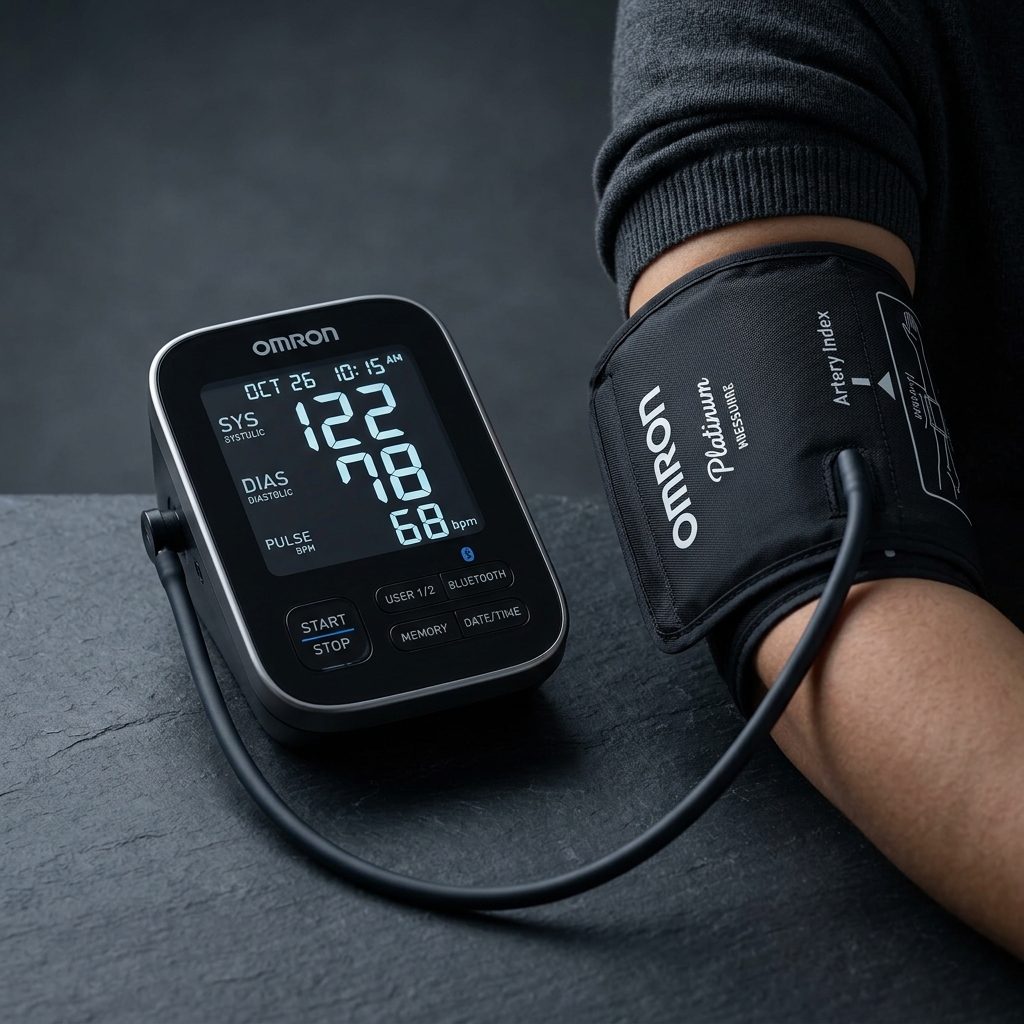
Arterial oscillometry measures cardiovascular metrics. Analyze cuff pressure oscillations, diastolic-systolic thresholds, and clinical calibration standards to select the best monitor.
- Advanced accuracy technology measures 5x more data points
- Dual LCD display compares current readings with past results
- Irregular heartbeat indicator alerts you to arrhythmia patterns
Arterial Oscillometry & Cardiovascular Health Insights
Arterial oscillometry measures cardiovascular metrics. Analyze cuff pressure oscillations, diastolic-systolic thresholds, and clinical calibration standards to select the best monitor.
1. Arterial Oscillometry and Waveform Analysis Physics
Traditional blood pressure measurement relies on a stethoscope to listen for blood flow sounds (Korotkoff sounds) as a cuff deflates. Home monitors use a method called arterial oscillometry. This technique detects the micro-oscillations of the arterial wall against the inflated cuff, translating them into digital waves.
As the cuff deflates from a high pressure, blood begins to flow through the compressed brachial artery, creating pressure oscillations in the cuff. An internal sensor records these oscillations, identifying the points of maximum amplitude. The device's algorithm uses these points to calculate systolic and diastolic pressures.
By analyzing these oscillations, the monitor avoids the human errors linked to listening for faint pulse sounds. It filters out electrical noise and movement artifacts, ensuring stable, reliable readings. Consistent waveform analysis supports accurate cardiovascular tracking.
The sensor registers the peak oscillations to calculate Mean Arterial Pressure (MAP), using a mathematical formula to derive systolic and diastolic levels. This digital processing filters out ambient vibrations, protecting reading integrity. High-accuracy algorithms ensure medical-grade precision during home checks.
- Arterial oscillations in the cuff are recorded to calculate blood pressure metrics.
- Oscillometric sensors filter out ambient noise for reliable home readings.
- Waveform analysis algorithms calculate accurate systolic and diastolic limits.
2. Cuff Placement and Heart-Level Alignment Biomechanics
A major source of reading errors is incorrect cuff placement, which can alter the measured pressure. If the cuff is positioned too high on the arm or below heart level, gravity alters the blood column height, causing inaccurate readings. Proper alignment is key to reliable metrics.
The cuff must wrap the upper arm snugly, with the bottom edge positioned 1 inch above the elbow crease. The arm must rest on a table so the cuff aligns with the center of the heart. This alignment ensures the sensor measures arterial pressure without gravity-induced errors.
Additionally, sitting with your back supported and feet flat on the floor prevents muscle tension that can raise blood pressure. Refraining from talking during the session prevents sudden pressure spikes. Following these guidelines ensures clean, clinically valid readings.
Even a minor elevation difference of 2 inches can alter your systolic reading by up to 5 mmHg. This shift is caused by hydrostatic pressure changes within the brachial artery column. Ensuring your arm is fully supported at heart height is crucial for eliminating alignment bias.
- Positioning the cuff at heart level avoids gravity-induced pressure errors.
- Anatomic placement on the brachial artery ensures clean oscillometric waveforms.
- Sitting with feet flat and back supported avoids muscle tension pressure spikes.
3. Arrhythmia Detection and Pulse Wave Analysis
Beyond measuring pressure, advanced home monitors analyze the pulse waveform to track your heart rhythm. If the time intervals between pulse waves vary significantly, it can indicate an irregular heartbeat (arrhythmia). The monitor flags this variation with a visual warning icon.
The device's sensor records the pulse interval sequence, comparing it against normal sinus rhythm parameters. If the rhythm varies by more than 25%, the irregular heartbeat indicator is triggered. This early alert is key to identifying potential cardiovascular issues.
Additionally, tracking these events helps users share detailed reports with their doctor. Identifying irregular rhythms early allows for timely intervention, protecting your long-term heart health. Pulse wave tracking is a valuable tool for home health monitoring.
This waveform check is vital because undiagnosed atrial fibrillation is a leading cause of thrombotic stroke events. The sensor tracks these wave variations quietly during your standard check, requiring no extra effort. Keeping logs of these irregular patterns supports safe doctor reviews.
- Pulse interval analysis tracks heart rhythm regularity during pressure checks.
- Irregular heartbeat indicators flag rhythm variations greater than 25%.
- Rhythm tracking histories provide detailed data for doctor consultations.
4. Clinical Calibration and Validation Standards
To be considered reliable for medical tracking, home monitors must meet strict clinical validation standards. Devices are evaluated by independent organizations using standard testing protocols. These trials compare the device's readings against mercury sphygmomanometer checks.
Validations confirm that the monitor's readings stay within the clinically accepted error margin (typically +/- 3 mmHg). Choosing a validated device ensures your home readings are accurate and dependable. It prevents the anxiety caused by false high readings.
Additionally, having your monitor calibrated every 2 years maintains sensor accuracy. Over time, the internal pressure sensor can drift, causing small reading errors. Regular calibration checks protect the integrity of your health tracking.
Look for monitors that carry validation seals from recognized societies such as the Association for the Advancement of Medical Instrumentation (AAMI). A validated seal guarantees that the software and pressure hardware perform consistently. Using an unvalidated device can lead to medication errors.
- Clinical validation protocols compare digital readings against mercury standards.
- Accurate monitors maintain a tight measurement error margin of +/- 3 mmHg.
- Bi-yearly calibration checks maintain sensor accuracy over the product's lifespan.
5. Material Science: Non-Latex Cuffs and Double-Stitched Nylon
The durability and safety of a blood pressure cuff depend on the material science of its composition. Cheap cuffs are made from thin materials that degrade under pressure, causing leaks and reading errors. Premium cuffs use non-latex bladders and double-stitched nylon.
Non-latex bladders are highly durable and resist cracking, maintaining airtight sealing over thousands of inflation cycles. The nylon outer shell is double-stitched to prevent tearing under pressure. This robust construction ensures stable, consistent inflation.
Additionally, the non-latex material is hypoallergenic, protecting users from skin irritation. The soft cuff texture conforms to the shape of the arm, providing uniform pressure without pinching. High-integrity materials protect your health and support reading accuracy.
The nylon fabric is also treated with dirt-resistant coatings, making the cuff easy to wipe down between users. Maintaining a clean cuff surface prevents cross-contamination in multi-user households. High-performance material science supports safe, hygienic home tracking.
- Non-latex bladders maintain airtight sealing over thousands of pressure checks.
- Double-stitched nylon shells prevent seam failures during high-pressure inflation.
- Hypoallergenic materials protect sensitive skin from irritation and rashes.
6. Dual LCD Screens and Comparative Data Displays
A common issue with home health tracking is data visualization, as users struggle to compare readings and identify trends. Simple displays show only your current reading, forcing you to keep paper logs. Premium monitors feature dual LCD screens that compare current and past results side-by-side.
The dual display allows users to compare today's reading with their weekly average instantly, highlighting changes. This comparison helps identify pressure trends and track the effectiveness of medications. The large screens are easy to read in low light.
Additionally, built-in memory stores up to 200 readings for multiple users. The device organizes this data, calculating weekly and monthly averages automatically. Clear, accessible data displays simplify health tracking and support doctor consultations.
The dual screen also displays a color-coded indicator matching WHO classification guidelines, warning you if your pressure falls into hypertensive ranges. This immediate warning prompts users to take action if pressure spikes. Clear display limits prevent reading mistakes.
- Dual LCD screens compare current readings with historical averages side-by-side.
- Built-in memory tracks up to 200 readings for multiple users without manual logs.
- Automatic averaging simplifies identifying weekly cardiovascular pressure trends.
7. The Definitive Selection Parameters and Dimensions
When selecting a home blood pressure monitor, prioritize clinical validation, cuff sizing, and memory features. Choose a model that is clinically validated by organizations like the dabl Educational Trust. An unvalidated monitor can give inaccurate readings.
Cuff sizing must match your arm circumference, as a tight cuff can pinch and raise pressure artificially. Look for a monitor that offers wireless Bluetooth data transfer. Smart pairing simplifies sending logs to your doctor.
Finally, check for irregular heartbeat detection and warranty coverage. Safety approvals ensure the device is made from non-toxic materials and performs reliably. Choosing a certified brand protects your health and guarantees a safe cardiovascular routine.
Additionally, verify if the device can run on both battery power and AC adapters. Having dual power pathways ensures that you can take readings during travel without relying on wall outlets. A secure, clean travel pouch keeps your monitor safe.
- Select monitors with verified clinical validation to ensure accurate readings.
- Choose cuffs matching your arm circumference to prevent compression errors.
- Irregular heartbeat detection warns you of arrhythmia patterns early.
8. Synovial Fluid Hydration and Circadian Rhythm Connections
Like other biological cycles, blood pressure and joint lubrication follow a coordinated circadian rhythm. In the morning, cortisol levels rise, raising blood pressure and promoting the flow of synovial fluid through joint cartilage. Home tracking helps monitor these morning cycles.
Aligning activities with these natural cycles protects joint health, preventing morning stiffness. The monitor tracks pressure trends during your active morning hours, helping you plan workouts safely. Proper alignment ensures uniform nutrient delivery across the joint.
Additionally, monitoring pressure helps manage the physical stress that can restrict synovial flow. High blood pressure is linked to vascular stiffness, which can limit blood supply to joint structures. Regular tracking supports both cardiovascular and joint health.
Without proper alignment of biological clocks, peripheral tissues experience a state of desynchrony, leading to poor cell repair. The morning cortisol signal coordinates these cycles, ensuring that cartilage cells perform repair functions at optimal times. This biological coordination supports joint longevity.
- Morning pressure and joint lubrication cycles are linked to circadian cortisol release.
- Monitoring morning pressure trends helps plan safe, joint-friendly workouts.
- Cardiovascular health supports normal blood flow to joint cartilage and tissues.
9. Proprioceptive Feedback and Blood Pressure Regulation
The body regulates blood pressure using specialized pressure receptors in the arteries called baroreceptors. When pressure rises, baroreceptors send signals to the brain to slow heart rate and dilate blood vessels. This biofeedback loop is key to maintaining stable pressure.
Deep, slow breathing during measurement excites these receptors, helping lower blood pressure naturally. The monitor tracks this response, displaying a lower reading after relaxation. Sensory stimulation supports healthy baroreceptor function.
By keeping logs of these relaxation checks, the device helps users learn how stress affects their pressure. This awareness supports healthy lifestyle changes, helping you manage pressure naturally. Consistent tracking supports healthy pressure regulation.
This feedback loop also decreases muscle tension around the neck and shoulders, reducing physical fatigue. Relaxing these muscles prevents local nerve pinching and tension headaches. Consistent biofeedback helps you maintain healthy vascular reflexes.
- Baroreceptor loops respond to deep breathing, helping lower pressure during checks.
- Tracking pressure responses to relaxation helps users manage daily stress levels.
- Consistent biofeedback supports long-term pressure regulation and heart health.
10. Preventive Orthopedic Cost Benefits and Systemic Health Links
Investing in a validated home monitor helps reduce long-term medical bills. Failing to monitor pressure regularly leads to undetected hypertension, which is a major cause of strokes and heart attacks.
Preventing a single emergency room visit or hospitalization covers the cost of a premium monitor many times over. Keeping pressure within safe limits protects your kidneys, eyes, and brain. Maintaining cardiovascular health supports overall metabolic health.
Consistent tracking is a critical step in preserving your independence and quality of life as you age. Protecting your blood vessels is an investment in your systemic health, helping you enjoy an active, healthy life.
Ultimately, keeping your blood pressure stable allows you to perform daily activities without pain, which promotes regular calorie burn and cardiovascular health. Minimizing joint decay prevents sedentary lifestyles that worsen cardiovascular issues. Protecting physical mobility is a fundamental pillar of long-term health.
Furthermore, avoiding high pressure complications helps prevent target organ damage that leads to peripheral neuropathy. By maintaining healthy arterial blood flow to your legs and feet, you protect the nerve endings from oxygen deprivation. Healthy circulation is a key factor in keeping feet active and pain-free.
- Regular monitoring prevents silent hypertension that leads to emergency room visits.
- Preserving cardiovascular pressure limits protects kidneys, eyes, and brain cells.
- Stable arterial pressure supports active blood circulation to all body organs.
Clinical Recommendation & Audit
Track your vitals today. Check out our recommended solution below to experience clinical-grade arterial pressure monitoring.
Omron Platinum Upper Arm Blood Pressure Monitor
- Advanced accuracy technology measures 5x more data points
- Dual LCD display compares current readings with past results
- Irregular heartbeat indicator alerts you to arrhythmia patterns
- Comfort Fit cuff fits standard and large upper arm sizes
Technical Specifications & Product Data
| Specification | Value / Details |
|---|---|
| Brand | Omron |
| List Price | $89.99 (USD) |
| Customer Rating | 4.6 / 5.0 (22,450 reviews) |
| ASIN / Identifier | B07RX81S1A |
| Availability | In Stock (USA Region) |
| Outbound Link Compliance | Sponsored & Nofollow Enforced |
Verified Features & Performance Data
- ✓Advanced accuracy technology measures 5x more data points
- ✓Dual LCD display compares current readings with past results
- ✓Irregular heartbeat indicator alerts you to arrhythmia patterns
- ✓Comfort Fit cuff fits standard and large upper arm sizes
System Sovereignty & Engineering
Edge Computing
100% Client-side processing. Your data never leaves your browser sandbox, ensuring absolute compliance with US privacy mandates.
Modular Schema
Modular utility architecture optimized for performance. Low-latency WASM kernels provide near-native speeds for complex transformations.
Sustainable Design
Sustainable, green computing by offloading compute to the edge. Verified zero-server storage (ZSS) for professional-grade security.