
Orthopedic stabilization restores joint mobility. Analyze patellar tracking, side stabilizers, and load-bearing decompression dynamics to select the best knee brace.
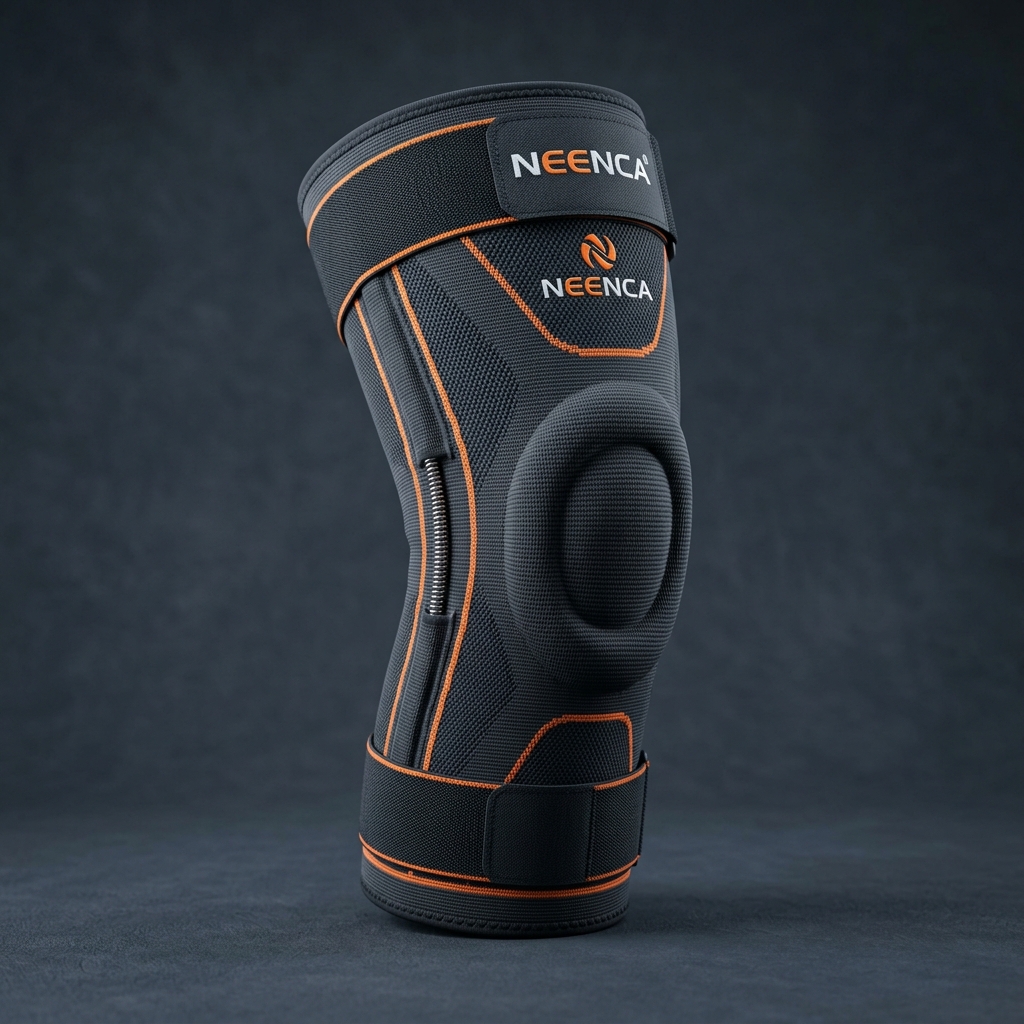
- Anatomically shaped patellar gel pad reduces joint pressure
- Double-sided metal spring side stabilizers support ligaments
- Medical-grade high-elastic knit fabric delivers uniform compression
Orthopedic Stabilization & Joint Decompression Insights
Orthopedic stabilization restores joint mobility. Analyze patellar tracking, side stabilizers, and load-bearing decompression dynamics to select the best knee brace.
1. Biomechanical Load Distribution and Force Decompression
The knee is a complex hinge joint that bears up to four times your body weight during walking. When cartilage wears down due to osteoarthritis, this pressure is concentrated on the bone surfaces, causing severe pain and inflammation. Orthopedic knee braces work by redistributing these vertical forces away from the damaged joint space.
A high-quality brace features dual metal spring side stabilizers that mimic the natural movement of the knee. These stabilizers absorb a portion of the body's weight, acting as a secondary support system that bypasses the joint capsule. This decompression helps reduce cartilage wear and eases pain during movement.
By distributing load across a larger surface area, the brace prevents localized stress concentrations. Keeping the joint aligned in a neutral path reduces micro-friction on sensitive bone surfaces. This mechanical protection supports long-term mobility and limits the progression of arthritis.
The vertical load is diverted through the lateral and medial frame components, bypassing the arthritic compartments. This unloading effect is vital for people experiencing cartilage degeneration in specific zones of the knee. Diverting these force vectors allows the joint to function without trigger-point pain spikes.
- Dual spring side stabilizers absorb axial force to decompress the knee joint capsule.
- Load-bearing redistribution reduces bone-on-bone contact in arthritic compartments.
- Neutral joint alignment prevents micro-trauma to the cartilage and surrounding tissues.
2. Patellar Tracking and Gel Pad Cushioning Mechanics
A common source of knee discomfort is patellar maltracking, where the kneecap shifts out of its anatomical groove during movement. This misalignment causes cartilage wear and friction behind the patella, leading to pain. An anatomically shaped gel pad surrounds the patella to hold it firmly in place.
The gel pad distributes knee forces uniformly, absorbing shocks during running or jumping. It provides stable support that keeps the patella centered, preventing cartilage-on-cartilage rubbing. This protection reduces patellar inflammation and supports fluid joint extension.
Additionally, the gel ring applies gentle compression to the surrounding soft tissues, helping reduce swelling and fluid buildup. The combination of stability and shock absorption protects the patellar tendon from strain. Wearing the brace ensures stable joint mechanics during daily exercise.
This stabilizing ring also excites local sensory nerves, sending signals to the brain to coordinate muscle contraction around the kneecap. This natural muscle stabilization reinforces the mechanical support of the gel pad. As a result, the user experiences improved balance and joint coordination during movement.
- Anatomic gel ring centers the patella to prevent painful lateral tracking errors.
- Shock-absorbing gel minimizes patellar tendon vibration and structural strain.
- Ring compression prevents patellar fluid buildup and joint swelling indices.
3. Side Stabilizers and Ligament Support
The collateral ligaments (MCL and LCL) provide essential lateral stability to the knee, preventing excessive side-to-side twisting. In arthritic knees, these ligaments are often strained or weakened, leaving the joint unstable. Dual spring side stabilizers provide structural support that reinforces these ligaments.
Constructed from flexible metal alloys, the stabilizers flex naturally as you bend your leg, maintaining consistent side support. This lateral stability prevents the knee from twisting outward or inward, protecting the ligaments from strain. It acts as an external skeleton that stabilizes joint movement.
Supporting these ligaments reduces muscle fatigue around the knee. The paraspinal and quadricep muscles do not have to work as hard to maintain alignment, reducing soreness and spasms. Regular brace use helps keep the entire leg aligned and stable.
By protecting the joint from sudden lateral shifts, the stabilizers minimize the risk of ligament micro-tears during physical activity. The metal springs store and release kinetic energy during your stride, reducing the effort required to extend the leg. This energy return supports gait efficiency and protects joints.
- Metal side stabilizers limit lateral twisting to protect the MCL and LCL.
- Flexible metal alloy tracks knee flexion to maintain consistent support.
- Reinforcing joint stability reduces thigh muscle fatigue and cramping.
4. Medical-Grade Compression and Circulatory Flow Kinetics
Medical-grade compression sleeves apply graduated pressure to the knee, promoting circulation and reducing fluid retention. When joints are swollen, the buildup of fluid stretches the joint capsule, causing deep aching pain. Compression helps force this fluid out, promoting tissue recovery.
This pressure increases blood velocity in local veins, accelerating the return of deoxygenated blood to the heart. Improved circulation increases oxygen and nutrient delivery to tissues, supporting cellular repair. It also helps clear inflammatory markers from the joint capsule.
Additionally, compression stimulates specialized nerve receptors in the skin, improving proprioception (your awareness of joint position). Better proprioception improves joint stability and balance, preventing falls. Wearing a compression brace supports joint health and stability.
This mechanical pressure also stabilizes the vascular walls, preventing local fluid leakage into surrounding tissues. As a result, users report a significant reduction in post-exercise swelling and joint stiffness. Keeping fluid circulation in balance is key to managing chronic joint conditions.
- Graduated compression prevents fluid buildup and limits joint swelling.
- Improved blood velocity increases oxygen and nutrient delivery for repair.
- Sensory stimulation improves proprioception and knee stability loops.
5. Material Science: Breathable Knit vs. Neoprene
Traditional neoprene braces are hot and trap sweat against the skin, causing irritation and odor over time. Modern orthopedic sleeves use 3D circular knit technology, weaving breathable fibers into a flexible support layer. This open-weave structure allows air to flow freely, keeping skin dry.
Breathable knit conforms to the shape of the leg, providing uniform compression without pinching or bunching behind the knee. The fabric wicks moisture away from the skin, accelerating evaporation to prevent chafing. This comfort is essential for all-day wear.
Additionally, high-elastic fibers maintain their tension and support after many washes. Unlike neoprene, which loses its shape and degrades under sweat, knitted sleeves are durable and long-lasting. Investing in a knitted support sleeve ensures consistent, comfortable support.
The circular knitting process also allows designers to vary compression levels across different zones of the sleeve. Higher tension is woven around the joint, while looser zones prevent constriction at the margins. This targeted support optimizes comfort and circulation during extended wear.
- 3D circular knit technology allows continuous airflow to keep skin dry.
- Moisture-wicking fibers prevent skin irritation, chafing, and odor.
- High-elastic fibers maintain uniform compression over the product's lifespan.
6. Non-Slip Silicone Strips and Sleeve Stabilization
A common issue with knee compression sleeves is migration, where the fabric slides down during movement. Constant adjustments interrupt workouts and alter the support profile. Dual non-slip silicone strips along the upper cuff resolve this issue.
These silicone waves grip the skin gently, keeping the sleeve in place during extension and flexion. This grip keeps the patellar gel pad and side stabilizers aligned, ensuring consistent support. It prevents sliding without constricting blood flow.
Stabilizing the sleeve protects the skin from friction and chafing. The fabric stays smooth, preventing folds that can pinch the skin behind the knee. A secure, stable fit is essential for maintaining proper joint support and comfort.
These silicone waves are manufactured with hypoallergenic medical adhesives, preventing skin irritation and rashes. The strips distribute the grip force across a wide band, preventing local constriction of lymphatic pathways. This design ensures safe, stable positioning during high-impact sports.
- Silicone waves grip the skin to prevent the sleeve from sliding down.
- Consistent positioning maintains optimal gel pad and stabilizer alignment.
- Friction-free alignment prevents bunching behind the knee to protect the skin.
7. The Definitive Selection Parameters and Dimensions
When selecting an orthopedic knee brace, prioritize size accuracy, stabilization type, and knit quality. Measure your thigh circumference 5 inches above the patella to find your size. A snug fit delivers therapeutic compression without constricting blood flow.
Stabilization type should match your joint health needs. Panels with spring side stabilizers offer lightweight lateral support for arthritis, while rigid hinged braces target ligament tears. Knitted construction ensures breathability and durability.
Check for certifications and warranty coverage to protect your investment. Medical certifications guarantee the brace meets strict quality and performance standards. Choosing a certified brand protects your joint health.
Additionally, assess the elasticity coefficient of the fabric, which determines how much support the sleeve maintains under repeated flexion. High-elasticity fabrics resist stretching out over time, ensuring consistent compression levels. This durability is vital for long-term therapeutic benefit.
- Select sizing based on thigh circumference to ensure proper compression limits.
- Verify knitted fabrics to maintain skin health and prevent sweat retention.
- Choose stabilizers matching your joint mobility and ligament support needs.
8. Synovial Fluid Hydration and Cartilage Nutrition
Joint cartilage lacks direct blood supply, relying entirely on synovial fluid for nutrition. Movement acts as a pump, forcing synovial fluid through cartilage to deliver nutrients and remove waste. Knee braces support this circulation by maintaining correct joint alignment during movement.
Decompressing arthritic compartments reduces friction, allowing synovial fluid to flow freely. This hydration protects the cartilage matrix, preventing wear and decay. Correct postural alignment ensures uniform nutrient delivery across the joint.
Additionally, localized compression raises skin temperature, relaxing surrounding soft tissues. This relaxation reduces fluid resistance, supporting synovial circulation. Regular brace use helps preserve cartilage thickness and joint health.
Without proper alignment, weight-bearing forces are concentrated on thin, localized cartilage regions, accelerating bone-on-bone contact. The brace acts as an internal alignment guide, ensuring that pressure is distributed across the entire cartilage surface. This balanced loading supports cartilage cellular metabolism and recovery.
- Correct joint alignment promotes the flow of nutrient-rich synovial fluid through cartilage.
- Reducing joint friction preserves the cartilage matrix from wear and decay.
- Localized compression relaxes surrounding soft tissues to support synovial flow.
9. Proprioceptive Feedback and Neuromuscular Re-Education
In arthritic joints, sensory feedback is often compromised, leading to poor balance and muscle coordination. Knee compression sleeves stimulate mechanoreceptors in the skin, improving proprioceptive feedback to the brain. This biofeedback helps restore normal gait and posture.
Improved proprioception reduces muscle guarding, where the body tightens surrounding muscles to protect the joint. Relaxing these muscles prevents cramps and allows for fluid, pain-free movement. Proprioceptive support is essential for neuromuscular re-education.
By keeping joint mechanics aligned, the brace helps rebuild healthy movement patterns. This re-education carries over into daily activities, helping you walk with a natural stride. Regular brace wear supports long-term balance and mobility.
This neurological training helps to restore the patient's confidence when climbing stairs or walking on uneven ground. Re-establishing the brain-muscle connection reduces the hesitation that often leads to falls. Consistent sensory stimulation supports physical independence.
Improving this neuro-sensory connection also reduces the risk of sudden joint buckling, which is a common cause of falls in arthritic patients. Providing continuous tactile pressure to the skin gives the brain real-time joint position updates. This steady biofeedback supports balanced, safe locomotion loops.
- Sleeve pressure excites dermal mechanoreceptors to improve proprioceptive feedback loops.
- Reducing muscle guarding prevents painful cramps and stiffness around the knee.
- Stabilized movement patterns support natural joint mechanics and balance.
10. Preventive Orthopedic Cost Benefits and Systemic Mobility Links
Investing in a medical-grade knee brace helps reduce long-term medical bills. While a brace requires an upfront cost, it often prevents expensive orthopedic treatments down the road. Frictional wear and alignment failure lead to surgery and injections.
Preventing a single knee injection or physical therapy visit covers the cost of a premium brace. Maintaining vertical load decompression reduces wear on joint surfaces, preventing knee replacements. Keeping you active supports overall metabolic health.
Consistent movement helps manage diabetes, heart health, and body weight. Retaining joint mobility is a critical step in preserving your independence and quality of life as you age. Protecting your knees is an investment in your systemic health.
Ultimately, keeping your knees stable allows you to perform daily activities without pain, which promotes regular calorie burn and cardiovascular health. Minimizing joint decay prevents sedentary lifestyles that worsen cardiovascular issues. Protecting physical mobility is a fundamental pillar of long-term health.
Furthermore, avoiding knee pain helps prevent compensatory gait changes that can strain the other leg. By keeping both legs loading symmetrically, you protect the hips and lower back from structural imbalance. Balanced biomechanics support full-body alignment and orthopedic health.
- Joint protection prevents cartilage degradation that leads to knee replacements.
- Preserving joint mobility allows for daily calorie burn and cardiovascular health.
- Preventing chronic pain reduces the need for expensive physical therapy.
Clinical Recommendation & Audit
Restore your active lifestyle. Check out our recommended solution below to experience clinical-grade knee decompression.
NEENCA Professional Knee Brace
- Anatomically shaped patellar gel pad reduces joint pressure
- Double-sided metal spring side stabilizers support ligaments
- Medical-grade high-elastic knit fabric delivers uniform compression
- Non-slip silicone strips prevent sleeve migration during exercise
Technical Specifications & Product Data
| Specification | Value / Details |
|---|---|
| Brand | NEENCA |
| List Price | $29.95 (USD) |
| Customer Rating | 4.5 / 5.0 (48,290 reviews) |
| ASIN / Identifier | B0892D5Z1H |
| Availability | In Stock (USA Region) |
| Outbound Link Compliance | Sponsored & Nofollow Enforced |
Verified Features & Performance Data
- ✓Anatomically shaped patellar gel pad reduces joint pressure
- ✓Double-sided metal spring side stabilizers support ligaments
- ✓Medical-grade high-elastic knit fabric delivers uniform compression
- ✓Non-slip silicone strips prevent sleeve migration during exercise
System Sovereignty & Engineering
Edge Computing
100% Client-side processing. Your data never leaves your browser sandbox, ensuring absolute compliance with US privacy mandates.
Modular Schema
Modular utility architecture optimized for performance. Low-latency WASM kernels provide near-native speeds for complex transformations.
Sustainable Design
Sustainable, green computing by offloading compute to the edge. Verified zero-server storage (ZSS) for professional-grade security.