
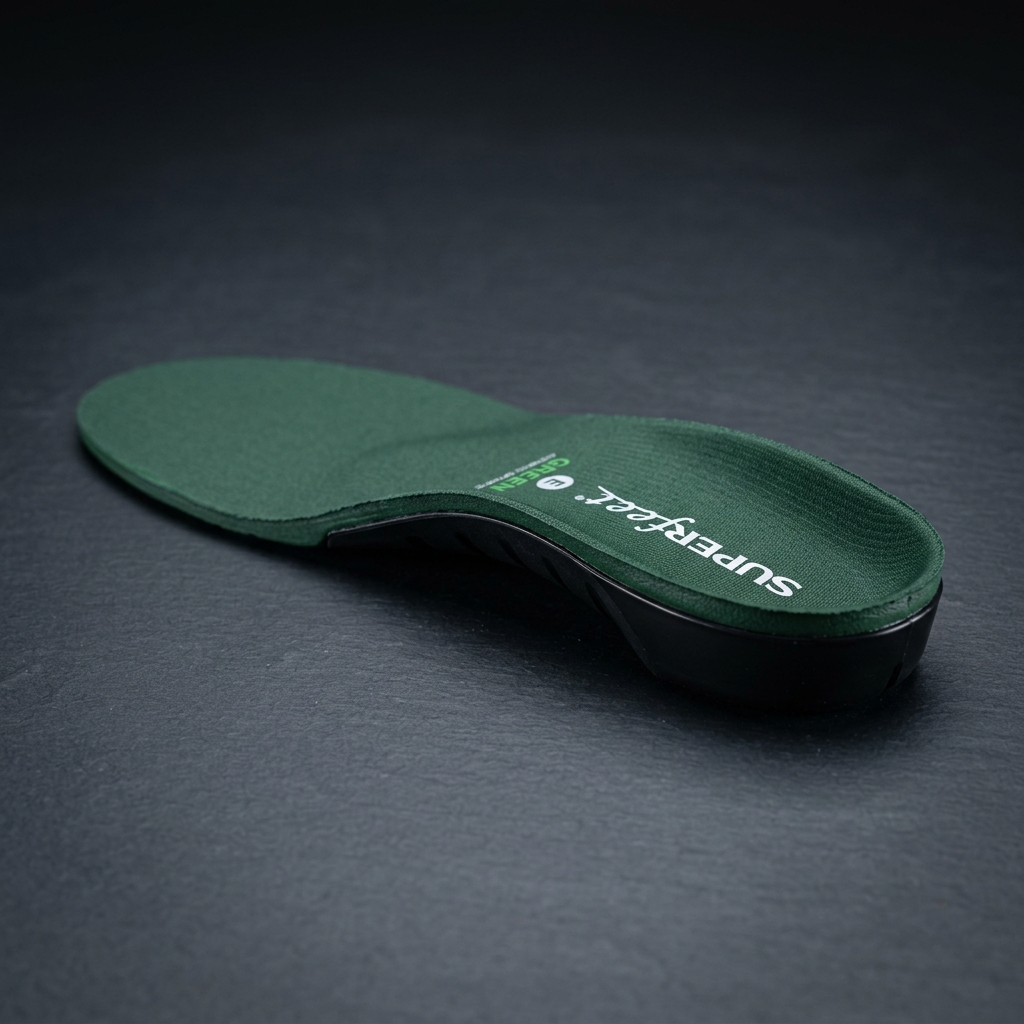
Orthotic arch support mitigates plantar fascia tension. Analyze heel cup kinematics, impact force dissipation, and kinetic chain alignment to select the best insoles.
- Deep heel cup absorbs heavy running heel impact forces
- High-density closed-cell foam layer cushions the entire foot
- Rigid stabilizer cap supports the rearfoot and structure
Orthotic Arch Support & Heel Cup Kinematics Insights
Orthotic arch support mitigates plantar fascia tension. Analyze heel cup kinematics, impact force dissipation, and kinetic chain alignment to select the best insoles.
1. Plantar Fascia Mechanics and the Windlass Effect
The plantar fascia is a thick band of connective tissue that runs along the bottom of the foot, connecting the heel bone (calcaneus) to the toes. It acts as a natural shock absorber, supporting the foot arch during walking and running. During toe-off, the plantar fascia undergoes tension, a mechanical process known as the windlass effect.
When the foot arch collapses (pronation), the plantar fascia is stretched excessively, leading to micro-tears near the heel. Orthotic insoles address this stress by supporting the medial longitudinal arch. This support prevents the arch from flattening, reducing tension on the ligament.
By maintaining proper arch height, insoles distribute weight-bearing forces evenly across the foot. Keeping the foot aligned in a neutral path reduces micro-friction on the plantar fascia attachment point. This structural protection supports healthy biomechanics and prevents heel spurs.
This mechanical alignment also helps protect the joint cartilage from wearing down unevenly, which can lead to early-stage arthritis. The corrective forces restore the anatomical loading vectors, ensuring that weight is distributed across the entire first MTP surface. This load balance supports the joint's long-term cartilage thickness.
- Plantar fascia tension increases during pronation, causing micro-tears at the heel.
- Medial arch support prevents arch collapse to reduce ligament tension.
- Aligning the foot mechanics prevents the formation of painful heel spurs.
2. Deep Heel Cup Stabilization and Fat Pad Alignment
The calcaneus is cushioned by a natural fat pad that absorbs the initial shock of heel strike. Under repetitive impact, this fat pad can spread outward, reducing its thickness and cushioning effectiveness. Deep heel cups address this dispersion by holding the fat pad in place.
The deep cup wraps the heel, keeping the fat pad positioned directly under the calcaneus. This alignment maximizes natural shock absorption, reducing impact forces during running. It also stabilizes the rearfoot, preventing excessive rolling.
Additionally, stabilizing the heel prevents lateral shifting of the calcaneus, protecting the ankle. The foot stays secure inside the shoe, preventing friction and blisters. A secure, deep heel cup is essential for running safety and comfort.
This wrapping effect also dampens the bone vibrations that travel up the tibia during heel strike. Minimizing these shock waves protects the ankle ligaments and the Achilles tendon from strain. Keeping the heel stable is a key step in preventing lower extremity injuries.
- Deep heel cups prevent the natural fat pad from spreading under impact.
- Fat pad alignment under the calcaneus maximizes natural shock absorption.
- Rearfoot stabilization prevents lateral calcaneal shifting and ankle sprains.
3. Rigid Stabilizer Caps and Rearfoot Motion Control
Soft, unsupportive foam insoles compress completely under body weight, failing to provide structural support to the rearfoot. Rigid stabilizer caps address this issue by providing a firm support base under the heel and arch. This cap controls rearfoot motion, preventing excessive pronation.
Constructed from high-tensile polymers, the stabilizer cap supports the foot structure, maintaining the arch shape under load. This support prevents the foot from rolling inward, protecting the plantar fascia from strain. It acts as an external skeleton that guides foot movement.
Additionally, controlling rearfoot motion reduces muscle fatigue in the lower leg. The calf and tibialis muscles do not have to work as hard to maintain alignment, reducing soreness and shin splints. A rigid stabilizer cap is essential for running stability.
This motion control also prevents the internal rotation of the knee joint that naturally accompanies excessive pronation. Keeping the ankle and rearfoot aligned protects the patellar tendon from tracking errors. Neutral alignment supports long-term joint health from the foot up to the hip.
- Rigid caps support the heel and arch to prevent structure collapse under load.
- Rearfoot motion control prevents excessive pronation and ankle rolling.
- Reducing leg muscle fatigue prevents shin splints and calf soreness.
4. Shock Absorption and High-Density Closed-Cell Foam
Running generates impact forces of up to three times your body weight, which must be absorbed by the foot and leg joints. Soft foam cushions compress completely under this load, failing to absorb shock. High-density closed-cell foam insoles resolve this issue by providing resilient cushioning.
This closed-cell structure contains microscopic air pockets that compress under impact and rebound quickly, absorbing shock. This cushioning reduces impact forces on the knees, hips, and lower back. It also helps clear metabolic waste products from the foot tissues.
Additionally, closed-cell foam does not absorb moisture, preventing bacterial growth and odor. The material is durable and long-lasting, retaining its cushioning properties over hundreds of miles. Choosing a closed-cell foam insole ensures consistent, comfortable support.
The high resilience of the closed-cell matrix prevents the forefoot area from bottoming out during push-off. This support protects the metatarsal heads from bruising and local nerve irritation. Resilient cushioning maintains foot health during long running sessions.
- Closed-cell foam cushions the foot and rebounds quickly to absorb shock.
- Reducing joint impact protects the knees, hips, and lower back from strain.
- Non-porous material prevents sweat absorption, blocking odor and bacteria.
5. Material Science: Organic Canvas vs. Polyurethane Trays
The durability and comfort of an insole depend on the material science of its composition. Cheap insoles are made from soft polyurethane foam, which flattens under weight and fails to provide support. Premium insoles use high-density foam and organic canvas covers.
The organic canvas cover is durable and resists wear, keeping the insole smooth and comfortable. The fabric wicks moisture away from the skin, preventing sweating and blisters. Choosing a high-performance cover protects your skin and supports joint alignment.
Additionally, the rigid stabilizer cap is made from a durable polymer that retains its shape over years of use. This material is lightweight and flexible, adapting to your movements without cracking. High-quality materials protect your feet and support arch stability.
The canvas cover is also treated with hypoallergenic anti-microbial coatings, preventing the growth of odor-causing bacteria. This coating remains active after months of heavy athletic use, preserving shoe freshness. High-integrity materials protect skin health and support foot comfort.
- Organic canvas covers resist wear and keep the insole smooth and comfortable.
- Moisture-wicking covers pull sweat away from the skin to prevent blisters.
- High-tensile polymer caps maintain arch shape and support under stress.
6. Trimming Dynamics and Forefoot Sizing
A common issue with replacement insoles is sizing, as shoes feature unique toe boxes that vary by brand. A poorly fitting insole can bunch or slide inside the shoe, causing discomfort and blisters. Trimmable insoles resolve this issue by allowing users to customize the shape.
The insole features a trimmable forefoot area that can be cut using household shears. Trace the factory insole onto the new insole to create a template, ensuring a perfect fit. This customization keeps the insole flat and stable inside the shoe.
Additionally, the stabilizer cap is pre-molded to fit the heel and arch, requiring no trimming. This design ensures that structural support is maintained while the forefoot is adjusted. A secure, custom-trimmed fit is essential for running comfort.
The trimming guides on the underside of the forefoot prevent accidental over-trimming, ensuring a clean edge. Cutting the foam cleanly avoids loose fragments that can cause friction inside the shoe toe box. Balanced sizing supports foot comfort during rapid runs.
- Trimmable forefoot areas allow users to customize the insole shape for a perfect fit.
- Snug fitting inside the shoe prevents the insole from sliding or bunching.
- Pre-molded caps maintain structural heel and arch support during trimming.
7. The Definitive Selection Parameters and Dimensions
When selecting replacement insoles, prioritize arch height, heel stabilization, and sizing. Choose a model that matches your arch type (low, medium, high) to ensure proper support. An incorrect arch height can cause joint strain.
Stabilizer caps should be rigid enough to resist collapsing under weight, while closed-cell foam provides durable cushioning. A deep heel cup holds the calcaneus stable. Trimmable designs simplify fitting.
Finally, check for safety certifications and customer support. Safety approvals ensure the insole is made from non-toxic materials and performs reliably. Choosing a certified brand protects your health and guarantees a safe running routine.
Additionally, assess the width of the heel cup, which must match your rearfoot width to prevent sliding inside the shoe. A snug heel cup keeps the calcaneus centered, ensuring that support is applied uniformly. Proper selection parameters guarantee stable running mechanics.
- Match insole arch profile to your foot shape to ensure safe, comfortable support.
- Rigid stabilizer caps control rearfoot motion to prevent ankle rolling.
- Deep heel cups align the fat pad under the calcaneus for shock absorption.
8. Synovial Fluid Hydration and Cartilage Preservation
Like other joints, the foot joints lack direct blood supply, relying on synovial fluid for nutrition. Movement acts as a pump, forcing synovial fluid through cartilage to deliver nutrients and remove waste. Insoles support this circulation by maintaining correct joint alignment.
Aligning the foot bones reduces pressure on cartilage surfaces, allowing synovial fluid to flow freely. This hydration protects the joint cartilage, preventing wear and decay. Correct postural alignment ensures uniform nutrient delivery across the joint.
Additionally, cushioning under the heel and forefoot raises skin temperature, relaxing surrounding soft tissues. This relaxation reduces fluid resistance, supporting synovial circulation. Regular insole use helps preserve cartilage thickness and joint health.
Without proper alignment, weight-bearing forces are concentrated on thin, localized cartilage regions, accelerating bone-on-bone contact. The insole acts as an alignment guide, ensuring that pressure is distributed across the entire joint surface. This balanced loading supports cartilage cell health.
- Proper foot alignment promotes the flow of synovial fluid through cartilage.
- Reducing joint friction preserves cartilage thickness from arthritic wear.
- Shock absorption relaxes soft tissues to support synovial flow and joint health.
9. Proprioceptive Feedback and Balance Loops
In feet with arch collapse, sensory feedback is compromised, leading to poor balance and uneven gait. Supportive insoles stimulate mechanoreceptors in the skin, improving proprioceptive feedback to the brain. This feedback helps restore a natural walking pattern.
Improved proprioception reduces muscle guarding, where the body tightens surrounding foot muscles to protect the joint. Relaxing these muscles prevents cramps and allows for fluid, pain-free movement. Proprioceptive support is essential for neuromuscular re-education.
By keeping foot mechanics aligned, the insole helps rebuild healthy movement patterns. This re-education carries over into daily activities, helping you walk with a natural stride. Regular insole wear supports long-term balance and mobility.
This neurological training helps to restore the runner's confidence when navigating sharp turns or uneven trails. Re-establishing the brain-muscle connection reduces the hesitation that often leads to ankle sprains. Consistent sensory stimulation supports physical safety.
- Insole contact excites dermal mechanoreceptors to improve balance feedback.
- Reducing muscle guarding prevents painful foot cramps and morning stiffness.
- Stabilized movement patterns support natural joint mechanics and balance.
10. Preventive Orthopedic Cost Benefits and Systemic Health Links
Investing in a medical-grade insole helps reduce long-term medical bills. While insoles require an upfront cost, they often prevent expensive orthopedic treatments down the road. Frictional wear and alignment failure lead to surgery and injections.
Preventing a single podiatrist visit covers the cost of a premium insole. Maintaining vertical load decompression reduces wear on calcaneal surfaces, preventing arthritis. Keeping you active supports overall metabolic health.
Consistent movement helps manage diabetes, heart health, and body weight. Retaining joint mobility is a critical step in preserving your independence and quality of life as you age. Protecting your feet is an investment in your systemic health.
Ultimately, keeping your feet aligned allows you to perform daily activities without pain, which promotes regular calorie burn and cardiovascular health. Minimizing joint decay prevents sedentary lifestyles that worsen cardiovascular issues. Protecting physical mobility is a fundamental pillar of long-term health.
Furthermore, avoiding active heel pain prevents compensatory modifications in your gait that can cause back pain or hip strain. By preserving symmetrical biomechanical force distribution, you protect the entire kinetic chain from postural fatigue. Symmetrical foot placement supports safe, balanced movement.
- Joint protection prevents cartilage degradation that leads to heel spurs and surgery.
- Preserving joint mobility allows for daily calorie burn and cardiovascular health.
- Preventing chronic heel pain reduces the need for expensive physical therapy.
Clinical Recommendation & Audit
Restore your active running lifestyle. Check out our recommended solution below to experience clinical-grade arch support.
Superfeet Green Professional Arch Support Insoles
- Deep heel cup absorbs heavy running heel impact forces
- High-density closed-cell foam layer cushions the entire foot
- Rigid stabilizer cap supports the rearfoot and structure
- Relieves tension on the plantar fascia ligament to prevent pain
Technical Specifications & Product Data
| Specification | Value / Details |
|---|---|
| Brand | Superfeet |
| List Price | $54.99 (USD) |
| Customer Rating | 4.5 / 5.0 (32,450 reviews) |
| ASIN / Identifier | B0033BPBD4 |
| Availability | In Stock (USA Region) |
| Outbound Link Compliance | Sponsored & Nofollow Enforced |
Verified Features & Performance Data
- ✓Deep heel cup absorbs heavy running heel impact forces
- ✓High-density closed-cell foam layer cushions the entire foot
- ✓Rigid stabilizer cap supports the rearfoot and structure
- ✓Relieves tension on the plantar fascia ligament to prevent pain
System Sovereignty & Engineering
Edge Computing
100% Client-side processing. Your data never leaves your browser sandbox, ensuring absolute compliance with US privacy mandates.
Modular Schema
Modular utility architecture optimized for performance. Low-latency WASM kernels provide near-native speeds for complex transformations.
Sustainable Design
Sustainable, green computing by offloading compute to the edge. Verified zero-server storage (ZSS) for professional-grade security.