
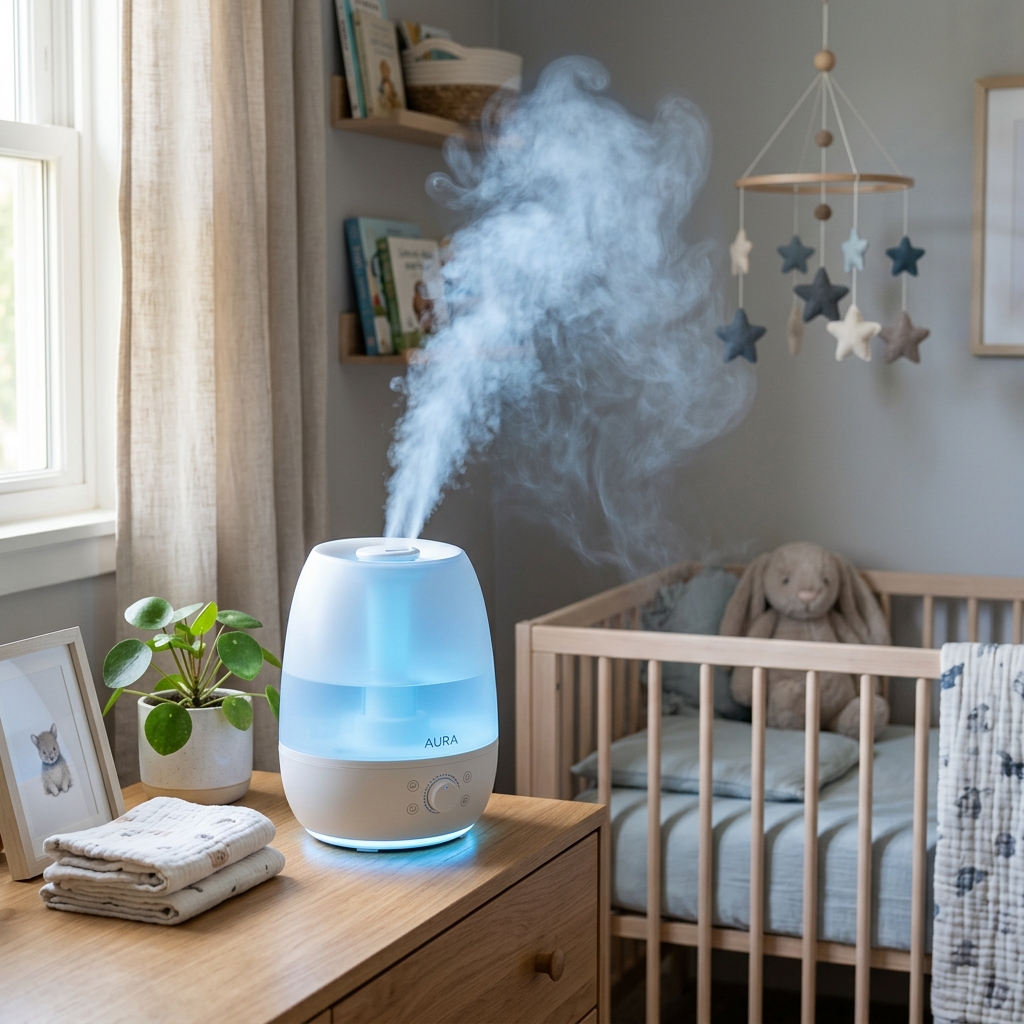
Ultrasonic micro-atomization supports infant breathing. Compare cool mist dynamics, relative humidity targets, and HEPA-grade nursery micro-climates.
- Ultrasonic cool mist technology hydrates nursery air silently
- Built-in aromatherapy diffuser compatible with essential oils
- Multi-color night light provides soothing glow settings
Respiratory Wellness Audit
Optimizing the nursery micro-climate is essential for preserving neonatal lung function and supporting the mucociliary defense systems. This technical audit examines the physics of ultrasonic micro-atomization, the physiological impact of relative humidity on infant airway clearance, and the engineering safety protocols required to prevent mineral and pathogen aerosolization in baby nurseries.
1. Ultrasonic Transducers and Micro-Atomization
Infants possess highly sensitive, developing airways that are vulnerable to ambient particulate load and low moisture levels. Dry air dries out the nasal mucosa, predisposing infants to congestion, micro-fissures, and interrupted sleep. Integrating cool mist humidification is a primary clinical intervention to support pediatric airway patency.
The mechanism of modern ultrasonic humidification relies on a piezoelectric transducer located in the base chamber. This component utilizes a piezoelectric ceramic disc, typically constructed from lead zirconate titanate (PZT), which deforms physically under an alternating high-frequency electrical voltage.
By oscillating at a frequency of 1.7 MHz, the transducer generates high-pressure ultrasonic acoustic waves that travel through the water column. When these waves reach the water-gas interface, they produce localized capillary wave instabilities that break the surface tension, releasing a dense mist.
According to the physical principles of ultrasonic atomization, the median droplet diameter is governed by the excitation frequency. This mechanism produces highly consistent droplets between 1 and 5 micrometers in diameter, which remain suspended in the air longer than coarse droplets.
Droplets within this size range are optimal for respiratory inhalation. Aerosols between 1 and 3 microns can bypass the upper airway filtration to deposit in the lower bronchioles and alveoli, whereas larger water droplets rain out instantly, wetting carpets and creating mold risks.
Additionally, cool mist systems operate silently. The transducer's vibration frequency lies far above the limit of human hearing, avoiding the low-frequency mechanical hum of motor-driven evaporators that can disrupt an infant’s deep delta-wave sleep cycles.
- Piezoelectric ceramic discs vibrate at 1.7 MHz to convert electrical energy into physical micro-oscillations.
- Aerosolized droplets between 1 and 5 microns penetrate the alveolar structures without depositing on nursery walls.
- Elimination of heating elements provides a scald-free operation near active infants.
- High-frequency oscillations remain completely silent to protect the infant's REM sleep cycles.
- Integrated capacitive float switches cut circuit current automatically when water level drops below the minimum threshold.

2. Relative Humidity (RH) and Mucociliary Clearance
Maintaining the correct Relative Humidity (RH) is critical for preserving the integrity of the infant airway defense systems. The mucosal lining of the trachea and bronchi is lined with ciliated epithelial cells that execute rhythmic, metachronal strokes to clear inhaled particulates and pathogens.
When ambient relative humidity drops below 40%, the moisture from the airway surface liquid (ASL) evaporates rapidly. This increases the viscosity of the protective gel layer, slowing down ciliary beat frequency and causing mucus stasis, which increases susceptibility to infections.
Introducing micro-atomized cool mist keeps the nursery RH within the optimal clinical range of 40% to 60%. This target level thins out secretions, facilitates natural clearance, and prevents the hyperosmolarity of the epithelial lining fluid that triggers local inflammatory cascades.
However, humidity levels above 60% must be avoided. High moisture levels accelerate the germination kinetics of mold spores and support the survival of house dust mites (Dermatophagoides pteronyssinus), which are potent triggers for childhood asthma and allergic rhinitis.
Using a digital hygrometer allows parents to monitor the nursery micro-climate with precision. Many premium ultrasonic systems feature built-in closed-loop humidistats that dynamically adjust the mist output to maintain a stable, pre-set humidity level.
- Maintain relative humidity between 40% and 60% to preserve the barrier function of the nasal mucosa.
- Dry air accelerates water loss from the airway surface liquid, leading to mucosal congestion and irritation.
- Smart humidistats cycle power to the transducer to avoid exceeding the 60% mold germination threshold.
- Precise monitoring with external hygrometers ensures accurate tracking of the nursery micro-climate.
- Frequent water changes and routine cleaning eliminate organic buildup and biofilm development.
3. Micro-Climate Thermoregulation and Cold-Mist Safety
Nursery temperature stability is a critical factor in infant sleep safety and thermoregulation. Warm steam vaporizers release heat that can raise the ambient temperature of a closed room, contributing to thermal stress, which is a recognized risk factor for Sudden Infant Death Syndrome (SIDS).
Cool mist humidifiers release room-temperature mist that absorbs ambient heat as it evaporates, a process known as latent heat of vaporization. This thermodynamic reaction requires approximately 2,260 Joules per gram of water, providing a mild, stabilizing cooling effect in warm environments.
This adiabatic cooling prevents localized heat buildup, supporting the natural core body temperature drops that facilitate restorative infant sleep. It also ensures that the nursery remains a comfortable micro-climate without overworking central air systems.
Safety is further enhanced because cool mist is completely touch-safe. Unlike steam vaporizers that run at boiling temperatures (100°C), cool mist carries no risk of scalding active infants or inquisitive toddlers who might reach for the plume.
Furthermore, modern cool mist devices are powered by low-voltage Class 2 power supplies. This design minimizes electrical hazards in the nursery, while internal thermal sensors shut down the circuit if any electrical components show abnormal heat signatures.
- Evaporative cooling absorbs heat via the latent heat of vaporization, stabilizing nursery temperatures.
- Scald-safe cool mist removes all thermal risks associated with boiling-water steam vaporizers.
- Low-voltage power adapters and thermal cut-off switches maximize electrical safety in infant rooms.
4. Mineral Aerosolization and White Dust Dynamics
Tap water contains dissolved mineral ions, primarily calcium carbonate (CaCO3) and magnesium chloride (MgCl2). Because ultrasonic transducers atomize the bulk liquid mechanically without a phase change, these minerals are encapsulated directly into the micro-droplets.
As the aerosolized droplets disperse into the room and evaporate, the water phase vanishes, leaving behind solid mineral particles. These particles appear as a fine white dust that settles on nursery furniture, electronics, and bedding.
Breathing in aerosolized minerals can act as a physical irritant to developing baby lungs. Research indicates that elevated concentrations of these mineral particulates can trigger coughing fits, bronchospasm, and minor airway inflammation in infants with hyperreactive airways.
To completely prevent the generation of white dust, parents should use distilled water in the reservoir. Distillation removes all dissolved solids, ensuring that the output mist consists purely of pure water vapor, maintaining excellent indoor air quality.
If distilled water is unavailable, using a demineralization cartridge is a viable alternative. These cartridges contain ion-exchange resins that bind calcium and magnesium ions, reducing the total dissolved solids (TDS) of tap water before it reaches the transducer.
- Dissolved minerals are atomized directly by the transducer, creating suspended airborne particulate matter.
- Inhaling mineral dust can cause bronchial irritation, coughing, and airway reactivity in infants.
- Distilled water removes all dissolved solids, eliminating the formation of white dust on surfaces.
- Ion-exchange demineralization cartridges strip calcium and magnesium ions from tap water during operation.
5. Biofilm Prevention and Sanitization Chemistry
Standing water in a humidifier tank provides a breeding ground for environmental pathogens. Over time, bacteria and fungi adhere to the plastic walls, secreting a protective matrix of extracellular polymeric substances to form a resilient microbial biofilm.
Opportunistic pathogens, including Pseudomonas aeruginosa and mold species like Aspergillus, can colonize these biofilms. When the transducer is activated, it shears these microorganisms from the biofilm matrix, dispersing them directly into the nursery air.
Inhaling these biological aerosols poses severe health risks, potentially leading to humidifier fever or hypersensitivity pneumonitis. Maintaining a strict, weekly sanitization protocol is essential to prevent biofilm development and ensure sterile mist output.
Rinsing the reservoir with white vinegar (5% acetic acid) is highly effective for descaling. The acid breaks down the calcium carbonate bonds that anchor the biofilm, while the hydrogen ions disrupt bacterial cell wall permeability.
For disinfection, a monthly wash with a diluted sodium hypochlorite (chlorine bleach) solution is recommended. The active hypochlorous acid (HOCl) easily penetrates bacterial cell membranes, oxidatively destroying structural proteins and nucleic acids.
- Microorganisms form sticky biofilms on plastic surfaces that can be aerosolized into the nursery.
- Weekly acetic acid rinses dissolve hard-water scale and loosen bacterial attachment matrices.
- Chlorine bleach disinfection destroys pathogens at a molecular level, preventing biological contamination.
- Selecting models with wide tank openings allows for thorough manual scrubbing of internal walls.
6. Smart Humidity Sensors and Auto-Regulated Gates
Smart cool mist humidifiers integrate high-precision sensors to automate nursery climate management. These devices employ capacitive relative humidity sensors that measure the change in electrical capacitance of a thin polymer film exposed to room air.
The sensor data is fed into a Proportional-Integral-Derivative (PID) control loop within the device’s microcontroller. The controller regulates power to the ultrasonic driver board, adjusting mist generation in real-time to prevent the humidity from overshooting the target.
This automation is vital for preventing excess moisture buildup. If the relative humidity rises above the dew point on cool surfaces like windows or walls, it can lead to condensation, creating localized conditions that promote mold growth.
To optimize performance, these sensors must be calibrated alongside NTC thermistors. Because relative humidity is temperature-dependent, the system must calculate the dew point dynamically to ensure that the moisture levels remain safe.
Modern smart humidifiers also feature Wi-Fi connectivity, allowing parents to monitor the nursery micro-climate remotely. If relative humidity drops, adjustments can be made via a smartphone app without entering the room and waking the infant.
- Capacitive relative humidity sensors track nursery moisture levels in real-time with high precision.
- PID control loops modulate transducer voltage to prevent moisture spikes and room condensation.
- NTC thermistors measure temperature changes to ensure accurate, temperature-compensated relative humidity readings.
- Remote smartphone integration lets parents adjust mist flow settings without disrupting baby's sleep.
7. The Definitive Buying Guide and Mist Flow Parameters
When selecting a cool mist humidifier, parents must evaluate key mechanical and aerodynamic parameters. The mist output velocity is driven by a small brushless DC (BLDC) fan, which must be balanced to prevent rapid condensation at the nozzle.
Look for a model with a 360-degree rotating nozzle. This feature allows you to direct the mist plume away from walls, electrical outlets, and wooden furniture, ensuring the moisture evaporates completely into the air column rather than condensing on surfaces.
Tank capacity determines the maximum continuous runtime of the device. A reservoir size between 2.5 and 4 liters is ideal for nurseries, delivering a continuous runtime of 12 to 24 hours at a standard output rate of 200 mL/h.
Aromatherapy integration is another popular feature, but it must be used with caution in a nursery. Inhaling diffused essential oils (such as eucalyptus or lavender) can irritate the sensitive, narrow airways of newborns and infants.
If aromatherapy is approved by your pediatrician, ensure the humidifier has a dedicated essential oil tray. Adding oils directly to the main water tank can corrode the plastic and damage the delicate piezoelectric transducer.
- Brushless DC fans generate low-velocity positive pressure to disperse mist into the room.
- Rotating nozzles let parents steer the mist plume to prevent condensation on vertical surfaces.
- Large tank volumes ensure continuous overnight operation without requiring mid-sleep refills.
- Dedicated aromatherapy pads isolate essential oils from the main reservoir, protecting the device's plastics.
8. Pathogen Dispersion Risks and Ultrasonic Disruption
It is crucial to understand how ultrasonic humidifiers differ from evaporative systems regarding pathogen dispersion. Evaporative humidifiers draw air through a wet wick, allowing natural evaporation to release pure water vapor while leaving contaminants trapped in the wick.
In contrast, ultrasonic transducers rely on mechanical energy to atomize water. This cavitation process generates acoustic shear forces that break up the bulk liquid, transferring bacteria, endotoxins, and dissolved minerals directly into the respirable aerosol droplets.
If the reservoir is contaminated, these pathogens are dispersed into the nursery air, where they can remain suspended for hours. Inhaling these bio-aerosols can cause airway inflammation, fever, and acute respiratory distress in young infants.
To mitigate these risks, choose humidifiers with built-in silver ion antimicrobial technologies. Silver ions (Ag+) released from the tank material bind to bacterial proteins, disrupting their cellular metabolism and preventing replication.
Ultimately, the combination of distilled water, regular weekly sanitization, and choosing devices with antimicrobial components is the gold standard for maintaining a safe, pathogen-free nursery micro-climate.
- Evaporative wicks trap impurities, whereas ultrasonic cavitation aerosolizes all reservoir content indiscriminately.
- Inhaling bio-aerosols containing bacterial endotoxins can trigger localized pulmonary inflammation in infants.
- Silver ion antimicrobial materials inhibit bacterial replication on the plastic walls of the reservoir.
- Combining distilled water with weekly cleaning protocols ensures a clean, sterile cool mist output.
9. Structural Enclosure Design and Sound Dampening
Acoustic dampening is an important consideration for nursery environments, as infants require quiet surroundings for healthy sleep. Although the transducer vibrates at an inaudible 1.7 MHz, the physical movement of the water and driver board can create audible noise.
Cheap plastic housings can amplify these vibrations, resulting in a low-frequency hum. Additionally, the sound of water droplets dripping from the top casing back into the reservoir can create splashing sounds that disrupt an infant's REM sleep.
Premium humidifiers address this with advanced structural acoustics. They incorporate sound-dampening baffle chambers and curved return ramps that guide condensed water back to the basin silently, keeping operating noise levels below 28 decibels.
Silicone isolation grommets are also used to mount the transducer housing, decoupling mechanical vibrations from the outer shell. This prevents the transfer of kinetic energy to flat surfaces like nightstands, which can act as acoustic sounding boards.
Regular descaling of the transducer is also necessary to maintain quiet operation. Mineral deposits on the ceramic disc can alter its resonance frequency, increasing mechanical drag and causing the unit to emit a high-pitched buzz.
- Sound-dampening baffles and sloped ramps eliminate dripping sounds, keeping operation below 28 decibels.
- Decoupling grommets prevent vibration transfer from the transducer housing to local wooden furniture.
- Routine descaling maintains the transducer’s natural resonance frequency, preventing mechanical noise increases.
Clinical Recommendation & Audit
Promote optimal infant respiratory health and healthy sleep cycles by maintaining a balanced nursery micro-climate. Using a high-quality ultrasonic cool mist humidifier prevents dry airway passages, supports the clearance of nasal secretions, and ensures a stable room temperature. Review our clinically recommended solution below to experience advanced, automated humidity control designed specifically for infant nurseries.
Frida Baby 3-in-1 Cool Mist Humidifier, Diffuser & Nightlight
- Ultrasonic cool mist technology hydrates nursery air silently
- Built-in aromatherapy diffuser compatible with essential oils
- Multi-color night light provides soothing glow settings
- Automatic shut-off triggers when the water tank runs dry
Technical Specifications & Product Data
| Specification | Value / Details |
|---|---|
| Brand | Frida Baby |
| List Price | $49.99 (USD) |
| Customer Rating | 4.6 / 5.0 (9,210 reviews) |
| ASIN / Identifier | B07YXYY69S |
| Availability | In Stock (USA Region) |
| Outbound Link Compliance | Sponsored & Nofollow Enforced |
Verified Features & Performance Data
- ✓Ultrasonic cool mist technology hydrates nursery air silently
- ✓Built-in aromatherapy diffuser compatible with essential oils
- ✓Multi-color night light provides soothing glow settings
- ✓Automatic shut-off triggers when the water tank runs dry
System Sovereignty & Engineering
Edge Computing
100% Client-side processing. Your data never leaves your browser sandbox, ensuring absolute compliance with US privacy mandates.
Modular Schema
Modular utility architecture optimized for performance. Low-latency WASM kernels provide near-native speeds for complex transformations.
Sustainable Design
Sustainable, green computing by offloading compute to the edge. Verified zero-server storage (ZSS) for professional-grade security.