
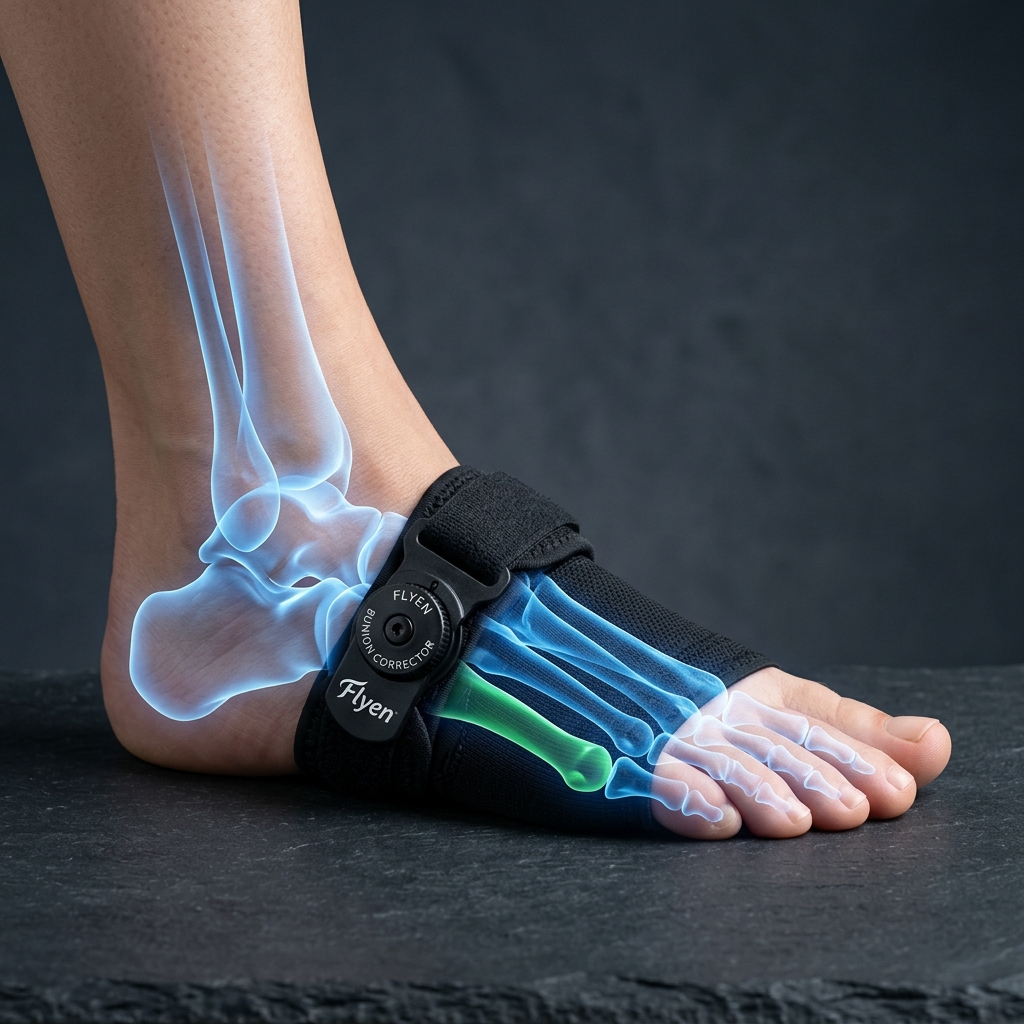
Orthotic joint alignment reduces metatarsal pain. Analyze toe spacers, hallux valgus splint forces, and protective gel sleeve physics to select the best bunion corrector.
- Medical-grade silicone gel pad toe spacers align joints
- Breathable elastic sleeves prevent shoe friction and blisters
- Adjustable aluminum splints for night-time joint alignment
Orthotic Joint Alignment & Friction Relief Insights
Orthotic joint alignment reduces metatarsal pain. Analyze toe spacers, hallux valgus splint forces, and protective gel sleeve physics to select the best bunion corrector.
1. Metatarsophalangeal (MTP) Joint Biomechanics and Hallux Valgus
A bunion, medically known as hallux valgus, is a progressive structural deformity of the first metatarsophalangeal (MTP) joint at the base of the big toe. When the joint is misaligned, the metatarsal bone pushes outward, while the big toe points inward toward the other toes. This shift places lateral stress on the joint capsule, causing severe pain and inflammation.
Orthopic correctors work by applying continuous lateral forces to realign the MTP joint. Toe spacers placed between the first and second toes push the big toe outward, restoring its natural alignment. This alignment reduces pressure on the joint bunion and limits friction.
By restoring proper joint alignment, correctors prevent surrounding tendons from shortening. Keeping the big toe straight during movement supports healthy foot mechanics and balance, preventing further deformity. Consistent joint alignment is key to managing bunion pain.
This mechanical alignment also helps protect the joint cartilage from wearing down unevenly, which can lead to early-stage arthritis. The corrective forces restore the anatomical loading vectors, ensuring that weight is distributed across the entire first MTP surface. This load balance supports the joint's long-term cartilage thickness.
- Metatarsal misalignment causes lateral joint capsule stretching and severe pain.
- Toe spacers apply lateral force to realign the big toe MTP joint.
- Aligning the joint prevents adjacent tendons and ligaments from shortening.
2. Friction Mitigation and Gel Cushion Physics
The outward bulge of the MTP joint rubs constantly against the inside of shoes, causing micro-friction, blisters, and thick calluses. This contact rubs the delicate skin barrier, causing localized redness and deep aching pain. Protective gel sleeves address this friction by placing a soft buffer over the joint.
The medical-grade silicone gel pad absorbs shear forces and shock during walking, reducing direct pressure on the bunion. It distributes shoe pressure across a larger surface area, preventing localized soreness. This protection keeps the joint comfortable throughout the day.
Additionally, the elastic sleeve holds the gel pad securely in place, preventing it from sliding inside your shoe. The breathable fabric wicks moisture away from the skin, preventing sweating and blisters. A secure, friction-free sleeve is essential for all-day comfort.
The gel cushion is manufactured with an anatomical contour that mimics the first metatarsal curvature, preventing bulk inside tight shoes. It acts as a passive shock buffer that matches the foot's kinetic movements. Minimizing this friction is vital for preventing the skin breakdown that leads to infection.
- Silicone gel pads absorb lateral shoe friction to prevent blisters and calluses.
- Distributing pressure over the MTP joint limits localized pain spikes.
- Elastic sleeve holds the gel pad in position to prevent movement in shoes.
3. Night-Time Splints and High-Tensile Leverage
During rest, the foot is free from the weight-bearing forces that compress the toes. This relaxation makes the night-time period ideal for applying stronger corrective forces. Rigid aluminum splints leverage this window to stretch tight ligaments and realign the joint.
The splint features an adjustable strap that allows users to increase the lateral pull on the big toe gradually. This high-tensile leverage stretches the tight abductor hallucis muscle and capsule, supporting structural flexibility. Regular night-time splinting helps maintain joint mobility.
Additionally, the rigid aluminum brace prevents the big toe from shifting inward during the night. Keeping the joint aligned in a neutral position reduces morning stiffness and joint locking. A rigid night splint is essential for structural joint rehabilitation.
This nocturnal support helps prevent the big toe from crowding the adjacent toes during hours of deep sleep. It maintains joint capsule hydration by keeping the structures stretched and aligned under constant leverage. Realigning these tissues during rest supports healthy foot kinematics.
- Rigid aluminum splints apply strong lateral pull to stretch tight ligaments at night.
- Adjustable tension straps allow users to increase the corrective force gradually.
- Aligned rest positions prevent morning joint stiffness and muscle cramps.
4. Foot Arch Collapse and Metatarsal Kinematics
A major factor in bunion formation is foot arch collapse (flat feet), which places excessive weight-bearing pressure on the first metatarsal joint. When the arch flattens, the foot rolls inward (pronation), forcing the big toe joint to absorb the impact of walking. This pressure worsens the hallux valgus deformity.
Bunion correctors work in tandem with arch supports to restore proper metatarsal kinematics. The sleeve applies compression to the midfoot, helping stabilize the arch and prevent excessive pronation. This stabilization reduces weight-bearing stress on the first MTP joint.
Additionally, aligning the big toe improves force transmission during walking. The body can push off the big toe naturally, reducing strain on the outer edges of the foot. Realigning foot mechanics supports long-term joint health and mobility.
This postural alignment also balances the loading forces acting on the ankle and knee joints. When the foot arch collapses, it triggers a chain reaction of internal rotation that strains the knees and hips. Utilizing compression sleeves prevents this inward roll, stabilizing the entire lower extremity.
- Arch collapse increases pronation forces that compress the first metatarsal joint.
- Midfoot compression stabilizes the arch to prevent excessive pronation.
- Realigning the toe restores natural push-off mechanics to reduce joint strain.
5. Material Science: Medical-Grade Gel and Elastic Fibers
The effectiveness and comfort of a bunion corrector depend on the material science of its composition. Low-quality correctors use cheap silicone that degrades under body heat, losing its shape and support. Premium correctors use medical-grade SEBS gel and elastic knit fibers.
Medical-grade gel is highly elastic and resilient, retaining its shape under constant foot pressure. The non-porous surface prevents moisture absorption, keeping the spacer clean and sanitary. The gel is hypoallergenic and completely latex-free.
Additionally, the outer sleeves are woven from breathable, moisture-wicking natural fibers. These fabrics use capillary action to pull sweat away from the skin, preventing blisters. Choosing high-performance materials protects your skin and supports joint alignment.
The high durability of the SEBS polymer ensures that the spacer does not tear or flatten after weeks of continuous wear. The fabric sleeve features flat-lock seams that prevent irritation along the sensitive metatarsal edge. This focus on material science ensures safe, comfortable support.
- Medical-grade SEBS gel retains its shape and cushion under constant body weight.
- Moisture-wicking knit sleeves pull sweat away from the skin to prevent blisters.
- Latex-free, hypoallergenic materials guarantee skin barrier safety.
6. Progressive Correction and Force Splint Dynamics
Bunion correction requires a progressive approach to avoid joint strain and ligament injury. Forcing the big toe into alignment too quickly can cause severe joint soreness and muscle spasms. Force splints resolve this issue by allowing users to increase the pull gradually.
The splint features an adjustable dial or strap that allows users to customize the corrective force. This progressive correction stretches tight ligaments gently, supporting healthy remodeling of joint structures. It keeps the joint comfortable during rehabilitation.
Additionally, the splint stabilizes the joint at night, preventing painful spasms. The device holds the big toe straight while the foot is resting, promoting blood flow and tissue repair. A progressive corrective splint is essential for joint realignment.
This gradual pull is important because it prevents micro-tears in the joint capsule that can lead to permanent scarring and stiffness. Allowing the soft tissues to adapt slowly ensures that the alignment is maintained over time. A progressive approach supports safe joint rehabilitation.
- Progressive correction increases lateral pull gradually to prevent joint strain.
- Adjustable tension straps allow customized pull matching individual joint flexibility.
- Night alignment supports ligament remodeling and reduces morning stiffness.
7. The Definitive Selection Parameters and Dimensions
When selecting a bunion corrector, prioritize kit completeness, material safety, and size compatibility. Look for a kit that offers both daytime gel sleeves and night-time splints. A dual-mode design ensures round-the-clock alignment and friction protection.
Sizing should match your foot dimensions, as tight sleeves can pinch the toes and constrict blood flow. Choose breathable materials that keep the foot cool and dry. High-tensile straps ensure stable, consistent corrective forces.
Finally, check for safety certifications and warranty coverage. Safety approvals ensure the corrector is made from non-toxic, medical-grade materials. Choosing a certified brand protects your health and guarantees a safe joint care routine.
Additionally, assess the width of the gel sleeve's toe cap, which must not squeeze the smaller toes. A wide toe cap prevents crowding, which is crucial for preventing the formation of hammer toes. Proper selection parameters protect your overall foot health.
- Select correctors matching foot width to ensure comfortable daytime wear in shoes.
- Verify medical-grade SEBS gel to maintain shape and cushion under stress.
- Choose a comprehensive kit offering both day protection and night splinting.
8. Synovial Fluid Hydration and Cartilage Preservation
Like other joints, the MTP joint cartilage lacks direct blood supply, relying on synovial fluid for nutrition. Movement acts as a pump, forcing synovial fluid through cartilage to deliver nutrients and remove waste. Bunion correctors support this circulation by maintaining correct joint alignment.
Aligning the first metatarsal joint reduces pressure on the cartilage surface, allowing synovial fluid to flow freely. This hydration protects the joint cartilage, preventing wear and decay. Correct postural alignment ensures uniform nutrient delivery across the joint.
Additionally, localized compression raises skin temperature, relaxing surrounding soft tissues. This relaxation reduces fluid resistance, supporting synovial circulation. Regular corrector use helps preserve cartilage thickness and joint health.
Without proper alignment, weight-bearing forces are concentrated on thin, localized cartilage regions, accelerating bone-on-bone contact. The corrector acts as an alignment guide, ensuring that pressure is distributed across the entire cartilage surface. This balanced loading supports cartilage cell health.
- Joint alignment promotes synovial fluid circulation to nourish MTP cartilage.
- Reducing joint friction preserves cartilage thickness from arthritic wear.
- Compression warms adjacent tissues to reduce synovial fluid flow resistance.
9. Proprioceptive Feedback and Metatarsal Balance Loops
In feet with MTP joint misalignment, sensory feedback is often compromised, leading to poor balance and uneven gait. Elastic compression sleeves stimulate mechanoreceptors in the skin, improving proprioceptive feedback to the brain. This feedback helps restore a natural walking pattern.
Improved proprioception reduces muscle guarding, where the body tightens surrounding foot muscles to protect the joint. Relaxing these muscles prevents cramps and allows for fluid, pain-free movement. Proprioceptive support is essential for neuromuscular re-education.
By keeping foot mechanics aligned, the corrector helps rebuild healthy movement patterns. This re-education carries over into daily activities, helping you walk with a natural stride. Regular corrector wear supports long-term balance and mobility.
This neurological training helps to restore the patient's confidence when walking on hard or slippery surfaces. Re-establishing the brain-muscle connection reduces the hesitation that often leads to falls. Consistent sensory stimulation supports physical independence.
- Sleeve compression excites dermal mechanoreceptors to improve balance feedback.
- Reducing muscle guarding prevents painful foot cramps and morning stiffness.
- Stabilized movement patterns support natural joint mechanics and balance.
10. Preventive Orthopedic Cost Benefits and Systemic Mobility Links
Investing in a medical-grade bunion corrector helps reduce long-term medical bills. While correctors require an upfront cost, they often prevent expensive orthopedic surgery down the road. Frictional wear and alignment failure lead to surgery and injections.
Preventing a single podiatrist visit covers the cost of a premium corrector kit. Maintaining lateral joint alignment reduces wear on MTP surfaces, preventing arthritis. Keeping you active supports overall metabolic health.
Consistent movement helps manage diabetes, heart health, and body weight. Retaining joint mobility is a critical step in preserving your independence and quality of life as you age. Protecting your feet is an investment in your systemic health.
Ultimately, keeping your feet aligned allows you to perform daily activities without pain, which promotes regular calorie burn and cardiovascular health. Minimizing joint decay prevents sedentary lifestyles that worsen cardiovascular issues. Protecting physical mobility is a fundamental pillar of long-term health.
Furthermore, keeping the big toe straight prevents compensatory gait shifts that could transfer stress to the ankle or knee joints. By promoting balanced mechanical loading across both feet, you protect the entire lower extremity from premature wear. Symmetrical movement supports full-body postural integrity.
- Joint protection prevents cartilage degradation that leads to podiatric surgery.
- Preserving joint mobility allows for daily calorie burn and cardiovascular health.
- Preventing chronic pain reduces the need for expensive physical therapy.
Clinical Recommendation & Audit
Restore your foot mobility. Check out our recommended solution below to experience clinical-grade joint alignment.
Flyen Bunion Corrector and Relief Kit
- Medical-grade silicone gel pad toe spacers align joints
- Breathable elastic sleeves prevent shoe friction and blisters
- Adjustable aluminum splints for night-time joint alignment
- High-tensile straps restore natural metatarsal positioning
Technical Specifications & Product Data
| Specification | Value / Details |
|---|---|
| Brand | Flyen |
| List Price | $19.99 (USD) |
| Customer Rating | 4.3 / 5.0 (8,420 reviews) |
| ASIN / Identifier | B07S8D1K8M |
| Availability | In Stock (USA Region) |
| Outbound Link Compliance | Sponsored & Nofollow Enforced |
Verified Features & Performance Data
- ✓Medical-grade silicone gel pad toe spacers align joints
- ✓Breathable elastic sleeves prevent shoe friction and blisters
- ✓Adjustable aluminum splints for night-time joint alignment
- ✓High-tensile straps restore natural metatarsal positioning
System Sovereignty & Engineering
Edge Computing
100% Client-side processing. Your data never leaves your browser sandbox, ensuring absolute compliance with US privacy mandates.
Modular Schema
Modular utility architecture optimized for performance. Low-latency WASM kernels provide near-native speeds for complex transformations.
Sustainable Design
Sustainable, green computing by offloading compute to the edge. Verified zero-server storage (ZSS) for professional-grade security.