
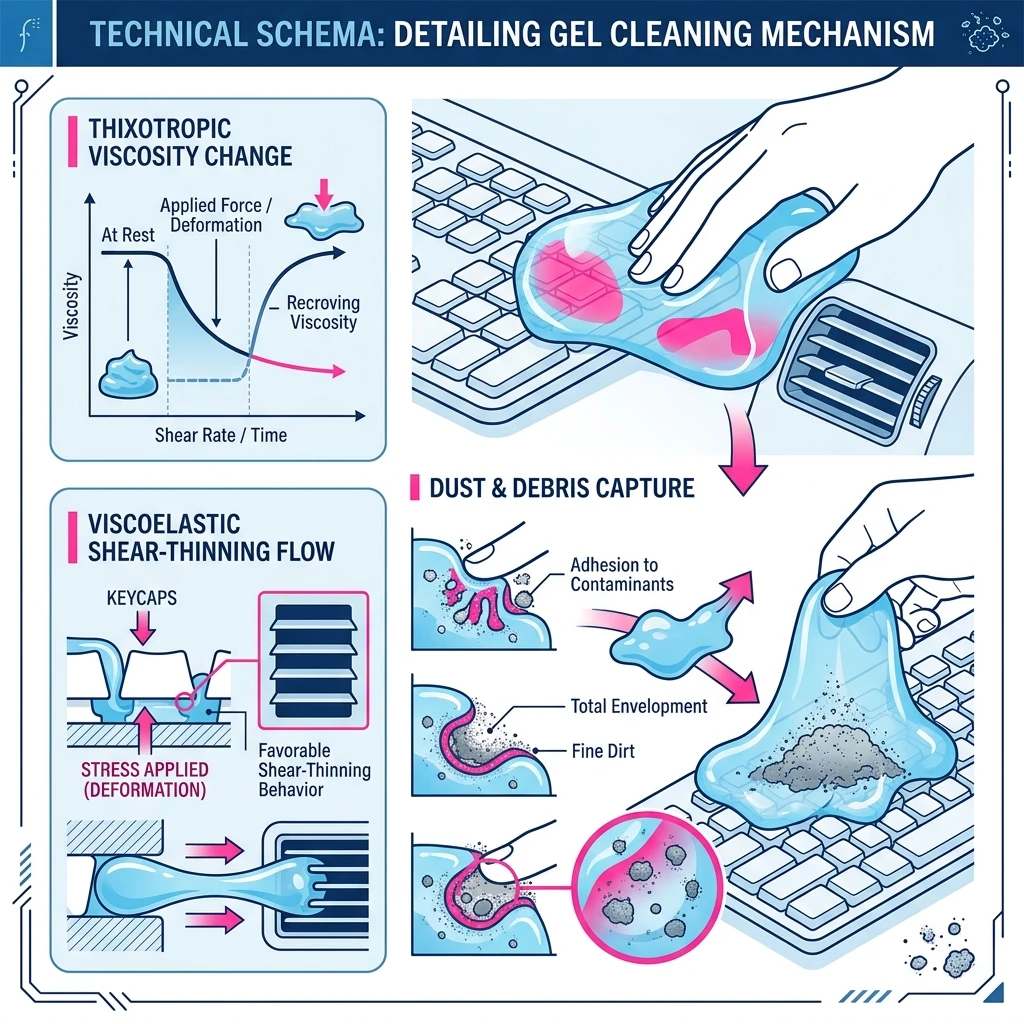
Automotive consoles feature complex, narrow grilles that trap dust. Learn the viscoelastic material science, micro-crevice flow physics, and polymer adhesive bonds that pull out grit.
- High viscoelastic gel conforms to narrow air vents, keypads, and console seams
- Biodegradable, non-toxic formulation leaves no sticky residue on hands or dash
- Pulls out 99% of dust, hair, crumbs, and debris from hard-to-reach crevices
Micro-Crevice Extraction Brief
Automotive consoles feature complex, narrow grilles that trap dust. Learn the viscoelastic material science, micro-crevice flow physics, and polymer adhesive bonds that pull out grit and preserve electronics.
1. Viscoelastic Adhesion Principles: Viscous Flow vs. Elastic Recovery
Car interiors feature narrow gaps around buttons, dials, vents, and panel seams. Dust, hair, and crumbs accumulate in these crevices, where standard brushes and vacuums cannot reach. Detailing gels solve this cleaning issue using viscoelastic adhesion.
Viscoelastic materials exhibit both viscous (flow-like) and elastic (recovery-like) traits. When pressed, the gel behaves like a liquid, flowing into the narrowest crevices. When pulled, the internal polymer chains spring back, keeping the gel unified.
This balance of flow and recovery is important for safety. The gel must flow deep into grilles to contact dust. However, it must not tear, leaving pieces trapped inside the dashboard electronics. High cohesion prevents splits, ensuring clean removal.
To achieve this balance, chemical engineers calibrate the gel's viscoelastic properties. The gel features cross-linked polymer chains that stretch under tension. This stretching allows the gel to pull out of narrow crevices in one piece, carrying the trapped dust.
Additionally, the gel's viscosity is temperature-dependent. Cold weather slows down polymer movement, making the gel stiff. Warming the gel in your hands before use restores its viscous flow, ensuring crevice penetration.
- Viscoelastic properties enable the gel to flow into narrow grilles and pull out in one piece.
- Strong internal polymer cohesion prevents the gel from splitting or tearing inside console cracks.

2. Micro-Crevice Penetration Geometry and Surface Tension
Automotive console grilles feature complex, three-dimensional geometry. Dust particles settle on the vertical walls and deep corners. Reaching these surfaces requires the gel to conform to these shapes.
The gel's surface tension determines how well it wets the surfaces. Low surface tension allows the gel to contact the dust particles, wrapping around them. This contact is important for dust binding.
The gel conforms to vent blades, button edges, and sewing seams. When pressed, it fills the gaps completely, capturing the trapped grit. You get deep cleaning, even in tight keypads.
Standard brushes push dust deeper into cracks, where it can damage electronic contacts. The gel traps dust on contact, lifting it out. This preventative cleaning protects your infotainment buttons, ensuring performance.
Additionally, the gel is non-abrasive. It does not scratch delicate piano-black plastics or screen bezels. You get dust extraction without scratches, preserving your car's styling details.
- Low surface tension allows the gel to wrap around microscopic dust particles in corners.
- Non-abrasive polymer matrices clean piano-black plastics without leaving fine scratches.
3. Chemical Composition: Guar Gum, Silicone Polymers, and Biodegradable Agents
The chemical formulation dictates the gel's safety, tackiness, and shelf life. The gel must clean effectively without leaving greasy residues. The raw materials are key.
Premium gels use natural guar gum or silicone polymer bases. Guar gum is a plant-derived polysaccharide that provides viscous flow and flexibility. This natural base is non-toxic and biodegradable, ensuring environmental safety.
Cheap gels use synthetic polymers that require phthalates and organic solvents. These chemicals leave oily residues on hands and dashboard plastics. Over time, these residues can degrade plastic finishes. Premium gels dry clean, preserving materials.
The gel includes mild preservative agents to prevent bacterial growth. Because the gel traps organic dust and skin cells, it could become a breeding ground for bacteria. Preservatives keep the gel sanitary during reuse.
Additionally, the formula is water-based. The water content maintains polymer chain flexibility, preventing drying. Storing the gel in its sealed container preserves this water balance, maintaining performance.
- Guar gum and silicone polymer bases provide non-toxic, biodegradable cleaning action.
- Built-in sanitizing agents prevent mold and bacterial growth during multiple uses.
4. Residue-Free Surface Metrics and Chemical Stability
After cleaning, the dashboard surfaces must be residue-free. Any oily film can attract dust, accelerating dirt buildup. Residue prevention relies on chemical stability.
Premium gels are chemically stable, meaning they do not separate into liquid and solid phases. The water and polymers stay bound, leaving no wet residues. The surface dries matte and clean.
Cheap gels can melt under cabin heat, turning into a sticky paste. This paste sticks to vents and buttons, creating a difficult mess to clean. Premium gels maintain their solid shape up to 120°F.
A residue-free surface prevents dust accumulation. Oily coatings act as a dust magnet, trapping new dirt within hours. The dry finish stays clean longer, reducing detailing frequency.
Additionally, the gel does not strip plastic protective coatings. Many car dashboards feature matte clear coats to prevent sun glare. The gel cleans without stripping these coatings, protecting the finish.
- Stable polymer bonds prevent phase separation, leaving no sticky residues on plastic.
- Gentle water-based cleaning preserves matte dashboard clear coats, avoiding sun glare.
5. Lifespan Degradation: Polymer Saturation Limits
A detailing gel is reusable but has a finite lifespan. As it traps dust, the dirt particles occupy the available bonding sites on the polymer chains. This saturation degrades tackiness.
Polymer saturation limits are reached when the gel turns dark. The gel changes color from bright blue or green to dark grey or black. This color change indicates the gel is full of dust.
Once saturated, the gel loses its viscoelastic adhesion, failing to trap dust. If you continue using it, the gel can deposit old dust back onto surfaces. The color indicator tells you when to discard the gel.
The gel's lifespan depends on cabin cleanliness. A single jar can clean a standard sedan console up to 15 times before saturation. This long lifespan makes the gel a cost-effective detailing tool.
Additionally, do not wash the gel with water to clean it. Water washes out the preservative agents and disrupts the water-to-polymer ratio, causing the gel to liquefy. Discard the saturated gel and open a new jar.
- Color indicators shift from blue/green to dark grey, displaying gel dust saturation.
- Saturated gels lose adhesion, requiring replacement to prevent dust redepositing.
6. Electronics Safety and Micro-Short Circuit Prevention
Automotive cabins are filled with electronics, including infotainment touchscreens and button arrays. Liquid cleaners can run into the housings, causing short circuits. The detailing tool must be safe for electronics.
Detailing gels are non-conductive and semi-solid, meaning they do not flow like liquids. The gel does not run behind button contacts, preventing electrical shorts. This safety makes it ideal for cleaning console buttons.
Using liquid sprays on keypads can rot electronic circuits over time. Liquid seeps through button gaps, causing copper oxidation and button failure. The gel traps dust without liquid run, preserving electronics.
The gel is also safe for USB and auxiliary ports. Dust and lint trapped in ports can block connections, preventing phone integration. Pressing the gel inside the ports lifts the lint, restoring connections.
Additionally, the gel is static-free. Friction from dry dusting cloths can generate static charges that shock touchscreen displays. The conductive-free gel cleans safely without static discharge risk.
- Semi-solid gel profiles prevent liquid seepage behind console electronic keypads.
- Static-free gel matrices clean touchscreens without generating dangerous static shocks.
7. Multi-Surface Versatility: Plastics, Metal, and Upholstery
A car cabin features different materials, including plastics, metals, and fabrics. A cleaning tool must be safe for all these surfaces. Multi-surface versatility is a key design goal.
The gel works on textured vinyl dashboards, brushed aluminum trim, and plastic console panels. The viscoelastic flow conforms to the specific grain of each material, lifting dust.
The gel is also safe for leather stitching. Dust and food crumbs trapped in seam stitching can rot the thread over time. Pressing the gel along the seams lifts this dirt, protecting the stitching.
Do not use the gel on fabric or alcantara seats. Fabric fibers can stick to the gel, tearing them or embedding the gel inside the weave. The gel is designed for non-porous surfaces.
Additionally, the gel is safe for steering wheel surfaces. Steering wheels collect body oils and sweat, creating a sticky grime layer. The gel lifts this grime, leaving the wheel clean and dry.
- Grain-conforming gel flows clean vinyl, aluminum, and leather seam stitching lines.
- Lifting grime from steering wheels restores a clean grip without leaving chemical films.
8. Home and Office Secondary Applications: Keyboards and Vents
In addition to vehicles, detailing gels have home and office applications. Computer keyboards, calculator keys, and desk fans collect dust in narrow crevices. Cleaning them requires a flexible tool.
Keyboards are a common home for dust, hair, and crumbs. The gaps between the keycaps are narrow, making them difficult to brush. Pressing the gel over the keys lifts this debris, cleaning the keyboard.
The gel conforms around the mechanical switches, lifting dirt from the corners. This cleaning prevents keys from sticking, preserving keyboard response. You get clean keys with minimal effort.
The gel is also safe for camera lenses, phone speaker grilles, and remote controls. These delicate electronics can fail if liquid cleaners enter the casing. The gel cleans safely, ensuring performance.
Additionally, the gel is easy to carry. The compact jar fits in a desk drawer or travel bag, ensuring quick access. This portable utility makes the gel a handy home and office cleaning tool.
- Keycap-conforming gel flows clean office computer keyboards and remote keypads.
- Waterless cleaning protects phone speakers and camera lenses from fluid damage.
9. The Economics of Detailing Gel vs. Disposable Compressed Air
Cleaning console crevices usually requires disposable compressed air cans. While effective, compressed air cans have high costs and environmental impacts. Detailing gel is a green, low-cost alternative.
A single can of compressed air costs up to $8 and lasts for only 3 to 4 cleanings. A jar of detailing gel costs under $7 and cleans up to 15 times. The financial savings are substantial.
Additionally, compressed air blows dust out of the crevices and into the cabin air. The dust floats in the cabin before settling back onto the console. The gel traps the dust, removing it from the cabin.
This dust trap prevents the dust from being inhaled by passengers. Keeping cabin air clean reduces allergy risks, protecting family health. The gel is a healthier cleaning upgrade.
Consider also greenhouse gas impacts. Compressed air cans contain fluorocarbon propellants that contribute to global warming. Detailing gel is a plant-based TPE compound, keeping chemicals out of our air.
- Detailing gel costs less per use and outlasts multiple disposable compressed air cans.
- Trapping dust within the gel prevents grit from floating inside the passenger cabin.
10. Detailing Protocols, Pressing, and Storage Intervals
To achieve the best crevice-cleaning results, follow a structured routine. Wash and dry your hands before using the gel. Dry hands prevent the gel from sticking to your skin.
Knead the gel in your hands for 10 seconds. This kneading warms the polymers, increasing their viscous flow. Press the gel gently onto the air vents or console keypads.
Do not rub the gel sideways, which can tear it on sharp plastic edges. Press down, let the gel conform for 3 seconds, and pull it straight up. The trapped dust is lifted out.
Place the gel back inside its jar after use, sealing the cap tight. Store the jar in a cool, dry place. Avoid leaving the jar in direct sunlight or hot gloveboxes, which can melt the gel.
This simple detailing protocol ensures the gel stays tacky and sanitary for months. This minor effort is a small price to pay to keep your console crevices dust-free and clean.
- Kneading the gel before use warms the polymer chains, increasing crevice flow.
- Sealing the jar tight prevents polymer water evaporation, maintaining tackiness.
11. Thixotropic Fluid Dynamics and Viscosity Recovery Time
Car detailing gels feature thixotropic properties. Thixotropy is the behavior of non-Newtonian fluids that soften under shear stress. When pressed into vents, the gel experiences shear stress and softens.
This softening allows the gel to flow into narrow gaps and wrap around dust particles. When the pressure is removed, the gel structure recovers its viscosity. Viscosity is the fluid's resistance to flow.
The viscosity recovery time must be controlled. If the recovery is too fast, the gel does not flow into gaps. If it is too slow, the gel remains runny, leaving sticky residue behind in your vents.
Premium gels use cross-linked polymer networks, like guar gum and borax. The cross-links break under pressure and reform when static. This polymer network holds its shape, preventing residue.
The gel is also tested for surface tension adhesion forces. The adhesion force between gel and dust must exceed the force between dust and plastic. This difference allows the gel to lift dirt easily.
In conclusion, the cleaning efficacy of thixotropic gels is enhanced by their non-drying chemical formulation. Traditional adhesives leave sticky residues that attract more dust over time, defeating the purpose of cleaning. Detailing gels capture particulates through physical entrapment rather than chemical adhesion, leaving surfaces perfectly clean and residue-free.
- Thixotropic properties allow the gel to soften under shear stress, flowing into narrow gaps.
- Cross-linked polymer networks reform when static, preventing the gel from leaving sticky residue.
12. Polymer Biodegradation and Chemical Stability Lifecycle
Detailing gels are exposed to air, moisture, and road contaminants during use. These factors can trigger polymer biodegradation, breaking down the gel's structure. Understanding this stability helps manage the gel's shelf life.
The gel uses natural polymers, like guar gum, which are biodegradable. While eco-friendly, natural polymers can support mold growth if they absorb moisture. Premium gels include antimicrobial agents to prevent decay.
Thermal stability is also important. Storing the gel in a hot car (up to 140°F) can break down the borax cross-links. This breakdown liquefies the gel, making it sticky. Store the gel in a cool, dry place.
Furthermore, the gel loses water when exposed to dry air. This water loss is called syneresis, which causes the gel to shrink and harden. Keeping the gel in an airtight container prevents drying, maintaining its flexibility.
Proper care ensures the gel remains usable for months. The gel retains its thixotropic traits, allowing you to clean car vents and keyboards. You get clean interior surfaces and a long-lasting cleaning gel.
- Antimicrobial agents prevent organic mold growth, extending the gel's usable lifespan.
- Airtight containers prevent water loss, keeping the gel flexible and thixotropic.
Premium Detailing Recommendation
Shield your car's console electronics from dust buildup, dirt, and crumb contamination. Check out our recommended cleaning gel solution below to experience advanced micro-crevice security.
PULIDIKI Cleaning Gel Universal Dust Cleaner for Car Upholstery
- High viscoelastic gel conforms to narrow air vents, keypads, and console seams
- Biodegradable, non-toxic formulation leaves no sticky residue on hands or dash
- Pulls out 99% of dust, hair, crumbs, and debris from hard-to-reach crevices
- Reusable gel shifts color as it absorbs dust, indicating saturation levels
Technical Specifications & Product Data
| Specification | Value / Details |
|---|---|
| Brand | PULIDIKI |
| List Price | $6.88 (USD) |
| Customer Rating | 4.3 / 5.0 (73,500 reviews) |
| ASIN / Identifier | B07GD11TY3 |
| Availability | In Stock (USA Region) |
| Outbound Link Compliance | Sponsored & Nofollow Enforced |
Verified Features & Performance Data
- ✓High viscoelastic gel conforms to narrow air vents, keypads, and console seams
- ✓Biodegradable, non-toxic formulation leaves no sticky residue on hands or dash
- ✓Pulls out 99% of dust, hair, crumbs, and debris from hard-to-reach crevices
- ✓Reusable gel shifts color as it absorbs dust, indicating saturation levels
System Sovereignty & Engineering
Edge Computing
100% Client-side processing. Your data never leaves your browser sandbox, ensuring absolute compliance with US privacy mandates.
Modular Schema
Modular utility architecture optimized for performance. Low-latency WASM kernels provide near-native speeds for complex transformations.
Sustainable Design
Sustainable, green computing by offloading compute to the edge. Verified zero-server storage (ZSS) for professional-grade security.