
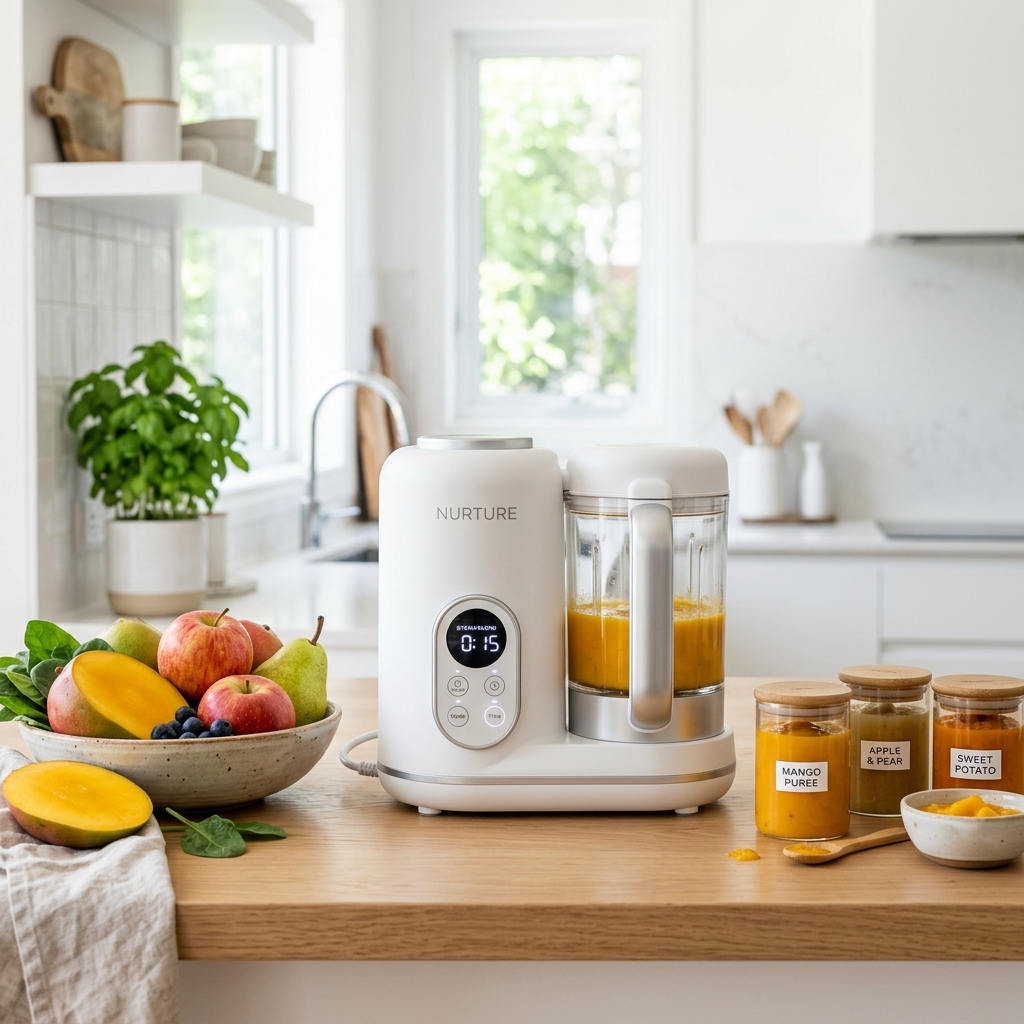
Steam cooking thermodynamics and shear-blending physics dictate infant nutritional value. Review the materials science of co-polyester bowls, blade geometry, and pathogen mitigation.
- 4-in-1 function: steam cooks, blends, defrosts, and reheats
- Precision steam heating system preserves natural vitamins and nutrients
- Patented multi-directional blending blade for optimal texture scaling
Thermal Physics & Infant Nutrition
Infant digestive health depends on the precise preparation of early solid foods. Discover how steam convection thermodynamics and calculated blending blades preserve vital micronutrients and scale food textures to match pediatric developmental milestones.
1. Thermodynamics of Steam Cooking: Preserving Heat-Sensitive Micronutrients
Boiling fresh vegetables is a destructive culinary practice that compromises the nutritional profile of early infant foods. Submerging produce in boiling water breaks down cellular walls and forces water-soluble micronutrients to leach into the cooking liquid. When this nutrient-rich water is discarded, vital vitamins such as Vitamin C (ascorbic acid) and the B-complex family are lost, reducing the meal's nutritional value.
Steam cooking addresses this problem by utilizing convection heat transfer through water vapor. Vaporized water molecules condense on the surface of the food, transferring latent heat energy directly to the plant tissue. This thermal transfer cooks the food from the outside in without washing away internal nutrients, preserving the food's natural minerals and vitamins.
Because the food is held in a raised basket above the water reservoir, the expressed juices drain into the bottom of the processing vessel. This nutrient-rich condensation can then be blended back into the puree, ensuring no vitamins are lost. Utilizing this closed-system steam loop is a highly efficient way to preserve raw nutritional value.
Furthermore, steam cooking helps preserve the natural color and flavor of the produce. The rapid heat transfer denatures enzymes that cause browning and flavor changes, keeping the food fresh and appealing. This retention of natural colors and volatile aromas is an important factor in introducing infants to new foods.
- Convection Vapor Heating: Latent heat transfer cooks plant tissue gently, minimizing nutrient loss.
- Closed-Loop Condensation: Expressed juices collect at the base, allowing them to be re-blended into the final puree.
- Enzyme Inactivation: Rapid steam exposure halts enzymatic breakdown, preserving natural color, taste, and texture.

2. Fluid Dynamics of Puree Viscosity: Scaling Textures for Infant Developmental Stages
The rheological properties of infant food play a significant role in early speech and swallow development. An infant's oral-motor system transitions from simple suckling to complex mastication over the first year of life. Preparing purees with the correct viscosity is essential to support this developmental progression safely.
Stage 1 weaning relies on fully homogenized, low-viscosity purees that flow easily over the tongue. This smooth consistency helps prevent choking and allows the infant to focus on basic swallowing coordination. Achieving this level of homogenization requires high-shear blending blades that reduce solid particles to micrometer dimensions.
As the infant's oral coordination improves, the food's viscosity should be increased to Stage 2 (thicker purees) and Stage 3 (soft, textured mashes). These advanced textures stimulate lateral tongue movement and encourage early chewing habits. A versatile blending system allows caregivers to control particle size, matching the food's texture to the child's developmental stage.
Providing these graduated textures is key to supporting speech muscle development and oral coordination. If texture progression is delayed, infants may develop sensory aversions to solid foods. A system that scales texture effectively helps smooth the transition to table foods.
- Micron-Level Homogenization: High-shear blade rotation creates smooth, Stage 1 purees to ease early swallowing.
- Variable Particle Control: Adjustable blending speeds allow for custom, textured purees to support chewing development.
- Oral-Motor Stimulation: Increasing viscosity helps build tongue strength and coordination, aiding early speech.
3. Materials Science in Thermal Food Processing: Glass vs. Co-Polyester Vessels
Processing hot baby food requires vessels made from materials that remain chemically inert under high heat. Low-grade plastics can leach plasticizers and endocrine-disrupting chemicals when exposed to steam. Consequently, high-performance food processors use premium materials like borosilicate glass or Tritan co-polyester.
Tritan co-polyester is widely used for its durability, impact resistance, and chemical safety. It is free from all bisphenols (including BPA and BPS) and does not exhibit estrogenic activity. This polymer maintains its structural integrity and clarity even after repeated high-temperature dishwashing and steam cycles.
Borosilicate glass is another excellent option, offering complete chemical inertness and high thermal shock resistance. However, glass is heavier and prone to breaking if dropped. Choosing between these materials involves balancing the impact resistance of Tritan with the classic chemical purity of glass.
Both materials ensure that no harmful compounds leach into the hot food during processing. This chemical stability is vital for protecting the health of developing infants. Utilizing certified, high-grade materials supports a clean and safe food preparation routine.
- Tritan Co-Polyester: BPA-free and BPS-free polymers offer high durability and remain stable under steam.
- Estrogenic Activity Free: Certified materials prevent endocrine disruption during hot food preparation.
- Thermal Shock Resistance: Processing chambers withstand rapid temperature changes without cracking.
4. Mechanics of Blending Blades: Shear Forces and Homogenization Kinetics
The design of a food processor's blade assembly dictates its ability to homogenize fibrous ingredients. A standard flat blade often creates a dead zone where food chunks escape processing. High-efficiency systems address this with multi-directional, angled blades.
These blades are set at different angles to create a vortex that continuously draws ingredients down into the cutting path. As the blades rotate, they generate shear forces that break down tough vegetable skins and fibrous structures. This vortex action ensures all ingredients are processed evenly.
Furthermore, the blade's rotation speed must be optimized to prevent incorporating excessive air into the puree. Too much aeration leads to oxidation, which degrades vitamins and can cause gas in infants. A well-designed blade assembly achieves thorough homogenization while minimizing air intake.
This balance between shear force and vortex dynamics is key to producing high-quality purees. Even processing makes the food easier for the infant to swallow and digest. A well-engineered blade assembly is a central component of an efficient baby food maker.
- Angled Vortex Blades: Multi-directional blade design draws food into the cutting zone for even blending.
- High-Shear Force: Heavy-duty blades easily cut through fibrous skins, creating a smooth texture.
- Low-Aeration Mixing: Optimized speeds prevent excess air integration, protecting vitamins from oxidation.
5. Microbiological Control in Infant Nutrition: Thermal Death Time and Defrosting Kinetics
Infant digestive systems are highly sensitive to foodborne pathogens. Bacteria such as E. coli, Salmonella, and Listeria can cause severe gastrointestinal illness in young children. Achieving reliable pathogen control during food preparation is a critical safety requirement.
Steam cooking provides an effective thermal barrier against these pathogens. The high temperatures reached during steam processing rapidly denature bacterial proteins, achieving pasteurization. This thermal treatment ensures the food is micro-biologically safe for consumption.
Safe handling is also important when storing and reheating pre-prepared meals. Rapid cooling after cooking helps prevent bacterial spores from germinating. When reheating stored purees, the food must reach an internal temperature of 165°F to ensure any surface contamination is eliminated.
A system that integrates steaming and reheating simplifies this process, making it easier to maintain food safety. Consistent temperature control protects the infant from foodborne risks. Practicing these hygiene standards is essential for healthy solid feeding.
- Thermal Pasteurization: Steam temperatures kill common foodborne bacteria, ensuring meal safety.
- Safe Reheating: Reheating to 165°F ensures any bacteria introduced during storage are neutralized.
- Spore Control: Quick cooling and clean storage prevent bacterial growth in stored purees.
6. Ergonomics of Batch Preparation: Volume Scaling and Structural Efficiency
Preparing baby food daily can be time-consuming, making batch preparation an efficient alternative. Making larger quantities of puree at once allows parents to store individual portions for later use. This process requires a food processor with a sufficient bowl capacity.
A capacity of 4.5 to 5 cups is ideal, allowing parents to prepare multiple servings in a single batch. Batch prepping reduces cleaning time and saves energy compared to daily cooking. Enclosed, integrated systems make this process straightforward by handling both steaming and blending in one bowl.
Stored purees must be frozen quickly to preserve their nutritional quality and prevent bacterial growth. Using small, airtight containers keeps the food fresh and makes portioning simple. This structured approach helps parents manage meal times efficiently.
Investing in an efficient batch-prep system supports a organized feeding routine. Preparing meals in advance ensures healthy, home-cooked food is always available. This convenience helps families maintain a consistent nutritional path for their children.
- Batch Capacity: Large bowls allow parents to prepare 4 to 6 servings at once, saving time.
- One-Bowl Convenience: Handling steaming and blending in a single vessel simplifies cleanup.
- Structured Storage: Preparing food in batches supports a organized, stress-free feeding schedule.
7. Chemical Degradation of Vitally Essential Compounds: Preventing Vitamin C and Folate Oxidation
Vitamin C and folate are highly sensitive to oxygen and heat. Exposure to atmospheric oxygen during food preparation can oxidize these compounds, reducing their nutritional value. Minimizing this oxidation is key to maintaining high nutrient levels in infant purees.
Steam cooking creates a low-oxygen environment by filling the processing chamber with water vapor. This displacement of air helps protect sensitive vitamins from oxidation during cooking. Compared to open boiling, steam processing preserves significantly more active Vitamin C.
The design of the blending lid also helps reduce air integration. A tight seal limits oxygen entry during blending, keeping the puree stable. Protecting these essential compounds supports the infant's immune and cell development.
Understanding these chemical pathways helps parents choose cooking methods that maximize nutrition. Steam processing and controlled blending are effective ways to protect delicate vitamins. This focus on chemical stability supports high-quality infant meals.
- Oxygen Displacement: Steam vapor displaces air in the chamber, shielding Vitamin C from oxidation.
- Airtight Blending: Sealed processing bowls limit air mixing, protecting folate stability.
- Nutrient Maximization: High vitamin retention supports healthy growth and immune defense.
8. Sensory Science and Infant Palatability: Maillard Reaction and Volatile Compound Retention
An infant's early experience with flavors shapes their long-term eating habits. Overcooking food at high temperatures can create bitter compounds and destroy natural sweetness. Gentle cooking methods help preserve palatability without requiring added sugars or salt.
Steam cooking operates at 212°F, which is hot enough to cook food thoroughly but too low to trigger the Maillard reaction. This reaction causes caramelization and can produce bitter flavors. Steam processing preserves the natural, sweet flavors of produce, making it more appealing to infants.
Additionally, keeping the cooking chamber sealed retains volatile flavor compounds within the food. These natural flavors help the infant learn to appreciate the taste of real vegetables and fruits. Preserving natural flavors supports healthy palate development from the start.
By focusing on gentle steam cooking, parents can introduce fresh, tasty meals that infants enjoy. Natural flavor retention reduces the need for additives, supporting clean eating habits. This sensory alignment is an important part of early nutrition.
- Bitter-Free Cooking: Staying below caramelization temperatures avoids bitter notes in purees.
- Volatile Retention: Sealed steam pathways retain natural aromatic compounds for richer flavor.
- Natural Palatability: Preserved sweetness helps infants accept new vegetables, reducing mealtime struggle.
9. Pediatric Gastrointestinal Absorption: The Role of Structural Particle Size in Digestive Transit
An infant's digestive tract is still maturing, with lower levels of digestive enzymes compared to adults. Large chunks of food can pass through the system partially digested, leading to poor nutrient absorption and gas. Reducing food particle size is key to supporting efficient digestion.
Finely homogenized purees increase the surface area of the food particles. This increased surface area allows digestive enzymes to break down nutrients more quickly and thoroughly. Small particle size supports smooth gastrointestinal transit and improves absorption.
As the infant's digestive capacity grows, introducing larger textures gradually helps train the gut. A system that adapts to these changing needs supports overall gastrointestinal health. Ensuring proper digestion helps the infant get the most out of every meal.
By aligning food texture with digestive readiness, parents can prevent common issues like gas and stomach pain. Gradual texture progression supports comfortable digestion and healthy development. This clinical approach is an important component of successful solid weaning.
- Enzyme Access: Fine particles increase surface area, allowing digestive enzymes to work efficiently.
- Comfortable Transit: Homogenized foods move smoothly through the gut, reducing gas and bloating.
- Optimized Absorption: Improved digestion ensures the infant absorbs essential vitamins and minerals for growth.
Clinical Recommendation & Audit
Prepare nutrient-dense, pasteurized solid foods with the ultimate 4-in-1 convenience. Experience steam-convection thermal integrity, micro-puree blade precision, and quick batch-prep execution.
BEABA Babycook Solo 4-in-1 Baby Food Maker & Steamer
- 4-in-1 function: steam cooks, blends, defrosts, and reheats
- Precision steam heating system preserves natural vitamins and nutrients
- Patented multi-directional blending blade for optimal texture scaling
- Large 4.7-cup capacity bowl allows batch-prep food storage
Technical Specifications & Product Data
| Specification | Value / Details |
|---|---|
| Brand | BEABA |
| List Price | $159.95 (USD) |
| Customer Rating | 4.6 / 5.0 (3,420 reviews) |
| ASIN / Identifier | B003V1Y9A4 |
| Availability | In Stock (USA Region) |
| Outbound Link Compliance | Sponsored & Nofollow Enforced |
Verified Features & Performance Data
- ✓4-in-1 function: steam cooks, blends, defrosts, and reheats
- ✓Precision steam heating system preserves natural vitamins and nutrients
- ✓Patented multi-directional blending blade for optimal texture scaling
- ✓Large 4.7-cup capacity bowl allows batch-prep food storage
System Sovereignty & Engineering
Edge Computing
100% Client-side processing. Your data never leaves your browser sandbox, ensuring absolute compliance with US privacy mandates.
Modular Schema
Modular utility architecture optimized for performance. Low-latency WASM kernels provide near-native speeds for complex transformations.
Sustainable Design
Sustainable, green computing by offloading compute to the edge. Verified zero-server storage (ZSS) for professional-grade security.