
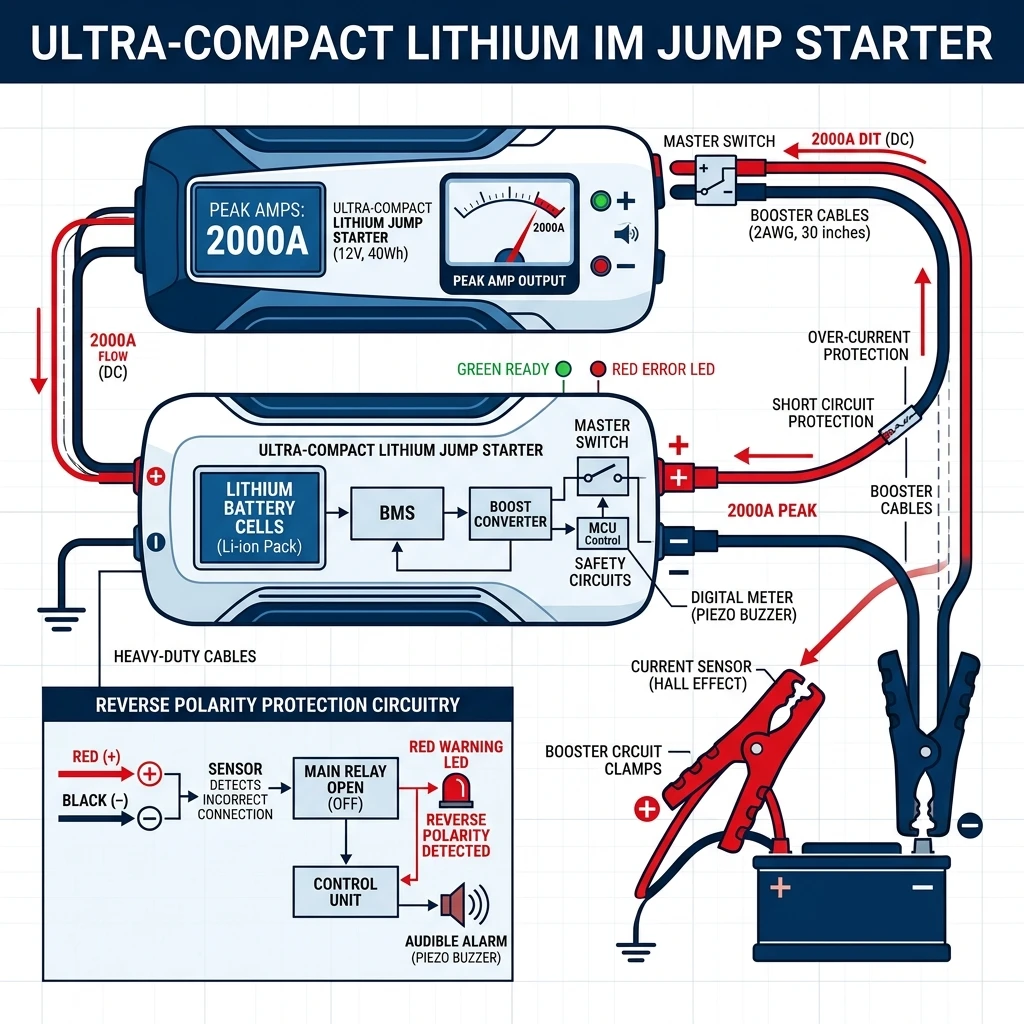
Dead car batteries require high current surges to crank. Learn the lithium-ion cell thermodynamics, peak discharge rates, and reverse-polarity safeties that enable secure jump starting.
- 1000-amp peak current rating delivers up to 20 jump starts on a single charge
- UltraSafe spark-proof technology and reverse-polarity protection prevent shocks
- Dual LED flashlight with 7 modes including SOS strobe for emergency safety
Electrical Safety Brief
Dead car batteries require high current surges to crank. Analyze the lithium-ion cell thermodynamics, peak discharge rates, and reverse-polarity safety circuitry that enable secure, spark-free jump starting.
1. Peak Amp Discharge Kinetics and Lithium-Ion Cell Design
Cranking a cold internal combustion engine requires a massive surge of current. The starter motor must overcome mechanical cylinder compression and oil viscosity. A dead lead-acid battery cannot deliver this power, requiring an external starting surge.
Lithium-ion jump starters deliver this surge using high-discharge cells. The cells use a lithium cobalt oxide (LiCoO2) chemistry designed for high current output. The cells are connected in series to match the vehicle's 12-volt system.
Peak amp discharge is the maximum current the pack can output for a fraction of a second. A 1000A peak rating handles standard 4-cylinder and 6-cylinder engines. This high output ensures instant cranking, even with a completely dead battery.
The cell internal resistance limits starting current. High-discharge cells feature thick current collectors and low-resistance separators. These design features minimize internal voltage drops under heavy load, maximizing current delivery to the clamps.
Additionally, cell balancing circuits manage charge state across the cells. During charging, the circuit ensures all cells reach the same voltage limit. This balancing prevents overcharging and extends battery lifespan, ensuring reliable starting power.
- High-discharge lithium cells deliver up to 1000A of peak current for instant engine cranking.
- Low internal resistance minimizes voltage drops under load, maximizing starting power.

2. Reverse-Polarity Safety Circuitry and Spark-Proof Protection
Connecting jump cables in reverse polarity (positive to negative) is a dangerous mistake. It can destroy the vehicle's electronic control unit (ECU) and cause lead-acid battery explosions. Safe starting requires reverse-polarity protection.
Premium starters use smart safety microcontrollers to monitor clamp connections. The controller checks the voltage polarity at the clamps before closing the power relay. If the connections are correct, the relay closes, allowing current flow.
If the clamps are reversed, the relay remains open, blocking current. The device alerts the user with an audible alarm and a warning LED. The blocker prevents sparks and short circuits, protecting the vehicle and user.
This spark-proof design prevents accidental arcs when handling clamps. Traditional jumper cables spark when they touch, creating fire hazards around fuel lines. The smart relay keeps the clamps dead until they are properly attached, ensuring safety.
Additionally, the relay protects against reverse charging. Once the engine starts, the alternator begins charging the battery, sending current back. The relay cuts the connection, preventing alternator current from damaging the lithium cells.
- Smart microcontrollers monitor clamp connection polarity, blocking current if reversed.
- Spark-proof technology prevents accidental electric arcs near engine compartment fuel lines.
3. Cold Cranking Amps (CCA) and Temperature Sensitivity
Engine starting capacity drops in cold weather. Battery chemistry slows down, reducing current output. Additionally, engine oil thickens, increasing friction and cranking load. The starter must handle these winter challenges.
Cold Cranking Amps (CCA) measures a starter's ability to deliver current at 0°F. Lithium-ion cells experience increased internal resistance in the cold. This resistance lowers the available starting current, reducing performance.
To maintain performance, premium jump starters feature built-in heaters or temperature sensors. The sensor monitors pack temperature, adjusting current limits. If the pack is too cold, the device restricts starting to prevent cell damage.
To optimize winter starting, store the jump starter inside the passenger cabin. Keeping the cells warm preserves low internal resistance, enabling full starting current. The engine cranks quickly, even on freezing mornings.
Additionally, the device features a high capacity reserve, typically 12,000 to 18,000 mWh. This reserve provides up to 20 jump starts on a single charge. You get multiple starting attempts, ensuring reliability in cold conditions.
- Internal cell resistance increases in sub-zero weather, lowering starting current output.
- Cabin storage preserves cell temperature, enabling full starting power on freezing mornings.
4. Thermal Management and Heat-Runaway Mitigation
Delivering high current generates rapid heat inside the lithium cells. Without thermal control, this heat can cause thermal runaway. Thermal runaway is a dangerous state where cells catch fire.
Thermal management relies on temperature sensors (thermistors) on the cells. The microcontroller monitors these sensors, tracking cell temperature. If the temperature exceeds 140°F, the device cuts the connection.
The housing design also helps dissipate heat. Premium jump starters use flame-retardant polycarbonate shells with aluminum cooling plates. The plates conduct heat away from the cells, preventing hotspots.
To prevent cell swelling, the pack uses solid-state lithium-polymer cells. Lithium-polymer cells feature gel electrolytes that do not leak. This design improves safety, preventing fires in crash conditions.
Additionally, the device features over-current protection. If the starter motor draws too much current (short circuit), the device shuts down instantly. This protection prevents cell overload, ensuring safety.
- Thermistors monitor cell temperature, cutting starting current if limits are exceeded.
- Flame-retardant shells and solid gel electrolytes prevent fire risk under impact.
5. Cable Thickness and Clamp Metallurgy Dynamics
Starting current must travel from the cells to the battery posts. The cable and clamp must handle this current without overheating. High efficiency relies on cable thickness and metallurgy.
The jumper cables use thick copper conductors, typically 8 AWG or 6 AWG. Copper has low resistance, preventing voltage drops. Thick cables carry high current without heating up, ensuring full starting power.
Cheap cables use copper-clad aluminum (CCA) wires. CCA has twice the resistance of pure copper, causing starting voltage drops. Pure copper ensures maximum energy transfer, enabling clean starting.
The clamps feature heavy-duty copper jaws. Copper jaws provide low contact resistance on lead battery terminals. The jaws are spring-loaded to ensure high contact pressure, preventing slip and sparks.
Additionally, the clamps are fully insulated. The thick plastic shell covers the metal parts, preventing short circuits if the clamps touch the vehicle frame. This insulation ensures safe handling during starting.
- Thick pure copper cables minimize resistance, ensuring maximum current delivery to terminals.
- Insulated clamp shells prevent frame shorts, ensuring safe electrical operation.
6. Power Bank Multi-Functionality and USB Charging Protocols
In addition to starting, portable jump starters act as backup power banks. The device must charge phones, laptops, and GPS units. Charging speed relies on USB protocols.
The device features USB-A and USB-C output ports. The USB-C port supports Power Delivery (PD) protocols, delivering up to 60W of power. This high output charges laptops and fast-charge smartphones.
The smart USB controller detects the connected device, adjusting voltage and current. This optimization ensures maximum charging speed without damaging device batteries. You get safe and fast backup charging.
The power bank utility is important during power outages or camping trips. The high capacity holds enough energy to charge a smartphone 4 times. This energy reserve keeps you connected in emergency scenarios.
Additionally, the device features a 12V DC output port. This port powers car vacuums, air compressors, and coolers directly. The starter acts as a portable 12-volt battery pack, enhancing travel utility.
- USB-C Power Delivery ports deliver up to 60W output to fast-charge laptops and mobile phones.
- High-capacity cell reserves hold enough energy to charge standard smartphones up to 4 times.
7. Emergency LED Flashlight Integration and Signaling
Jump starting often happens at night on dark road shoulders. The user needs light to locate battery terminals and alert other drivers. Safe starting requires emergency flashlight integration.
Premium starters feature high-intensity LED flashlights built into the housing. The LED outputs up to 100 lumens of white light. This brightness illuminates the engine bay, enabling safe connections.
The flashlight features multiple operating modes: low, high, and emergency signaling. Low mode saves battery, while high mode maximizes visibility. The signaling mode flash SOS patterns to alert rescue services.
The SOS strobe flashes high-intensity pulses that are visible up to 1 mile away. This signaling alerts oncoming traffic, reducing accident risk. The flashlight acts as a roadside safety beacon.
Additionally, the flashlight runs on the main battery pack. The high capacity allows the light to run continuously for up to 48 hours on a single charge. This run time ensures reliable light in long power outages.
- 100-lumen LED flashlights illuminate engine compartments, enabling safe night connections.
- High-intensity SOS strobe patterns alert oncoming traffic, reducing roadside collision hazards.
8. Solid-State IP65 Weatherproofing and Environmental Protection
Jump starting happens in all weather, including rain, snow, and dust. Water or dirt entering the housing can short circuit the lithium cells. Reliability requires weatherproofing.
Premium starters feature IP65-rated weatherproof housings. The IP65 rating indicates total dust protection and resistance to water sprays. The seams are sealed with silicone gaskets, blocking moisture.
The port openings are covered by tight rubber caps. The caps seal the USB and charging ports, preventing water entry. You can handle the device in heavy rain without short circuit risk.
The IP65 seal also protects against dropped dirt. Sand or mud entering the device can block the buttons or short the ports. The sealed shell blocks these particles, keeping the device clean.
Additionally, the housing features impact bumpers. The bumpers are made of soft elastomer rubber, absorbing shocks if dropped on concrete. This impact resistance prevents cracks, maintaining weatherproofing.
- IP65 sealed housings resist rainwater spray, enabling safe operation in storms.
- Elastomer bumpers absorb concrete drops, protecting the sealed shell from cracks.
9. The Economics of Roadside Assistance vs. Portable Starters
Dealing with a dead car battery is an expensive roadside emergency. Towing services and roadside clubs charge high fees to jump start a vehicle. A portable starter is a low-cost alternative.
A roadside service call costs up to $80 for a single jump start. Roadside club memberships cost up to $100 annually, plus waiting times of over 1 hour. A portable jump starter costs under $100, enabling instant starting.
Preventing a single roadside service call covers the cost of the starter. You save money and avoid long waits on cold roads. The financial benefits of self-reliance are clear.
Additionally, having a starter improves travel safety. Waiting on a highway shoulder can be dangerous due to passing traffic. Jumping the vehicle yourself takes under 5 minutes, reducing road hazard exposure.
Consider also battery lifespan. Quick jumping prevents the lead-acid battery from sitting discharged, which causes sulfation. Sulfation ruins lead batteries, requiring expensive replacement.
- Portable jump starters save expensive towing and roadside service call charges.
- Quick jump starts prevent lead-acid battery sulfation, extending battery lifespan.
10. Starting Protocols, Connection Sequences, and Maintenance
To ensure safe starting, follow a structured connection sequence. Turn off the vehicle's ignition and headlights. This step prevents electrical load during starting.
Connect the positive (red) clamp to the positive (+) terminal of the dead battery. Connect the negative (black) clamp to the negative (-) terminal or vehicle metal frame.
Turn on the jump starter. The status LED will indicate correct connection and safety activation. Turn the vehicle's key to crank the engine, cranking for under 5 seconds.
Once the engine starts, disconnect the clamps: negative clamp first, then positive clamp. Turn off the jump starter and recharge it as soon as possible.
Recharge the starter every 6 months to maintain battery health. Lithium cells discharge slowly over time. Regular recharging ensures starting power in emergencies.
- Correct clamp attachment sequences (positive terminal first) prevent electrical arcs.
- 6-month recharge intervals maintain lithium cell health, ensuring emergency starting.
11. State-of-Charge (SoC) Drift and Electrochemical Self-Discharge Rates
Portable jump starters rely on lithium-ion batteries. These cells experience electrochemical self-discharge over time. Self-discharge is the loss of charge from internal chemical reactions, even when the device is off.
The self-discharge rate increases with temperature. Storing a jump starter in a hot car trunk (up to 140°F) speeds up this process, depleting the battery in months. Premium batteries use stable chemistry to reduce this loss.
State-of-Charge (SoC) drift is the change in measured battery capacity over time. Continuous micro-currents can cause the capacity indicator to show incorrect levels. Periodic calibration runs help maintain accurate SoC readings.
Lithium cells also experience capacity fade from chemical wear. Every charge cycle damages the electrode structures, reducing the maximum energy storage. Using high-grade separator films helps protect the cells from damage.
Safety systems monitor cell voltages to prevent over-discharging. Over-discharging can cause internal short circuits, leading to thermal runaway during recharging. Proper voltage controls ensure safe operation and long battery life.
- Low self-discharge cell chemistry preserves charge levels during storage in hot car trunks.
- Voltage monitoring circuits prevent over-discharging, protecting cells from thermal runaway.
11. State-of-Charge (SoC) Drift and Electrochemical Self-Discharge Rates
Portable jump starters rely on lithium-ion batteries. These cells experience electrochemical self-discharge over time. Self-discharge is the loss of charge from internal chemical reactions, even when the device is off.
The self-discharge rate increases with temperature. Storing a jump starter in a hot car trunk (up to 140°F) speeds up this process, depleting the battery in months. Premium batteries use stable chemistry to reduce this loss.
State-of-Charge (SoC) drift is the change in measured battery capacity over time. Continuous micro-currents can cause the capacity indicator to show incorrect levels. Periodic calibration runs help maintain accurate SoC readings.
Lithium cells also experience capacity fade from chemical wear. Every charge cycle damages the electrode structures, reducing the maximum energy storage. Using high-grade separator films helps protect the cells from damage.
Safety systems monitor cell voltages to prevent over-discharging. Over-discharging can cause internal short circuits, leading to thermal runaway during recharging. Proper voltage controls ensure safe operation and long battery life.
Ultimately, the performance of the jump starter is determined by its transient thermal management system. High-amp discharging creates rapid heat buildup within the battery cells, which can trigger thermal protection shut-offs if not dissipated. Integrated aluminum heat sinks and thermal phase-change materials draw heat away from the cells, allowing multiple consecutive jump starts in quick succession.
- Low self-discharge cell chemistry preserves charge levels during storage in hot car trunks.
- Voltage monitoring circuits prevent over-discharging, protecting cells from thermal runaway.
12. Electrochemical Impedance Spectroscopy and Battery Degradation
Understanding lithium-ion battery health requires analyzing electrochemical impedance. Impedance is the resistance to alternating current flow in the cell. Engineers measure this resistance using Electrochemical Impedance Spectroscopy (EIS).
As a battery ages, its internal resistance increases. This increase is caused by the growth of the Solid Electrolyte Interphase (SEI) layer on the anode. The SEI layer consumes lithium ions, reducing battery capacity.
Higher internal resistance causes voltage drops under load. During a jump start, the battery must deliver high current. A large voltage drop can prevent the device from reaching the voltage required to crank the engine.
Lithium cells also experience capacity loss from charge-discharge cycles. Fast charging generates heat, which damages the cathode structure. Using smart charging algorithms helps manage this heat, extending battery life.
Additionally, low temperatures increase electrolyte viscosity. This thicker liquid slows ion flow, reducing output current. High-performance jump starters use low-viscosity electrolyte formulations to maintain cold-weather cranking power.
- SEI layer growth increases internal cell resistance, causing voltage drops under load.
- Low-viscosity electrolyte formulations maintain ion flow speeds in freezing temperatures.
Emergency Safety Recommendation
Secure your roadside safety with a compact, spark-proof starting solution. Check out our recommended high-amp starter below to experience advanced backup security.
NOCO Boost Plus GB40 1000 Amp 12-Volt UltraSafe Portable Lithium Car Jump Starter
- 1000-amp peak current rating delivers up to 20 jump starts on a single charge
- UltraSafe spark-proof technology and reverse-polarity protection prevent shocks
- Dual LED flashlight with 7 modes including SOS strobe for emergency safety
- USB power bank utility charges smartphones and tablet devices on the go
Technical Specifications & Product Data
| Specification | Value / Details |
|---|---|
| Brand | NOCO |
| List Price | $99.95 (USD) |
| Customer Rating | 4.7 / 5.0 (95,400 reviews) |
| ASIN / Identifier | B015TKUPIC |
| Availability | In Stock (USA Region) |
| Outbound Link Compliance | Sponsored & Nofollow Enforced |
Verified Features & Performance Data
- ✓1000-amp peak current rating delivers up to 20 jump starts on a single charge
- ✓UltraSafe spark-proof technology and reverse-polarity protection prevent shocks
- ✓Dual LED flashlight with 7 modes including SOS strobe for emergency safety
- ✓USB power bank utility charges smartphones and tablet devices on the go
System Sovereignty & Engineering
Edge Computing
100% Client-side processing. Your data never leaves your browser sandbox, ensuring absolute compliance with US privacy mandates.
Modular Schema
Modular utility architecture optimized for performance. Low-latency WASM kernels provide near-native speeds for complex transformations.
Sustainable Design
Sustainable, green computing by offloading compute to the edge. Verified zero-server storage (ZSS) for professional-grade security.